
Last updated October 15, 2026
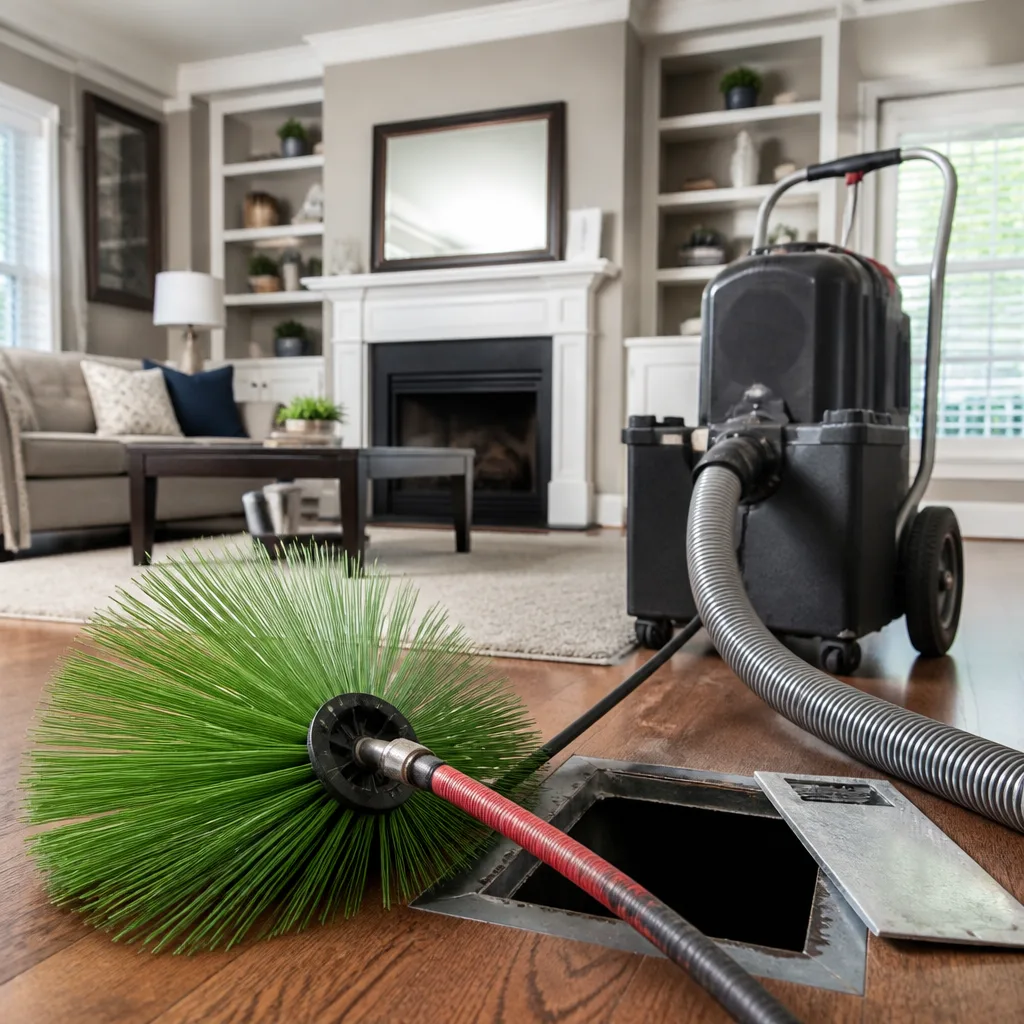 Whole-home duct cleaning
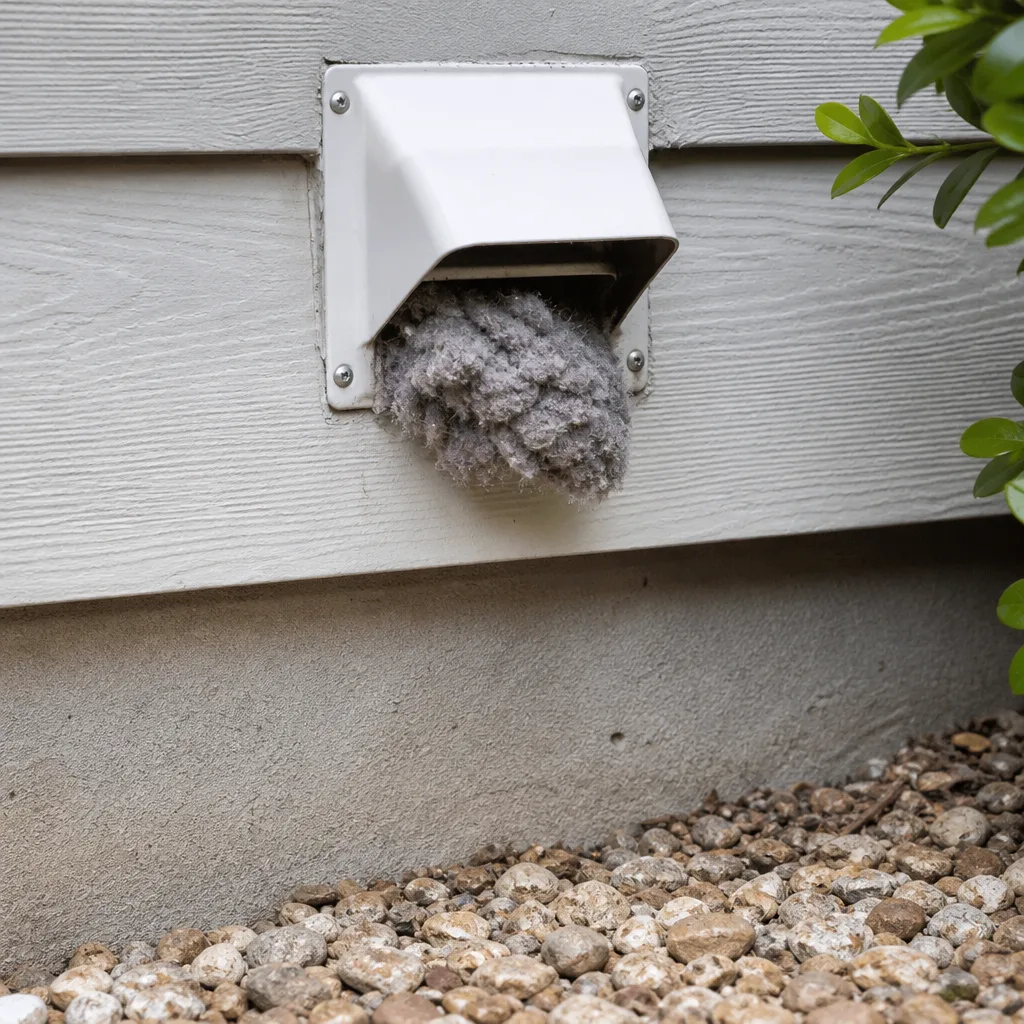 Dryer vent cleaning
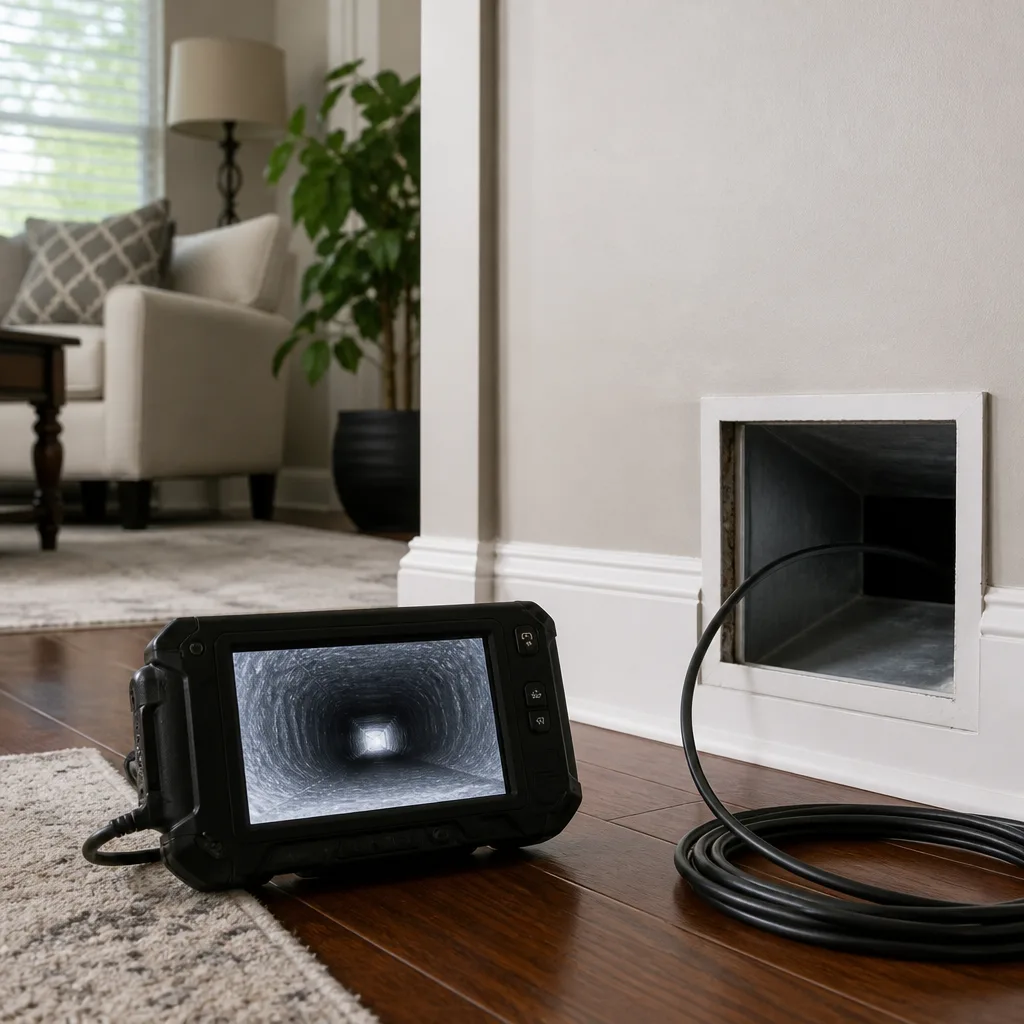 Camera inspection
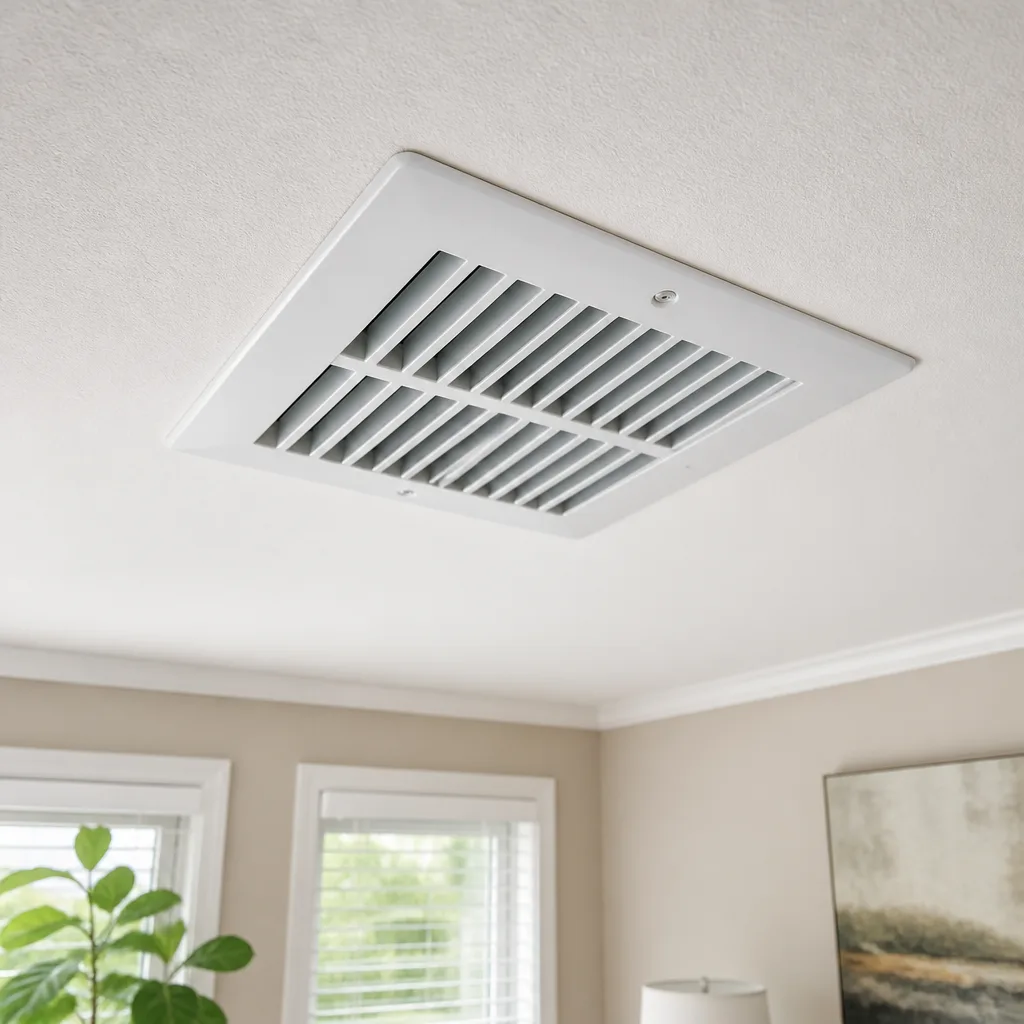 Sanitizing & deodorizing
Whole-system duct and dryer vent check with before-and-after photos - you see exactly what came out of your vents
That "$99 whole-house special" is a bait ad - the real number appears once they are in your hallway, or the "clean" is a shop-vac at the register. We photograph the inside of your ducts before and after instead.
The Complete Guide to Air Duct Cleaning in Tampa
Here’s a number that should make every Tampa homeowner pause: your AC system moves roughly 1,200 cubic feet of air per minute through your ductwork when it’s running, and in Tampa, it’s running 10 to 11 months out of the year. Now consider what’s in that air: fine sand from St. Pete beaches, pollen from South Tampa’s oak canopies, pet dander from your neighbor’s labradoodle, and the ever-present moisture that keeps Tampa’s humidity hovering near 80% from June through September. Your ducts aren’t just passive pipes. They’re a collection system, and in Tampa’s subtropical climate, that collection happens faster and holds on tighter than anywhere in the continental U.S. This guide explains what actually builds up in Tampa ductwork, what a legitimate cleaning looks like, what fair Tampa pricing is per vent, and how to verify the job was done properly, not just photographed at a flattering angle.
Quick Answer
Air duct cleaning in Tampa typically costs $349 to $649 for a standard single-system home under 2,500 square feet, with most companies pricing per vent at $25 to $45 per opening. Tampa’s climate changes the calculus: humidity-driven microbial growth and year-round AC runtime mean many local homes benefit from cleaning every 2 to 4 years, not the 3 to 5 years the EPA suggests for temperate climates. The gold standard is source-removal cleaning using HEPA-filtered negative-pressure equipment, and any company that won’t show you before-and-after photos of your actual ducts hasn’t earned your booking.
Styles & brands we work with
Table of Contents
- The Tampa Problem: Why National Duct Cleaning Advice Misses the Mark
- What’s Actually Building Up in Your Tampa Ductwork
- Source Removal vs. Blow-and-Go: The Two Very Different Duct Cleanings
- What Air Duct Cleaning Costs in Tampa: An Honest Per-Vent Breakdown
- How to Verify the Work Was Actually Done (Not Just Photographed at an Angle)
- The Relay Visibility Guarantee: Why Trackable Arrival and Written Pricing Aren’t Perks
- When You Should Actually Skip Air Duct Cleaning
- How Often Should Tampa Homeowners Really Clean Their Ducts?
The Tampa Problem: Why National Duct Cleaning Advice Misses the Mark
Most air duct cleaning guidance circulating online gets recycled from national sources. The EPA’s well-known “consider cleaning every 3 to 5 years” language was developed with temperate, four-season climates in mind: think Cleveland, Denver, or Portland. Those homes shut their HVAC systems down for months at a time. Cool, dry periods naturally suppress dust mite populations, slow mold spore activity, and give filters a break. Tampa never gets that reset button.
Your AC in Tampa logs between 3,000 and 4,000 runtime hours per year. Homes in moderate climates log half that. Every one of those hours pulls unfiltered or partially filtered air across your evaporator coil and through your duct runs. What Tampa’s climate adds that other regions don’t: persistent condensation. When cool conditioned air travels through ductwork that runs through a 95-degree attic in Carrollwood or Westchase, the temperature differential creates condensation on the inside of duct surfaces. That moisture traps particulate matter that would otherwise pass through. It’s the difference between dust that blows through a dry pipe and dust that sticks to a damp pipe. In our experience, ducts in Tampa homes accumulate a tacky, adhered layer of debris that requires mechanical agitation to remove. A vacuum alone won’t touch it.
Then there’s the microbial question. Mold spores exist in all Florida air, but they need three things to colonize a surface: organic matter for food, sustained moisture, and darkness. Tampa ductwork provides all three, especially in older homes where insulation has compressed or duct joints have loosened. We regularly see light surface growth on interior duct surfaces in homes that haven’t been cleaned in five-plus years. It’s not necessarily the toxic mold you see on the news, but it’s not something you want recirculating through your bedroom either. National guidelines don’t account for this because national guidelines assume your ducts dry out. In Tampa, they often don’t.
Understanding local conditions is the first step. The second step is understanding what a real cleaning involves, because there are two very different services being sold under the same name (see Air Duct Cleaning in Tampa).
What’s Actually Building Up in Your Tampa Ductwork
Homeowners often imagine their ducts as uniformly dusty tubes. In reality, what accumulates depends on where you live, how old your home is, and what’s already in your air. Here’s what Tampa technicians actually pull out of local duct systems, ranked by frequency:
- Construction debris: In Tampa’s newer developments, Riverside, Fishhawk, and New Tampa, homes often have drywall dust, paint overspray, and even wood scraps left in ducts from the build. Builders rarely clean ducts after construction, and those particulates circulate for years.
- Blown-in insulation particles: Attic insulation migrates into duct leaks and return plenums. Older Tampa homes with original ductwork frequently show fiberglass particles inside supply runs.
- Fine sand and soil: It may surprise people. Tampa sits on sandy soil, and homes with pets or kids track it in daily. That fine grit becomes airborne and settles in low points of duct runs.
- Pet dander and hair: Tampa has one of the highest pet ownership rates in Florida. Dander is lightweight and sticky, and it accumulates on return grilles and inside duct liners.
- Dust mite debris: Dust mites thrive in Tampa’s humidity. Their waste particles are a common asthma trigger and settle in ductwork between professional cleanings.
- Microbial growth: The dark, humid interior of Tampa ductwork is a hospitable environment for mold and mildew, particularly in systems with clogged drain pans or oversized AC units that short-cycle and never dehumidify properly.
Here’s what this means for you. A duct cleaning isn’t just about dust removal for aesthetic reasons. It’s about continuing air quality in the room where you spend the most hours: your bedroom, your living room, your home office. The air you breathe inside is largely the air your ducts deliver. If the ducts are dirty, that air is dirty. And in Tampa, where you’re likely running the AC while you sleep from March through November, that’s a meaningful exposure.
Source Removal vs. Blow-and-Go: The Two Very Different Duct Cleanings
The air duct cleaning industry has a split personality. On one side, you have companies practicing source-removal cleaning, the method formally defined by NADCA (the National Air Duct Cleaners Association). On the other, you’ve got what the trade informally calls “blow-and-go” operators, whose business model is built on a low entry price and a fast in-and-out visit. The difference matters more in Tampa than almost anywhere else, because Tampa’s adhered debris doesn’t come loose with a quick vacuum pass.
What source-removal cleaning actually involves
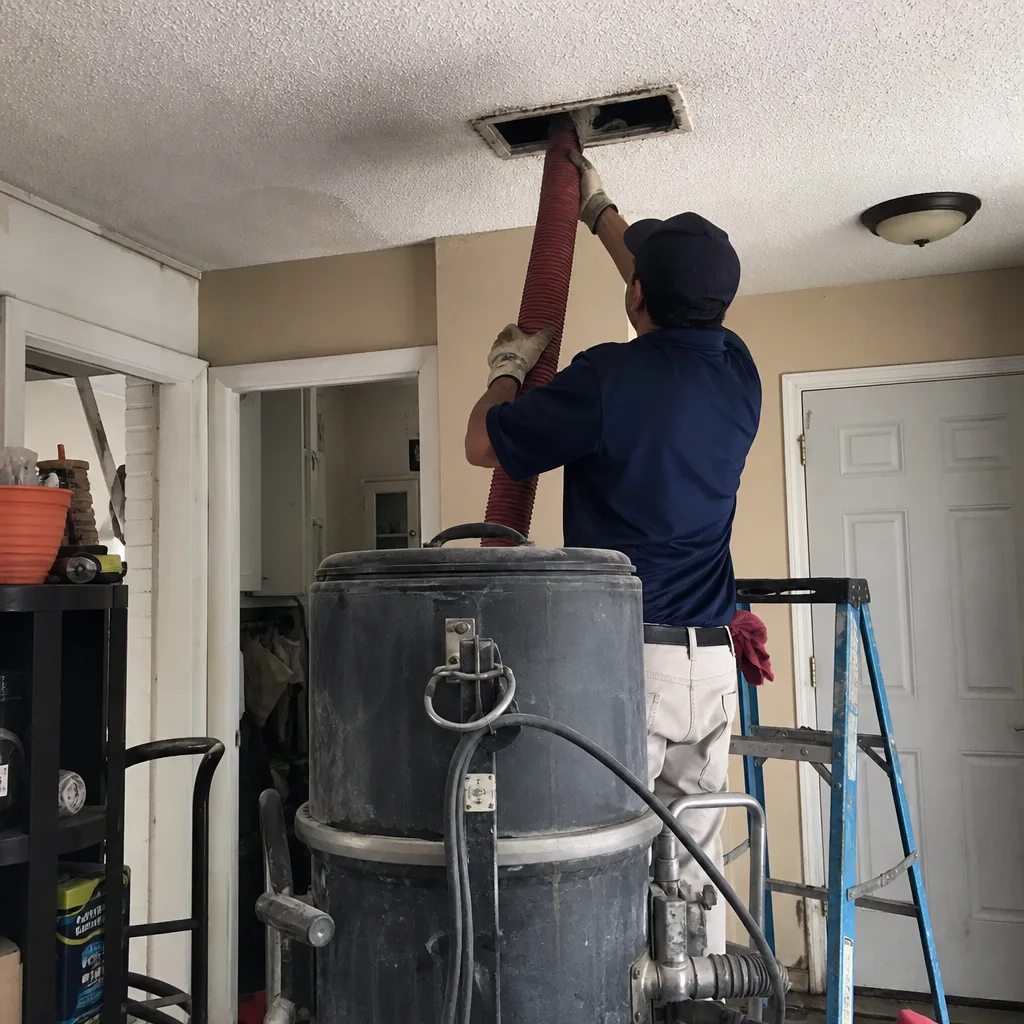
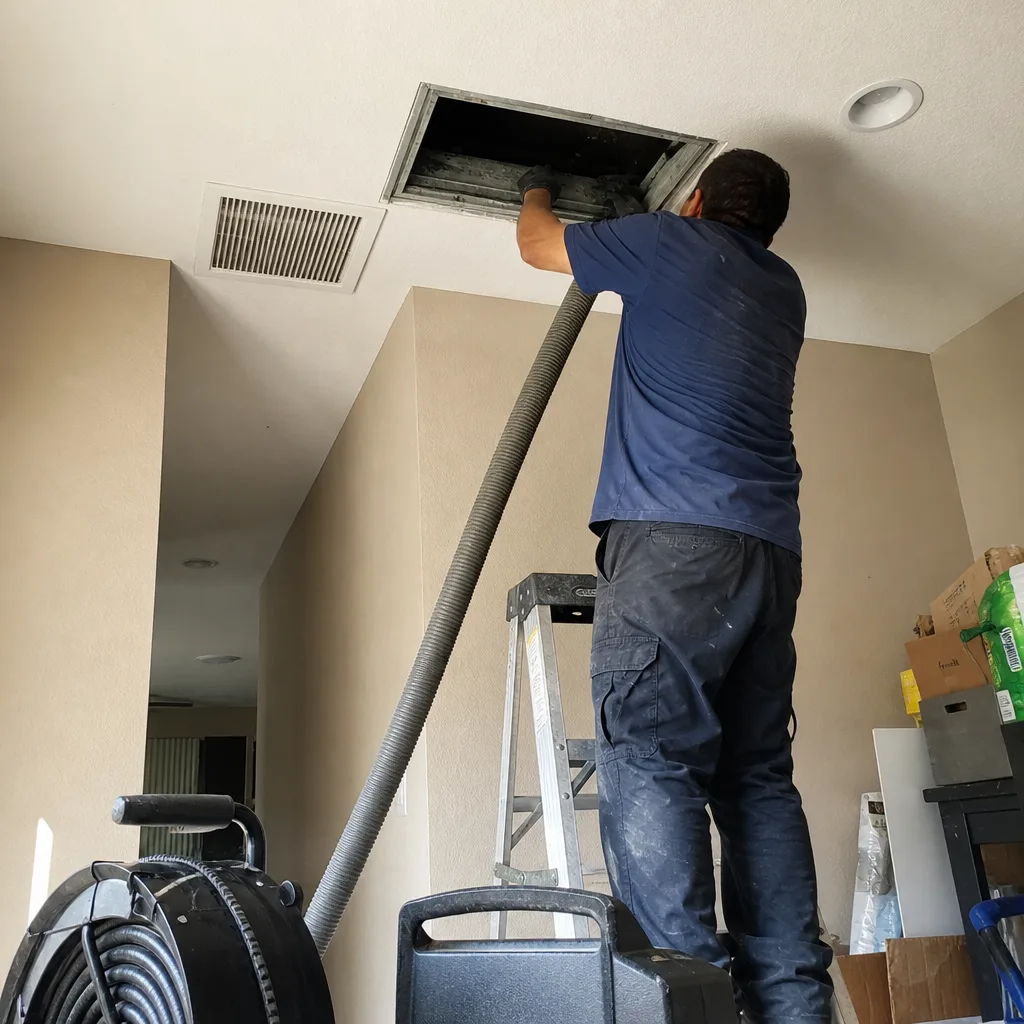
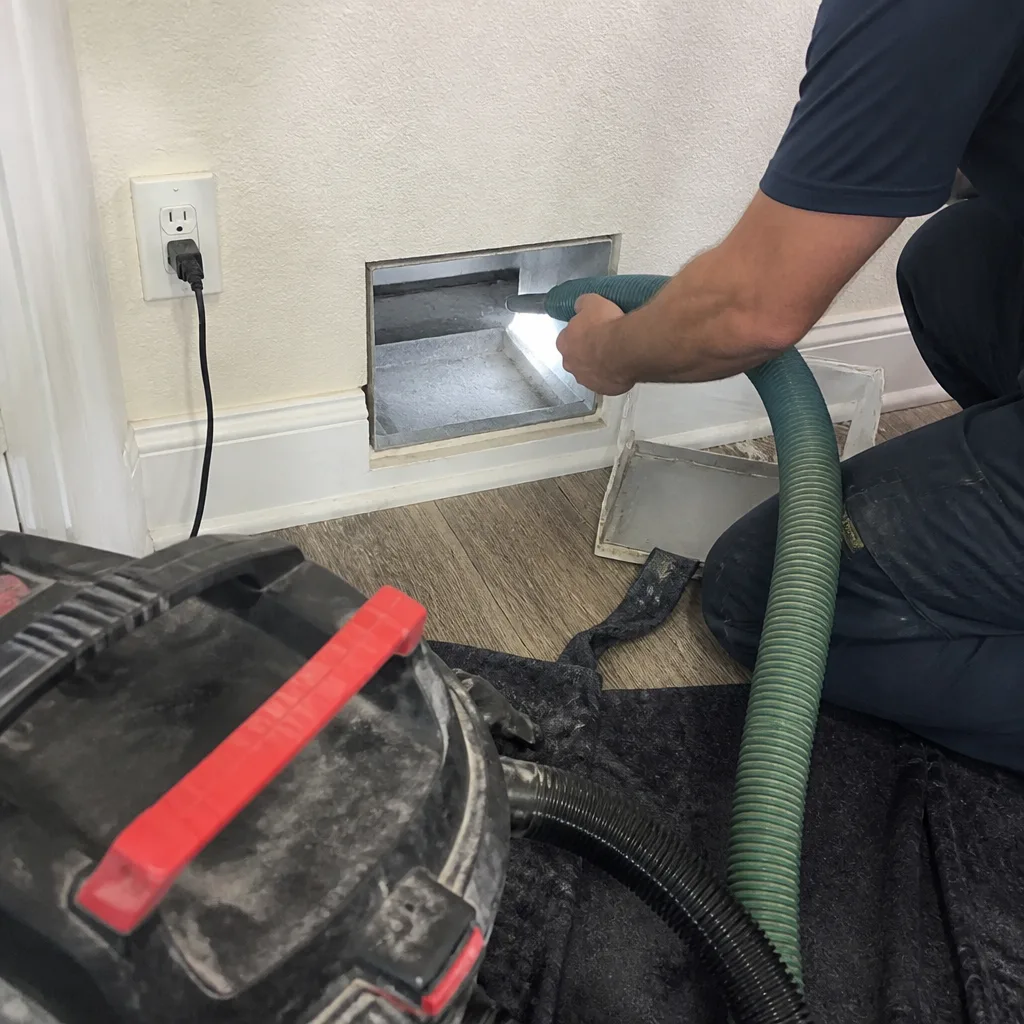
Source removal is exactly what it sounds like: the debris is removed at its source, inside the ductwork, using mechanical agitation combined with continuous negative-pressure extraction. That means the loosened debris goes straight into the vacuum, not back into your living room. A proper setup includes:
- Containment and pressure control: The system stays under negative pressure throughout the cleaning so that every particle disturbed goes toward the collection unit, never into the house.
- Mechanical agitation: Compressed-air whips, rotary brushes, or a combination of both break the debris loose from duct walls. We run Rotobrush brush systems for this, because Tampa’s humidity-baked debris needs more than a puff of air to dislodge.
- HEPA-filtered extraction: The vacuum pulling debris out must be HEPA-filtered at the point of collection. We use Nikro HEPA vacuums, which capture 99.97% of particles down to 0.3 microns. A shop vac duct-taped to a vent is not this.
- Access point creation: The technician cuts or opens proper access ports to reach every branch run, then seals them professionally afterward.
- Component cleaning: Registers, grilles, return plenums, and the blower compartment get cleaned too, not just the duct runs themselves.
What blow-and-go looks like
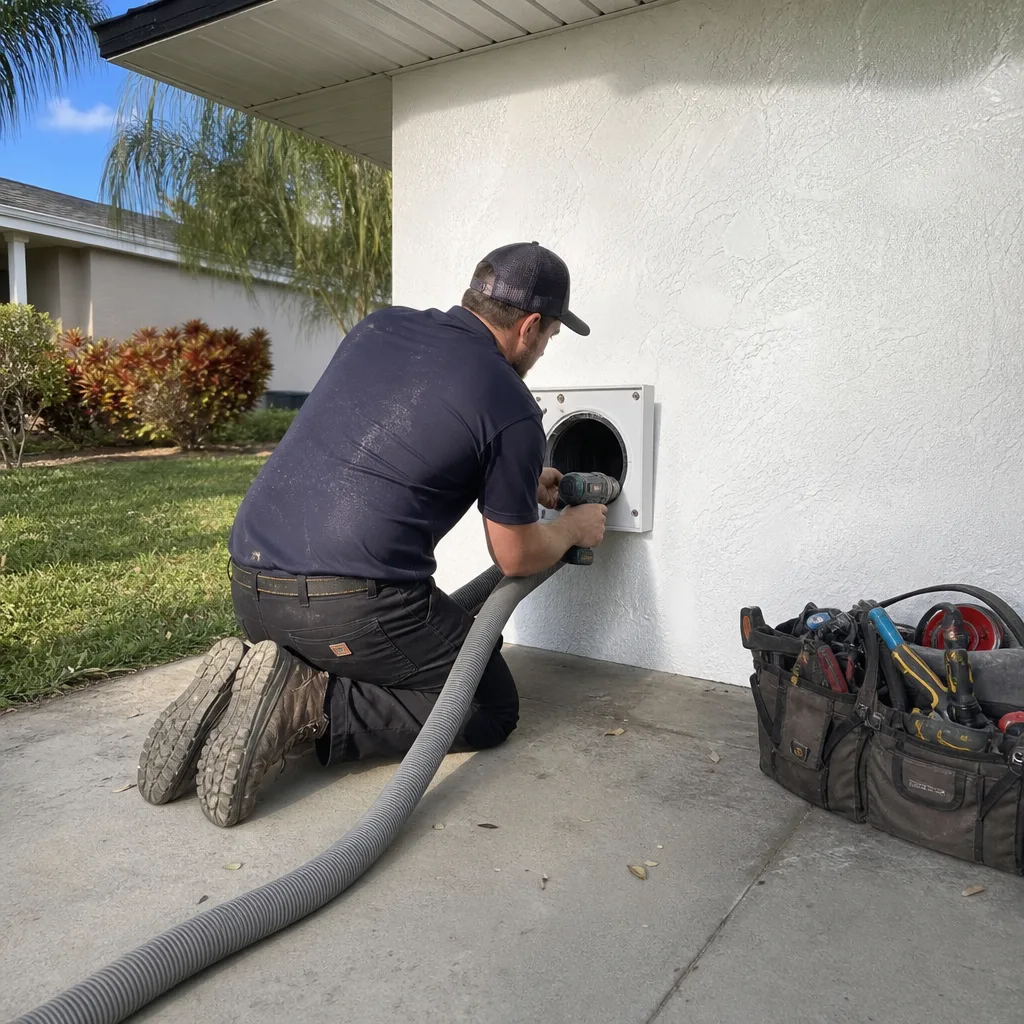
The blow-and-go model uses a portable vacuum at a single register and a rotating brush on a long flexible shaft, or sometimes just compressed air and a shop vac. There’s no full containment, no negative-pressure environment, and no meaningful extraction from most of the system. Debris gets stirred up and much of it settles back into the ducts. The customer sees a flurry of activity and a dirt-filled vacuum canister and assumes the system is clean. It isn’t.
In Tampa specifically, blow-and-go is doubly ineffective, because the humidity-cured debris layer requires genuine mechanical force to break free. A light brush pass simply doesn’t do it. If you’re comparing quotes in Tampa and one is dramatically cheaper than the others, the most likely explanation is that you’re comparing these two methods.
This is also where equipment brands become a useful signal. Professional-grade setups from Rotobrush, Nikro, and Abatement Technologies exist because the method requires them. A company that shows up with a portable vacuum and a drill attachment isn’t performing the same service, regardless of what the invoice says. We run Abatement Technologies containment units when needed, because in tight attic spaces common in Tampa bungalows off Bayshore, you can’t risk releasing particulate into the home’s living space.
What Air Duct Cleaning Costs in Tampa: An Honest Per-Vent Breakdown
Let’s skip the mystery pricing that plagues this industry and give you real Tampa numbers. Here’s what you should expect to pay for a legitimate source-removal cleaning in the Tampa Bay area, as of current market rates:
Typical Tampa pricing structures
- Per-vent pricing: Most Tampa companies quote per vent or per opening. Expect $25 to $45 per supply and return vent. A standard 2,000-square-foot Tampa home has 10 to 14 vents, putting the total at $250 to $630 for basic cleaning.
- Flat-rate system pricing: Some companies, including Cardinal Air Duct Tampa, quote one flat price per system based on home size and number of vents, agreed before work starts. For most Tampa homes under 2,500 square feet, that lands between $349 and $649 for a complete single-system cleaning.
- Additional system components: If you add the air handler, evaporator coil, and blower compartment, expect $150 to $350 more. In Tampa’s humid environment, coil cleaning is often worth it, since biological growth on the coil is common.
- Dryer vent cleaning add-on: Usually $75 to $150 when bundled with duct cleaning. We offer this as a separate service too (see Dryer Vent Cleaning in Tampa).
What’s the catch with companies advertising $99 whole-house cleanings? There isn’t a scenario where a legitimate source-removal cleaning with HEPA extraction costs $99. That price covers, at best, a quick visual inspection and maybe three or four vents. The rest gets upsold once the tech is in your driveway. The industry’s bait-and-switch reputation is real and well-earned, and it’s exactly why we put a written price in your hand before a single duct is touched. One flat price per system. No per-vent games. No add-on pressure at the door.
You can read the full breakdown of current Tampa pricing and what drives cost differences in our Cardinal Air Duct Tampa home page.
How to Verify the Work Was Actually Done (Not Just Photographed at an Angle)
Before-and-after photos are the industry’s preferred proof of work, but a poorly lit “after” shot from five feet back tells you nothing. Here’s how to verify the job was actually done correctly, even if you never climb into your attic:
- Demand same-angle, same-vent photos. A legitimate before-and-after set shows the exact same vent, photographed from the exact same angle, with visible debris in the “before” and clean metal or fiberboard in the “after.” If the before photo shows a different vent than the after, ask why.
- Look for the access points. Real source-removal cleaning requires cutting access holes to reach branch runs. The after photos should show those access points sealed with metal patches and aluminum tape or mastic. If there are no sealed access points visible, ask how they reached the branches.
- Check the register photos. Your supply registers and return grilles should look visibly cleaner. Not just dusted, but actually cleaned of the gray film that accumulates over years. If the grilles in the after photos look untouched, the crew skipped component cleaning.
- Inspect the return plenum. The return side of your system pulls air in and is typically the dirtiest part. A competent cleaning includes before-and-after documentation of the return plenum. This is a detail most blow-and-go operators conveniently forget to photograph.
- Ask about the HEPA filter change. If the company is running HEPA-rated extraction equipment, that filter sees everything pulled from your home. Ask to see the filled collection canister or filter before it’s cleaned out. It should contain visible Tampa-grade debris: dust, pet hair, insulation fragments.
This is where The Relay Visibility Guarantee changes the transaction. Every Cardinal Air Duct Tampa booking includes before-and-after photo documentation as standard, delivered with your digital invoice. You don’t have to remember to ask, and you don’t have to wonder whether the photos you’re looking at are real. They show your vents, your access points, your return plenum. If the work isn’t done right, the 365-Day Done Right Promise covers a return visit at no charge. That’s the mechanism: not a vague “satisfaction guaranteed” slogan, but a one-year, no-excuses correction window.
The Relay Visibility Guarantee: Why Trackable Arrival and Written Pricing Aren’t Perks
Home services have a predictability problem. You book a window, the tech arrives three hours late, the price changes after the diagnostic, and the invoice arrives on a carbon-copy pad that you have to photograph and Zelle payment for. The Relay Standard exists because no one should have to navigate that with a service as easy to fumble as duct cleaning.
Here’s what The Relay Visibility Guarantee looks like in practice, structured into the booking itself:
- Live trackable arrival time: When we dispatch a technician to your home in Tampa, you get a live link showing where the van is and when it arrives. Not a four-hour window. A live location. You’re not waiting by the door; you’re doing your actual life until we’re genuinely on the way.
- Written price before work starts: The price is calculated and written down before any equipment comes off the van. It doesn’t change at the door. No upsell pressure, no per-vent runaround, no bad surprises. The number you’re handed is the number on the invoice.
- Before-and-after photo proof: Documented at every vent, every access point, and every component we touch. You get those photos with your invoice, and you can keep them forever.
- Digital invoice payable by link: Fully phone-native. Tap the link, pay the invoice, done. No carbon copy, no checkbook, no “sorry, our card reader is down.”
If you’re comparing Cardinal Air Duct Tampa to another local company, ask them this: “Will I get a live trackable arrival time and a written price before you start?” Most companies won’t answer that question directly, because they can’t. That’s the real difference. And if you’re also considering full HVAC cleaning, we cover that too (see HVAC Cleaning in Tampa).
When You Should Actually Skip Air Duct Cleaning
We’ve been in this trade long enough, and served enough Tampa homes, to tell you honestly when duct cleaning isn’t worth your money. There are scenarios where the right answer is “not yet.”
- You just had new ducts installed: New ductwork doesn’t need cleaning. If the installers left construction debris inside, that’s an installation defect, not a cleaning issue. Call the installer back.
- The real problem is your leaky returns: If your ducts are pulling air from a moldy, unsealed attic, cleaning them won’t help. The leaks need sealing first. A honest technician will flag this before selling you a cleaning. We do, and it costs us bookings, but it’s the right call.
- Your filter has been missing for years and the coil is destroyed: If the AC hasn’t had a filter and the evaporator coil is a solid block of biofilm, cleaning ducts is treating a symptom. The coil needs attention first.
- You’re selling the home and the buyer isn’t asking: Duct cleaning doesn’t meaningfully increase home value and won’t show up in a standard inspection. Spend the money on the visible fixes buyers actually notice.
The theme here is simple: clean ducts when ducts are the problem, not as a reflex. A company that always says “yes, clean them” is selling appointments, not solutions. We’d rather lose a job than do one that serves no purpose. Tampa has enough bait-and-switch in this industry already.
How Often Should Tampa Homeowners Really Clean Their Ducts?
Here’s the honest answer, adjusted for Tampa’s climate and the reality of local home construction:
- New construction or major renovation: Clean once, immediately after construction dust has settled. Seminole Heights bungalow renovations and South Tampa tear-downs both generate enormous particulate loads that builders never remove.
- Homes with shedding pets and AC running 10+ months: Consider cleaning every 2 to 3 years. Pet dander is lighter and stickier in humid air, and it doesn’t just pass through.
- Homes with allergy or asthma sufferers: Every 2 to 3 years, and pay attention to whether symptoms improve after cleaning. If they don’t, the issue may be the AC coil, not the ducts, and that points toward HVAC Cleaning in Tampa as the next step.
- Typical Tampa home with no pets, no allergies, AC runs normally: Every 3 to 4 years is defensible, but inspect registers and returns annually. If you see visible gray film on grilles, dust streaking on walls near vents, or you smell mustiness when the AC cycles on, the schedule moves up.
- After water intrusion or flooding: Immediately. Tampa’s hurricane season brings water where it shouldn’t be, and wet ducts are a mold time bomb. If your home took water in the attic or HVAC closet, get it inspected before you run the system again.
One more Tampa-specific note. If you run your AC on “fan on” rather than “auto,” you move air continuously, which sounds like it should help air quality, but in practice it means your ducts collect whatever’s in your air supply all day long and re-humidify continuously. It’s a common setting among Tampa homeowners trying to even out temperature differences between floors. Just know it shortens the interval between cleanings.
Common Mistakes to Avoid
- Trusting a “$99 whole-house special” from a mailer: Tampa mailboxes get flooded with these coupons. A legitimate source-removal cleaning cannot be done for that price, period. You’re either getting a sales visit or a blow-and-go job.
- Confusing AC servicing with duct cleaning: Your annual AC tune-up is not the same thing as duct cleaning. One cleans the mechanical components; the other cleans the air delivery system. Ask explicitly which service you’re getting.
- Assuming clean-looking registers mean clean ducts: The register is the last six inches. The duct run behind it can be carrying a decade of debris. Look beyond the grille.
- Skipping the dryer vent because it’s “different”: It is different, but it’s equally important. Tampa’s humidity plus dryer lint equals a genuine fire risk. Bundle it with your duct cleaning or schedule it separately, but don’t ignore it. See Dryer Vent Cleaning in Tampa for specifics.
- Not asking about equipment: Any company can say they do “professional duct cleaning.” Ask what they run. If you hear “shop vac” or “portable unit” without brands like Rotobrush or Nikro behind them, ask more questions.
- Paying before seeing proof: No legitimate company requires payment before the before-and-after photos exist and you’ve seen them. If the tech wants payment at the start, that’s a red flag.
- Assuming newer homes don’t need it: New Tampa construction is often loaded with drywall dust and paint particulates from the build phase. Some of the dirtiest ducts we see are in homes under five years old.
See the difference
 Before
 After
After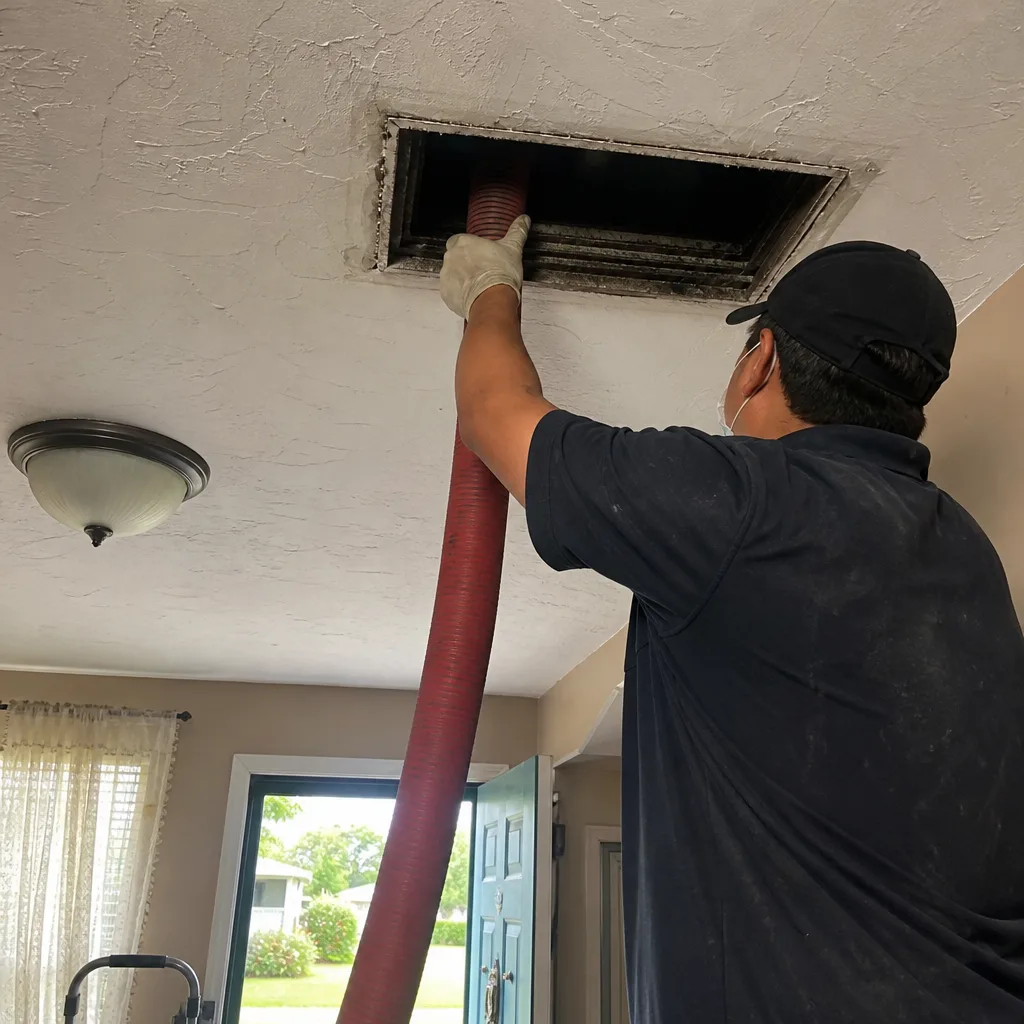 Before
 After
After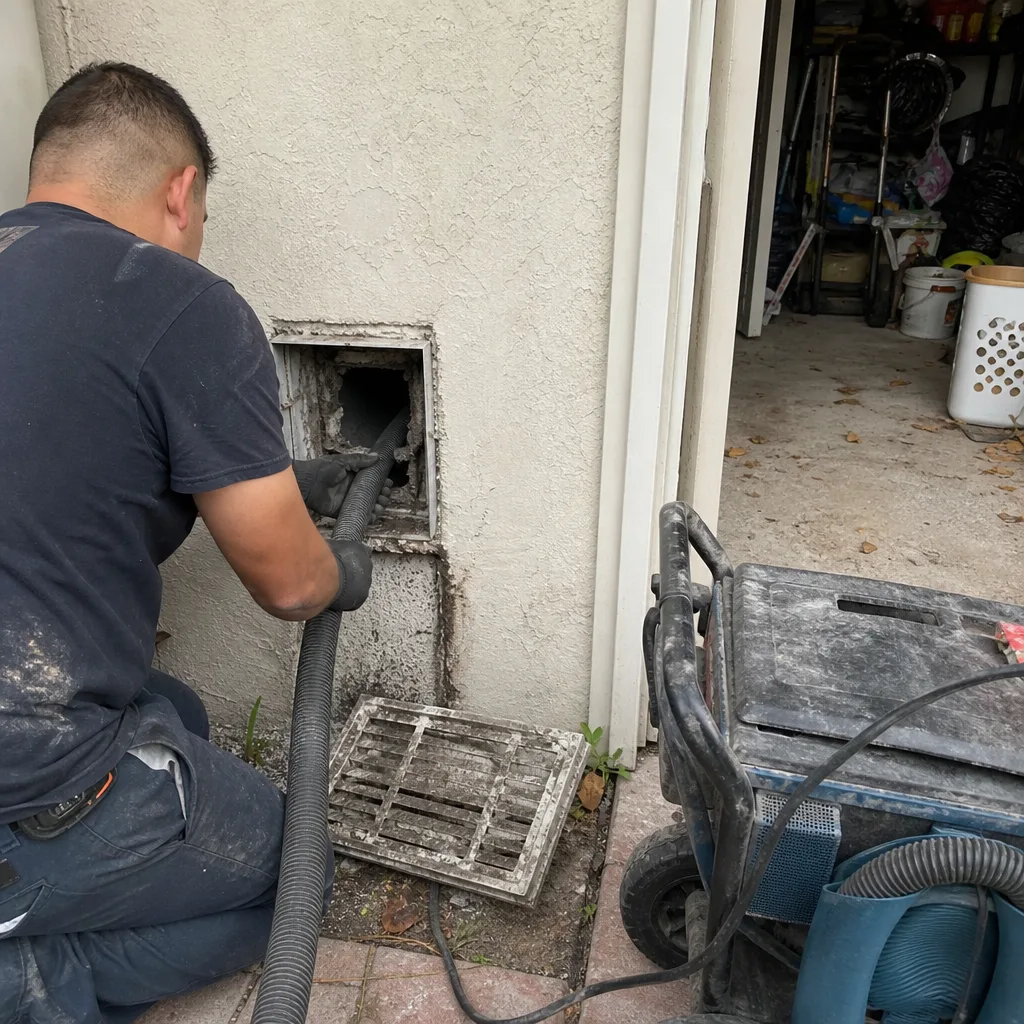 Before
 After
AfterWhen to Call a Professional
Call a professional when you see dust streaking on walls or ceilings near supply vents, when you smell a musty odor that kicks in with the AC, when your registers show visible gray or black film, when anyone in the household has unexplained allergy symptoms that improve away from home, or when you’ve had construction, renovation, or water intrusion. If you’re not sure whether your ducts need attention, the fastest way to know is a visual inspection. Cardinal Air Duct Tampa offers free estimates in Tampa, and we’ll show you photos of what’s actually inside your ducts before recommending anything. Call (850) 403-3474 to schedule. A live person answers, and you’ll have a written price in hand before any work begins.
Frequently Asked Questions
For a standard Tampa home under 2,500 square feet, expect $349 to $649 for a complete source-removal cleaning with HEPA extraction. Per-vent pricing typically ranges $25 to $45 per opening. Add $150 to $350 if you include the air handler and evaporator coil. Call (850) 403-3474 for an exact written quote, free of charge.
Because they’re not for the same service. A $99 or $149 quote is almost always a blow-and-go job: a vacuum attached to one register, no negative-pressure containment, no access points cut, no meaningful cleaning of branch runs. The price difference reflects the method difference. A legitimate source-removal cleaning takes hours and uses professional equipment, which costs more. The cheaper quote isn’t a better deal; it’s a different product.
Demand same-angle, same-vent before-and-after photos showing visible debris before and clean surfaces after, plus photos of sealed access points and a cleaned return plenum. The photos should show your actual vents, not stock images. We deliver photo documentation with every invoice as standard.
In Tampa’s year-round AC climate, every 2 to 4 years for most homes. Homes with pets, allergy sufferers, or post-renovation conditions may need cleaning every 2 to 3 years. New construction should be cleaned once immediately after move-in. Call (850) 403-3474 for a free inspection and a straight recommendation, even if we tell you you don’t need it yet.
Yes, with nuance. A good filter protects your AC equipment, but it doesn’t prevent accumulation inside the ductwork downstream. In Tampa’s humid environment, the debris that does pass through sticks and builds up. A filter changes the rate of buildup; it doesn’t eliminate the need for eventual cleaning.
Dirty ducts can contribute to irritation for people with asthma, allergies, or respiratory sensitivities, particularly when they’re circulating dust mite waste, pet dander, or microbial particles. We won’t make medical claims, but we can tell you that in Tampa’s humidity, what accumulates in ducts is more biologically active than dry-climate dust. Cleaning it out creates a genuinely cleaner air stream.
The Bottom Line
Tampa’s climate doesn’t play by national duct cleaning rules. Year-round AC runtime, persistent humidity, and sandy, pollen-laden air mean ducts here collect debris faster and hold it tighter. A legitimate cleaning requires source-removal methods with HEPA extraction and mechanical agitation. A written price, live trackable arrival, and before-and-after photo proof aren’t add-ons; they’re the baseline for what a trustworthy service should be. If you’re going to clean your ducts, clean them right, verify the work, and pay a fair Tampa price, not a teaser with strings attached. Cardinal Air Duct Tampa is part of the Relay Home Co. family, founded 2005, and we hold every job to The Relay Visibility Guarantee. Call (850) 403-3474 for a free estimate, and you’ll have a written price before any work begins.
Written by Omar Haddad, Owner at Cardinal Air Duct Tampa, serving Tampa since 2005.