
Last updated October 15, 2026
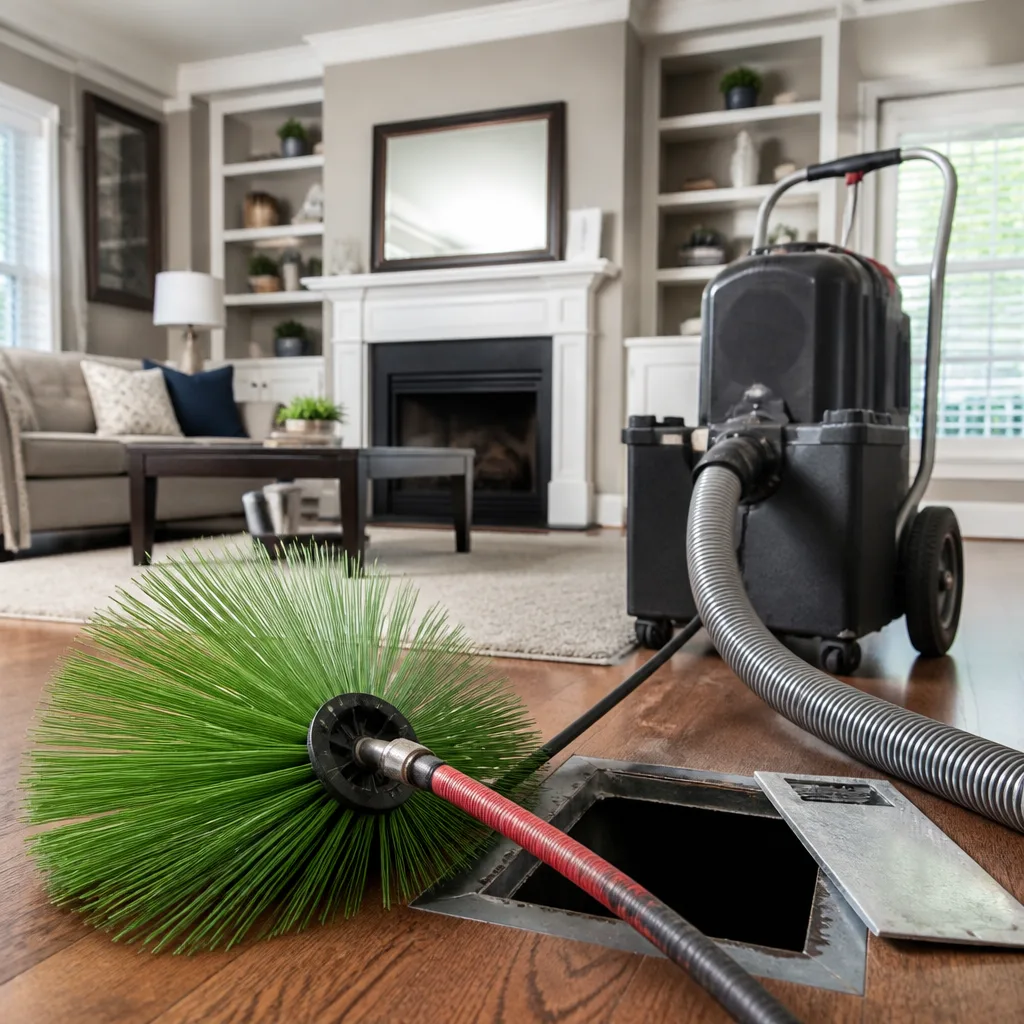 Whole-home duct cleaning
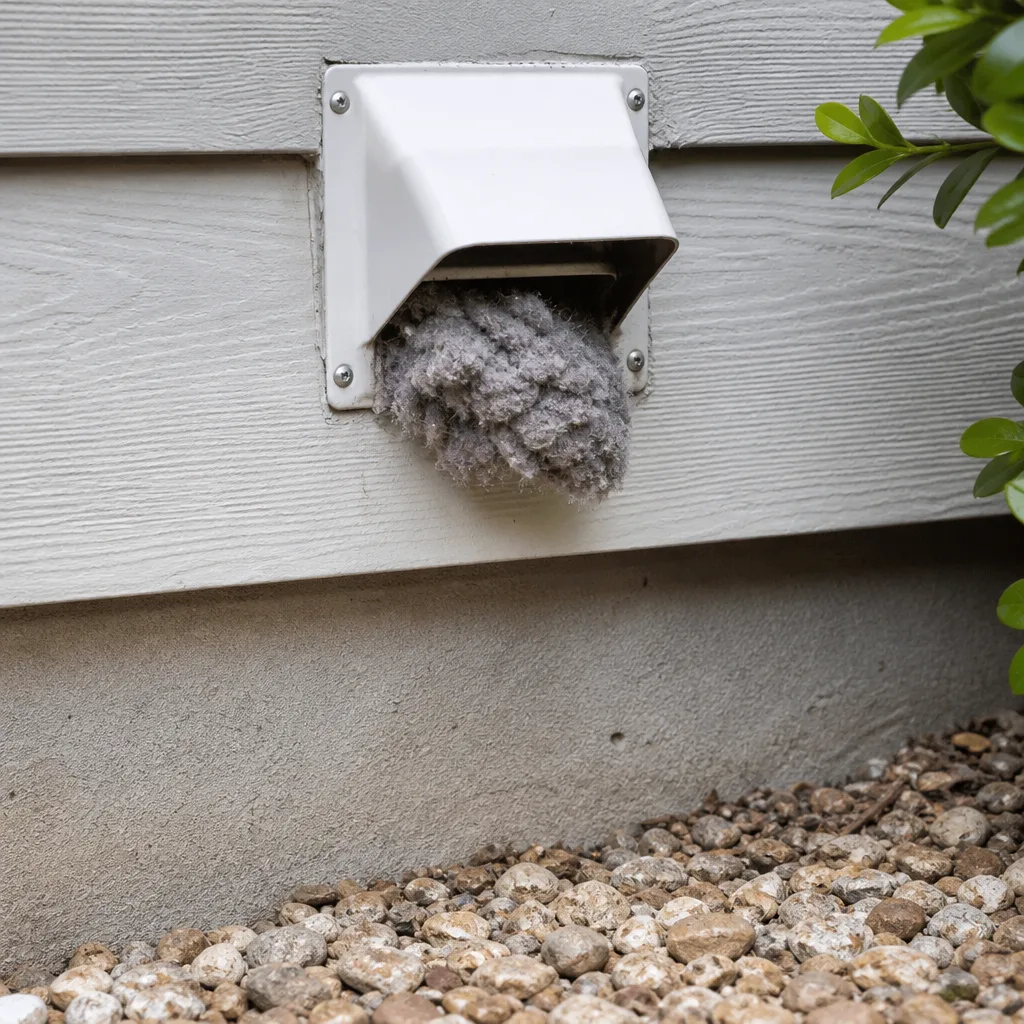 Dryer vent cleaning
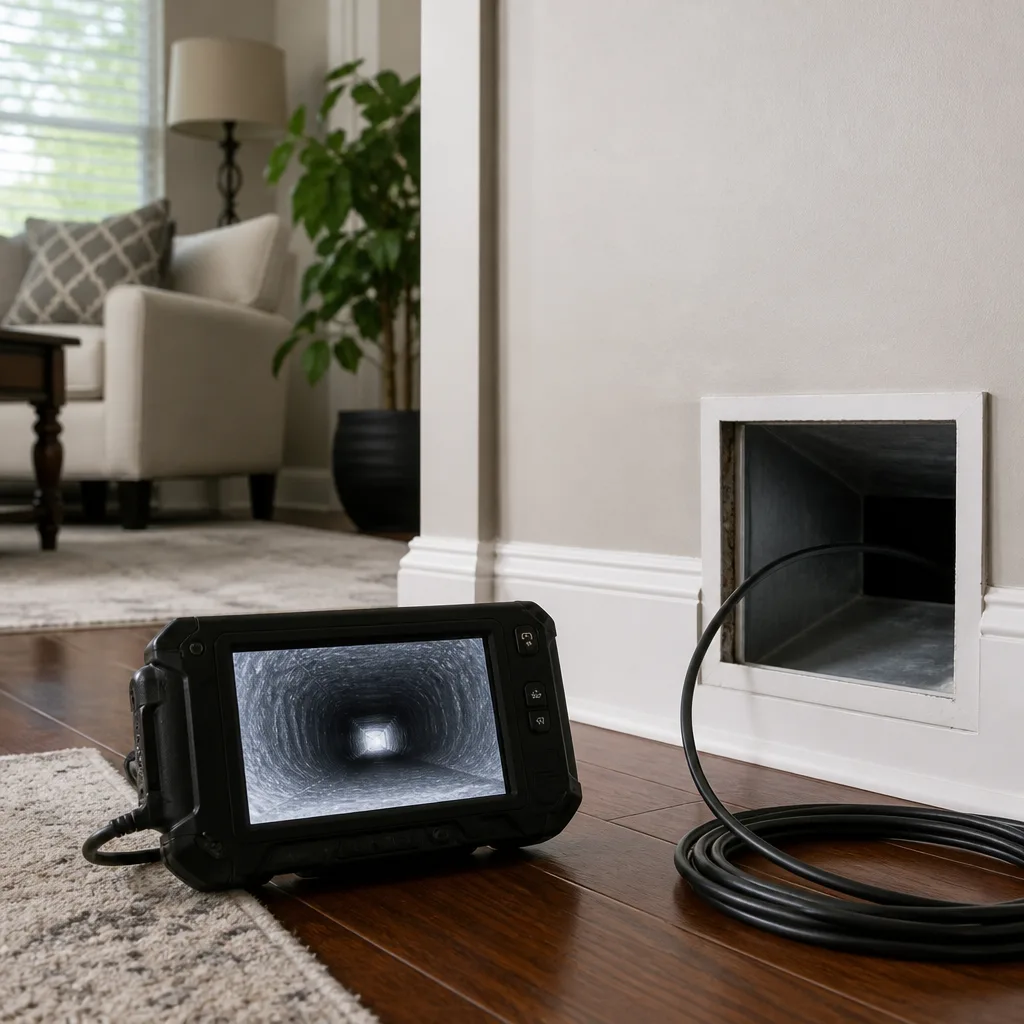 Camera inspection
 Sanitizing & deodorizing
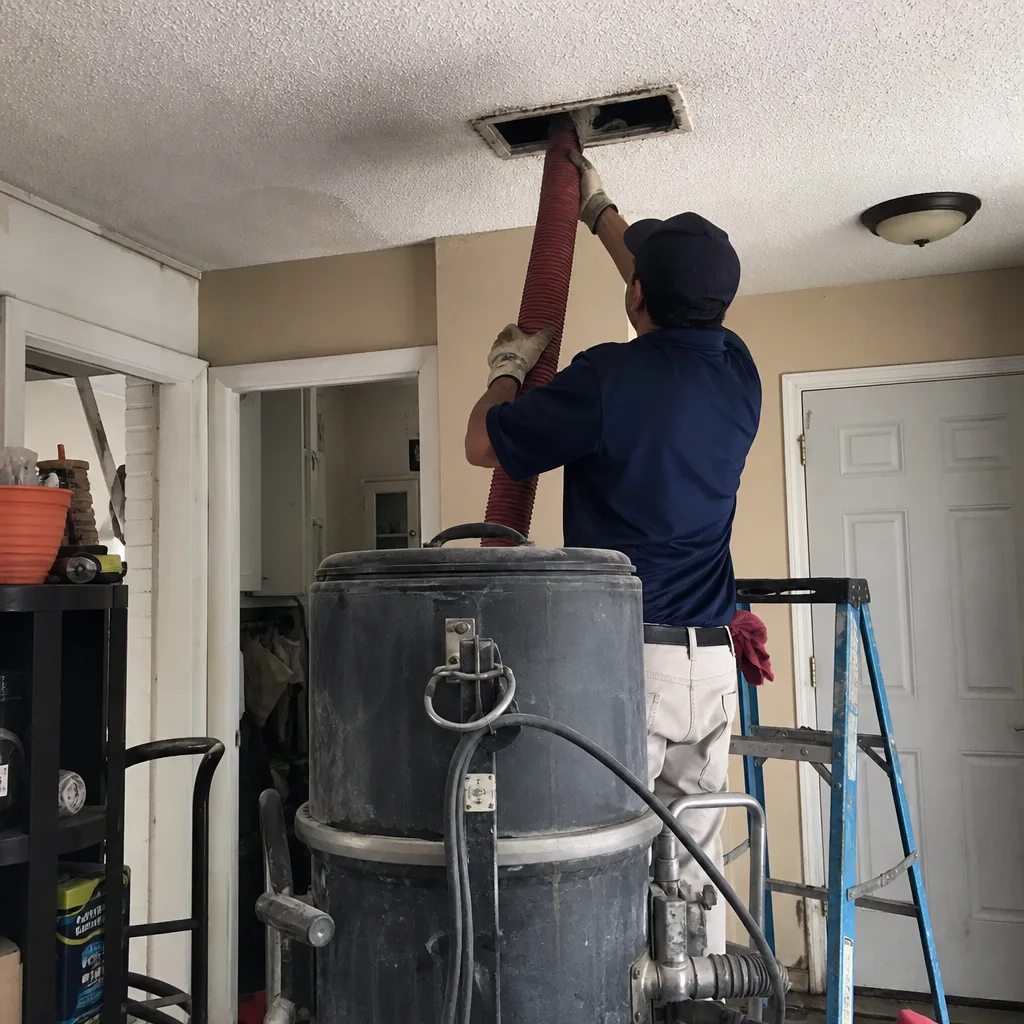
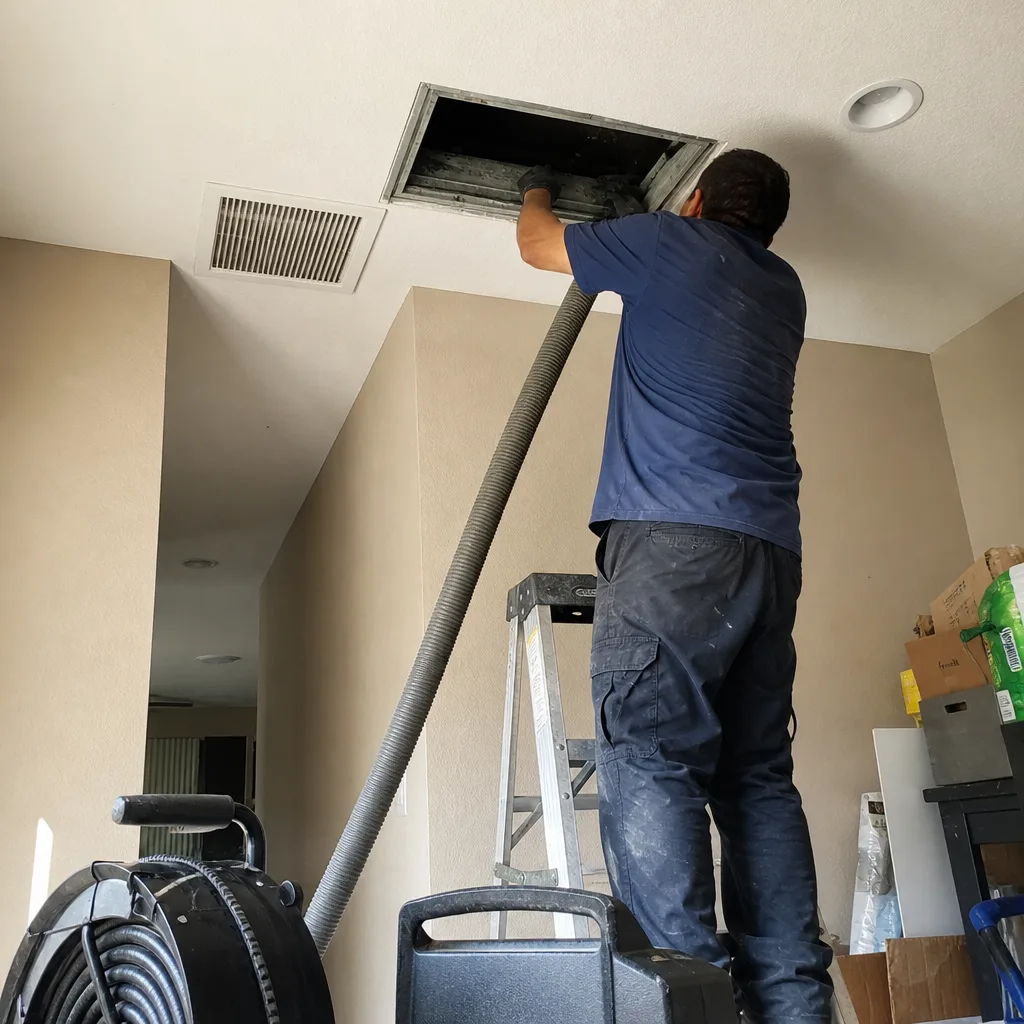
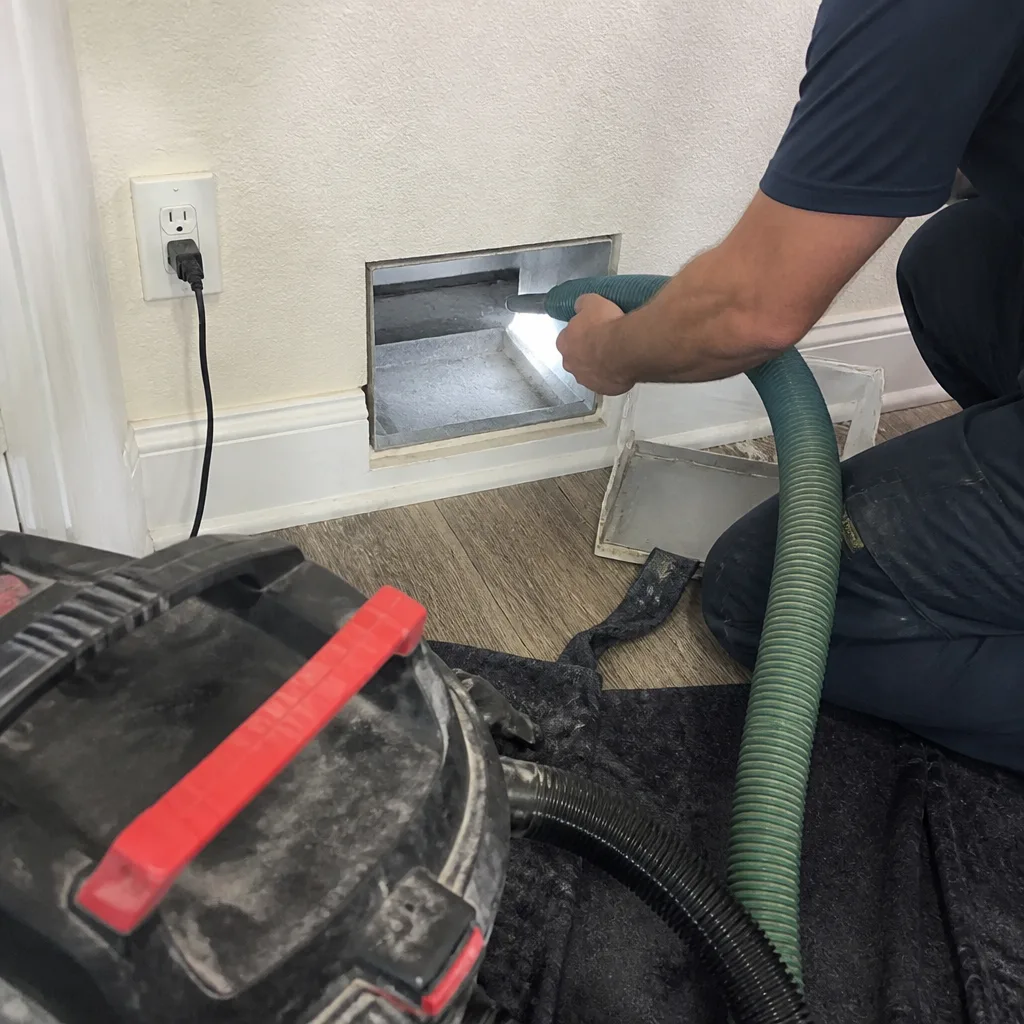
Whole-system duct and dryer vent check with before-and-after photos - you see exactly what came out of your vents
That "$99 whole-house special" is a bait ad - the real number appears once they are in your hallway, or the "clean" is a shop-vac at the register. We photograph the inside of your ducts before and after instead.
Air Duct Cleaning Permits, Codes & Inspections in FL: What You Need to Know
Here’s a stat that surprises most Tampa homeowners: a technician applies an antimicrobial coating inside your ductwork, and if that product isn’t EPA-registered for exactly that use, the job just became a federal violation under FIFRA (the Federal Insecticide, Fungicide, and Rodenticide Act). Not a county code issue. Federal. Most duct cleaning companies in Tampa never mention this because most don’t know it. Air duct cleaning itself sits in a strange legal gray zone in Florida: no permit required for the cleaning, but the moment a job crosses into modification, chemical application, or mold remediation, the rulebook changes. This guide draws the exact line, section by section, so you can ask the right questions before anyone touches your system. For more detail, see The Complete Guide to Air Duct Cleaning in Tampa.
Styles & brands we work with
Quick Answer
Air duct cleaning does not require a permit in Florida, and there is no state license specifically for duct cleaners. However, any duct modification (replacing sections, resizing, sealing with non-cleaner products), any application of antimicrobials or sealants, and any visible mold remediation fall under separate Florida statutes that require HVAC licensing, EPA product registration, or a licensed mold remediator under Chapter 468. Plain cleaning? No permit. Anything beyond cleaning? The regulatory picture changes fast.
Table of Contents
- Florida Statutes: Cleaning vs. Modification – Where the Legal Line Sits
- FIFRA Compliance: Antimicrobials, Sanitizers, and Sealants Inside Ductwork
- Mold Remediation Licensing in Florida: Chapter 468 and Visible Mold in Ducts
- HOA and Condo Board Rules in Tampa: Duct Access in Multi-Unit Buildings
- What to Ask for in Writing Before Any Chemical Application
- Post-Cleaning Inspections: What a Legitimate Verification Looks Like
- Common Mistakes to Avoid
- When to Call a Professional
- Frequently Asked Questions
- The Bottom Line
Florida Statutes: Cleaning vs. Modification – Where the Legal Line Sits
Florida draws a distinction that most homeowners never hear about. Cleaning your air ducts is classified as maintenance, not construction. That means no building permit, no state duct cleaning license, and no requirement to pull anything from the city of Tampa’s permitting office. The work is treated the same way as carpet cleaning or window washing.
But here’s the line: Florida Statute 489.105 defines HVAC contracting as the installation, maintenance, repair, alteration, or extension of an air conditioning system. Replacement of duct sections, resizing a plenum, modifying the return drop, or cutting into the trunk line all qualify as alteration. The moment a technician does any of that, they’re performing HVAC contracting work, which requires a state-certified or state-registered contractor license.
In Tampa, this matters because so many older homes in neighborhoods like Seminole Heights, Palma Ceia, and Carrollwood still have original duct runs from the 1970s and 1980s. Those systems sometimes need more than cleaning. A fiberglass duct board that’s crumbling needs replacement, not a brush. If a duct cleaner offers to “patch” a section with tape and mastic, that’s not cleaning anymore. That’s repair work, and Florida requires a licensed contractor to do it.
What does this mean for you as a homeowner in Tampa? Ask one question before the job starts: “Is any part of this going to involve replacing, cutting, or modifying duct sections?” If the answer is anything other than a flat no, verify the technician holds a Florida HVAC license. Our team at Cardinal Air Duct Tampa home cleans and inspects ducts, and when we find damage that needs modification, we tell you it needs a licensed HVAC contractor. We don’t blur the line. That’s how the line is supposed to work.
FIFRA Compliance: Antimicrobials, Sanitizers, and Sealants Inside Ductwork
This is the section where competitors go quiet. FIFRA, the Federal Insecticide, Fungicide, and Rodenticide Act, regulates any product that claims to kill or inhibit microorganisms. That includes antimicrobial coatings, sanitizers, disinfectants, and fungicides marketed for use inside HVAC systems. Every single product in this category must carry an EPA registration number. If the label doesn’t have one, applying it inside your ducts is a federal violation.
Here’s the part most Tampa homeowners don’t realize: even EPA-registered products have use restrictions. A product registered for use on hard, non-porous surfaces (like bathroom tile) is not automatically registered for use inside porous fiberglass duct liner. The EPA registration specifies where, how, and by whom a product can be applied. A technician spraying an EPA-registered tile sanitizer into your ductwork is using the product off-label. That’s a violation of federal law, not just a bad practice.
So how do you verify compliance? Three steps:
- Ask for the product’s EPA registration number before any chemical is applied to your ducts.
- Look up that number on the EPA’s online Pesticide Product and Label System. The label will state whether HVAC ductwork is an approved use site.
- Ask for the product’s Safety Data Sheet (SDS) and keep a copy. It lists health hazards, ventilation requirements, and protective equipment the applicator must use.
At Cardinal Air Duct Tampa, we don’t apply antimicrobials unless the homeowner specifically requests them and we’ve confirmed the product is registered for the exact use. Even then, we provide the EPA registration number and SDS in writing before anything touches your ducts. No surprise chemicals. No off-label applications. That’s the standard every company doing this work in Tampa should meet.
Mold Remediation Licensing in Florida: Chapter 468 and Visible Mold in Ducts
Florida has some of the strictest mold remediation licensing laws in the country, and the intersection with duct cleaning catches homeowners by surprise. Florida Statutes Chapter 468, Part XVI requires that any person or company performing mold remediation – defined as the removal, cleaning, sanitizing, or treatment of mold that covers more than 10 square feet – hold a mold remediator license from the Florida Department of Business and Professional Regulation.
Here’s the key question: is the mold inside your ducts or on your air handler? If a technician opens your return vent, sees visible mold growth on the interior surfaces, and starts scrubbing it as part of a “duct cleaning,” that’s mold remediation. If the affected area is over 10 square feet, or if the mold is on the air handler itself, that work requires a licensed mold remediator in Florida. A duct cleaner without that license performing the work is violating state law.
For Tampa homeowners, the climate makes this more relevant than in most states. High humidity from May through October creates exactly the conditions mold thrives in. Air handlers in unconditioned garages (common in Tampa homes built before the 1990s) are especially vulnerable. We’ve seen systems in South Tampa where condensation on the cooling coil kept the blower cabinet damp for months. By the time we opened the access panel, the visible mold growth was well past the 10-square-foot threshold.
The responsible approach: if you suspect mold in your ducts or air handler, have a visual inspection done first. A legitimate air duct cleaning in Tampa should include a camera inspection before any cleaning begins. If mold is found, the technician should tell you whether it crosses the Chapter 468 line. If it does, you’ll need a licensed mold assessor and remediator. We refer those jobs out because the law requires it, and we’d rather lose that work than put you at legal risk.
HOA and Condo Board Rules in Tampa: Duct Access in Multi-Unit Buildings
Tampa’s multi-unit housing market has its own regulatory layer, and it’s one that state law doesn’t cover. High-rises in Hyde Park, Channel District condos, and Westshore apartment buildings all have governing documents that control access to mechanical systems. In many condo buildings, the air handler in your unit is your responsibility, but the duct risers (the vertical shafts that carry air between floors) are common elements. Those are the HOA’s responsibility.
What does this mean for duct cleaning? Before any work begins, the technician needs to know which parts of the system are unit-owned and which are common-element. Serving a rooftop packaged unit? That’s almost certainly common property managed by the association. Cleaning the flexible ducts in your own unit? That’s usually your call, but the building’s management office may still require insurance certificates from the cleaning company before authorizing access.
Practical advice for Tampa condo owners: request a copy of your building’s “declaration of condominium” access rules before booking. Most buildings require:
- A certificate of insurance from the duct cleaning company naming the association as additionally insured
- Advance notice (often 48-72 hours) before any mechanical work in the unit
- Specific hours during which service elevators or mechanical rooms can be accessed
- Written confirmation that the technician will not access common-element ducts without board approval
We handle this paperwork regularly for condo buildings across Tampa, from Bayshore Boulevard high-rises to newer mid-rises in Seminole Heights. The process isn’t complicated; it just requires knowing which forms your building wants before the technician arrives. Ask us to check with your building manager ahead of time. It saves you a canceled appointment.
What to Ask for in Writing Before Any Chemical Application
If any chemical is going inside your ductwork – an antimicrobial, a sanitizer, a sealant, an encapsulant – you want a paper trail before the work starts, not after. A paper trail protects you if the product causes respiratory irritation, damages your HVAC system, or triggers a homeowners insurance claim that your insurer questions.
Here’s the exact list to request in writing before you sign anything:
- EPA registration number for every product that will be applied. No number? No chemical application. Simple.
- The product’s EPA-approved label showing that HVAC ductwork is a listed use site. If the label doesn’t say ductwork, don’t let it be applied.
- Safety Data Sheet (SDS) for each product. This document states re-entry times, ventilation requirements, and health hazards. If the technician can’t produce it, call the company and demand it.
- The applicator’s name and qualifications. Some antimicrobial products are “restricted use,” meaning only certified applicators may apply them. Ask for proof of certification if the product requires it.
- A written description of the intended outcome. What precisely is the product supposed to accomplish? Kill existing mold? Prevent future mold? Seal a leak? If the description is vague, walk away.
One more thing about airtight pre-job paperwork: a written price. Not an estimate. A written price. In our business, we hand you a price before any work begins and it does not change at the door. The same principle applies to chemical applications – the cost, the product name, and the EPA number should all be spelled out on paper. If a company won’t do that, they’re not transparent enough to work inside your home. Our standard is simple: the written price includes every product, every fee, and every step. If it’s not in writing, it doesn’t happen.
Post-Cleaning Inspections: What a Legitimate Verification Looks Like
A duct cleaning job in Tampa is only as good as the proof that the work actually happened. Without verification, you’re left trusting words. Here’s what legitimate post-cleaning verification includes, and what it doesn’t.
Before-and-after photo documentation is the baseline. A company running professional-grade equipment – the type used by HVAC cleaning in Tampa – will have a camera scope that reaches into your ducts. The photos should show the return plenum, a section of the trunk line, and at least one supply branch before and after cleaning. Ask to see the photos while the technician is still on site. If the “after” photos look the same as the “before” photos, ask why.
What about laboratory analysis? Some companies sell surface sampling or air sampling at the end of a cleaning to “prove” the ducts are clean. Here’s the reality: there is no Florida regulation requiring post-cleaning sampling, and no state agency validates the results. A company that insists on sampling to prove cleanliness is selling an optional extra, not a requirement. If you want independent verification, hire a third-party indoor environmental professional who has no financial connection to the cleaning company.
What should you check yourself after the work is done?
- Access points closed: Any openings cut into the duct system should be resealed with approved metal patches and mastic, not duct tape.
- Furnace filter: A new filter should be installed unless you specifically declined it. If the old dirty filter is back in place, that’s a red flag.
- Registers and grilles: They should be cleaned and fully reattached. No gaps, no loose screws, no bent fins.
- System operation: Turn on your HVAC. Air should flow from every supply register. Static pressure should feel normal. No new whistling or rattling.
A legitimate inspection checklist should take about 15 minutes of your time, and the technician should walk you through it before leaving. If the company rushes out and leaves you to “figure it out,” that tells you something about how they operate.
Common Mistakes to Avoid
- Assuming all duct cleaning is the same. A truck-mounted shop vac and a commercial negative-air extraction system (we use Nikro and Abatement Technologies units) produce very different results. Ask what equipment is actually coming to your Tampa home.
- Letting someone “sanitize” your ducts without showing you the EPA label. If the product isn’t registered for HVAC use, the application is off-label and potentially a federal violation. Get the registration number or refuse the application.
- Treating visible mold as a cleaning issue. In Tampa’s humidity, mold in the air handler often crosses the Chapter 468 threshold. A licensed mold remediator is required, not optional. Don’t let a duct cleaner scrub it away.
- Skipping the HOA paperwork in condo buildings. Common-element ducts are not yours to clean, and most Tampa condo boards require insurance certificates before any mechanical work. The 20 minutes of paperwork in advance saves you a rejected service visit.
- Accepting a verbal price. A written price is the only price that matters. If a company won’t hand you a written price before starting, the price you’re given verbally isn’t the price you’ll pay.
- Confusing duct modification with cleaning. Replacing duct sections, adding registers, or resizing a plenum is HVAC contracting work in Florida. A cleaning company that offers to “do a little repair while we’re in there” is crossing a legal line without a contractor license.
When to Call a Professional
Call a professional when the answer isn’t obvious. If dust is blowing from your registers every time the system cycles, if you can hear debris rattling inside the trunk line, if your energy bills climb while your usage stays flat, or if anyone in the home has allergy symptoms that worsen when the AC runs, something is happening inside the ducts that needs eyes on it. If you spot mold on the interior of a return vent or smell a persistent musty odor from the supply registers, that’s a phone call you shouldn’t put off. Read our Air Duct Cleaning Warning Signs: A Tampa Homeowner’s Reference Guide to know what else to watch for. A camera inspection answers in 20 minutes what guesswork never will. If visible mold is present, expect the technician to address the Chapter 468 threshold honestly. If they don’t, find someone else. Cardinal Air Duct Tampa offers free estimates in Tampa – call (850) 403-3474 and we’ll send a technician who does this inspection the right way.
Frequently Asked Questions
No. Air duct cleaning is classified as maintenance work under Florida law, which means no building permit is required in Tampa or anywhere else in the state. The moment the job includes modification (replacing duct sections, resizing, cutting into the trunk line), it becomes HVAC contracting work that requires a licensed contractor. Plain cleaning stays permit-free.
No. Florida does not have a state license category for air duct cleaners. Companies performing this work often carry general business licenses, and some technicians hold NADCA certification (the National Air Duct Cleaners Association), which is a voluntary industry credential, not a state requirement. What matters more is whether the company is insured and whether it follows written-price and photo-verification standards. Call (850) 403-3474 to ask us directly.
Only if the product is EPA-registered specifically for HVAC ductwork application. A technician applying an off-label product – one registered for tiles or countertops, for example – is violating FIFRA, a federal law. Before any chemical goes into your ducts, ask for the EPA registration number and verify that ductwork is an approved use site. If the company hesitates, that’s your answer.
Duct cleaning is the removal of dust, debris, and build-up from the interior surfaces of your duct system. Mold remediation is the removal, cleaning, sanitizing, or treatment of mold that covers more than 10 square feet, and Florida Chapter 468 requires a licensed mold remediator to perform that work. If visible mold inside your ducts or air handler exceeds that threshold, a duct cleaning company without a mold license cannot legally handle it.
Yes. In many Tampa condo buildings, particularly high-rises and mid-rises in Hyde Park, Channel District, and Westshore, the building’s governing documents require advance notice, insurance certificates, and approval before any mechanical work in a unit. Common-element ducts are the association’s responsibility, not yours. A legitimate duct cleaning company will handle the paperwork with your building manager before the appointment.
Look for three things: a written price before any work begins, clarity about what equipment will be used, and before-and-after photo verification included as standard. The biggest red flag in this industry is a low teaser price that doesn’t survive the first ten minutes of the technician’s arrival. Most standard air duct cleanings in Tampa run between $350 and $600 for a typical single-family home, depending on the number of vents and the system’s complexity. A quote far below that range deserves a long list of questions. For a specific price on your home, call (850) 403-3474 – the estimate is free. You can also explore more guides & resources on our blog.
The Bottom Line
Air duct cleaning in Florida doesn’t require a permit, but the edges of the job are where the law gets sharp. Chemical applications fall under federal FIFRA regulation. Visible mold crosses into Chapter 468 territory. Duct modification crosses into licensed HVAC contracting. Condo rules in Tampa add another layer entirely. The common thread: documentation. Written prices, EPA registration numbers, product labels, insurance certificates, photo verification. If it’s not in writing, it doesn’t count. That’s the standard we operate by, and it’s the standard you should demand from any company working inside your Tampa home. Ask the questions. Get the paper trail. Your ducts, your air, your decision.
Written by Omar Haddad, Owner at Cardinal Air Duct Tampa, serving Tampa since 2005.
See the difference
 Before
 After
After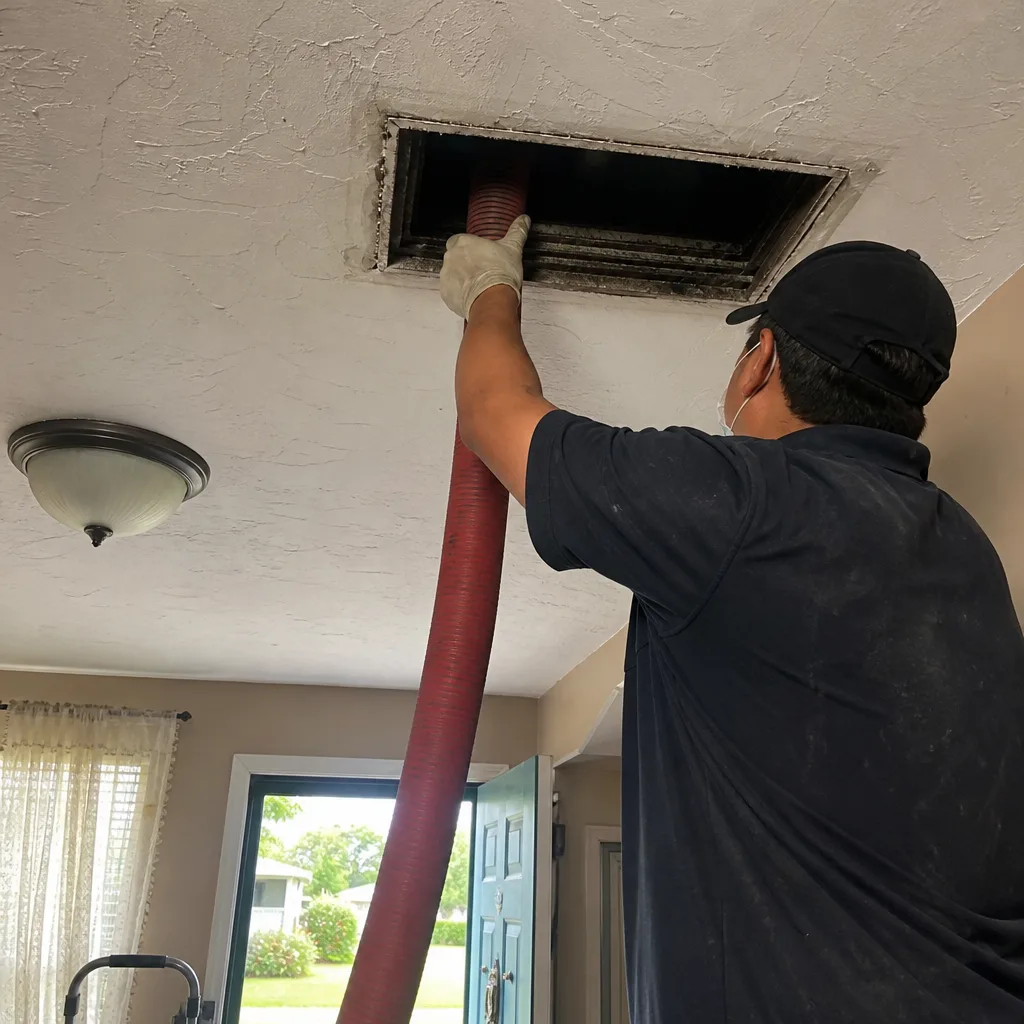 Before
 After
After Before
 After
After