
Last updated October 15, 2026
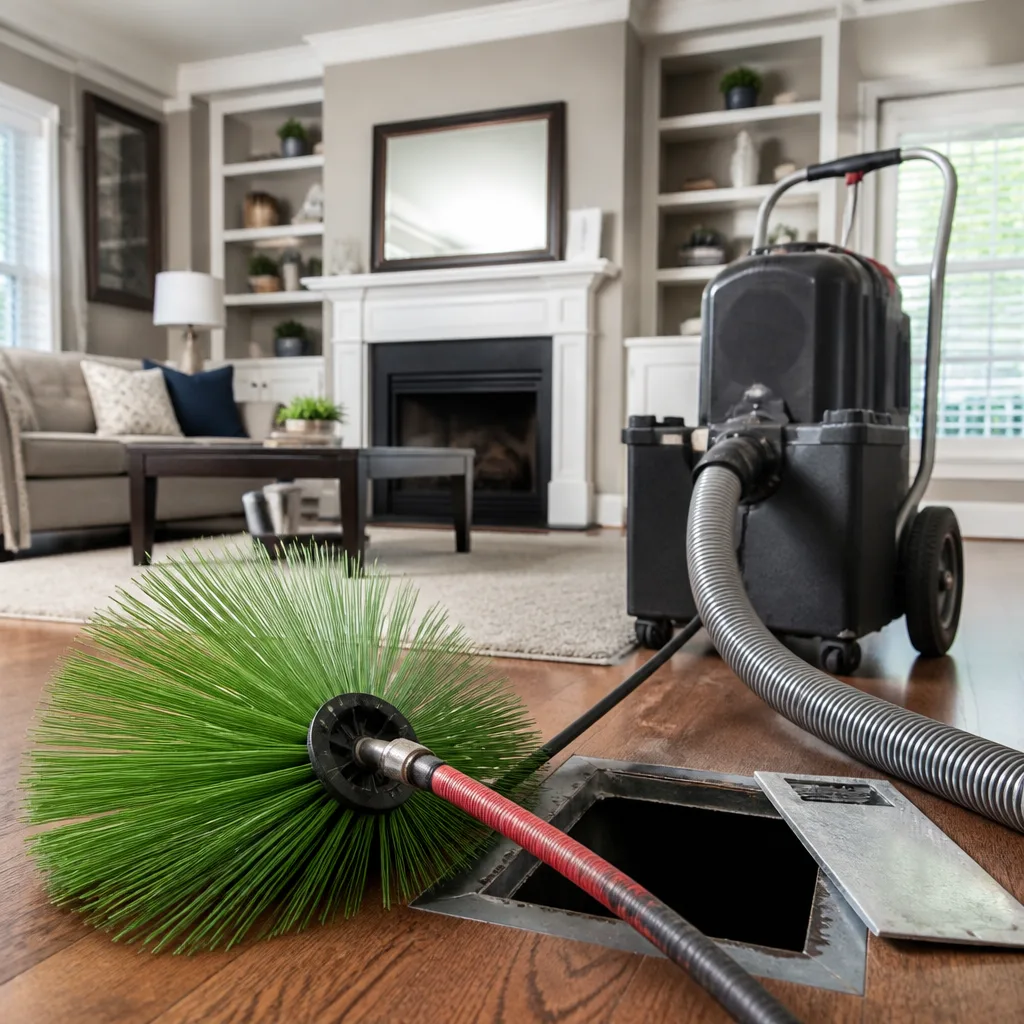 Whole-home duct cleaning
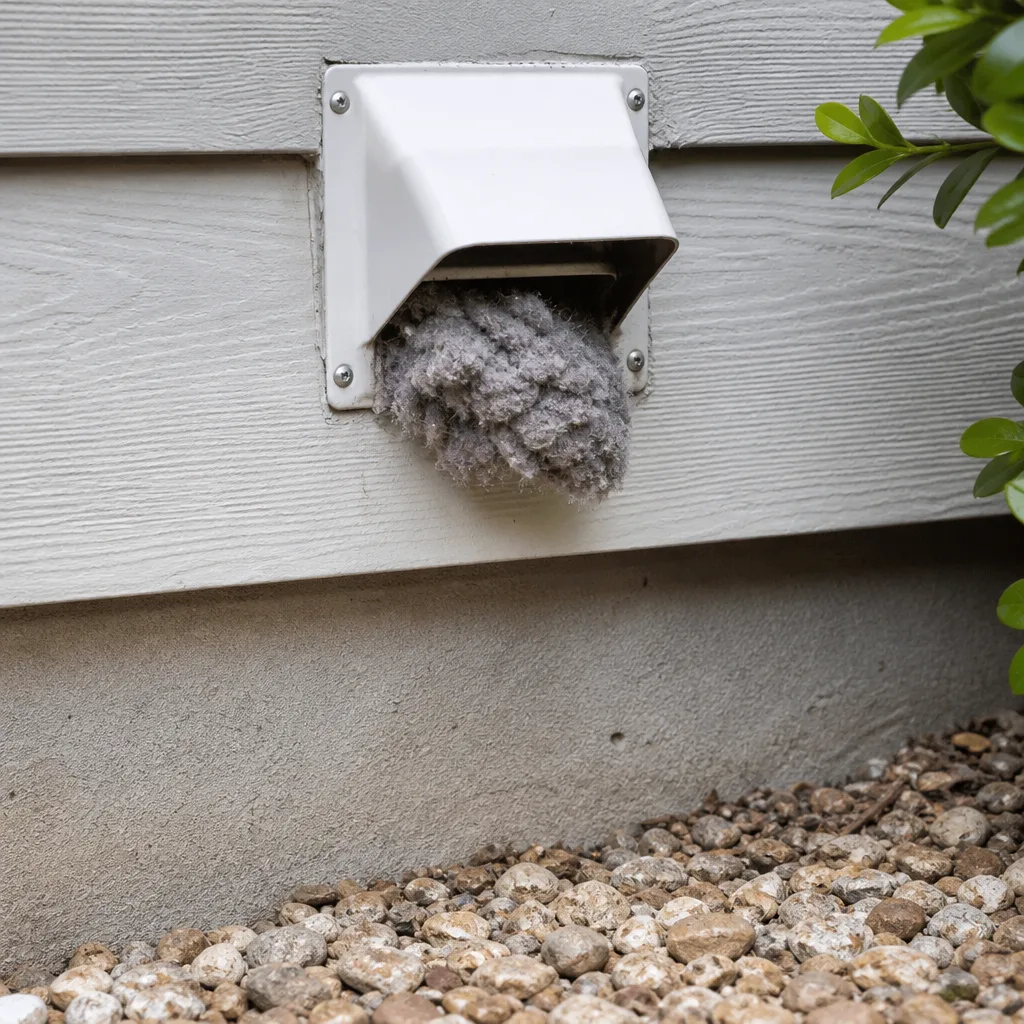 Dryer vent cleaning
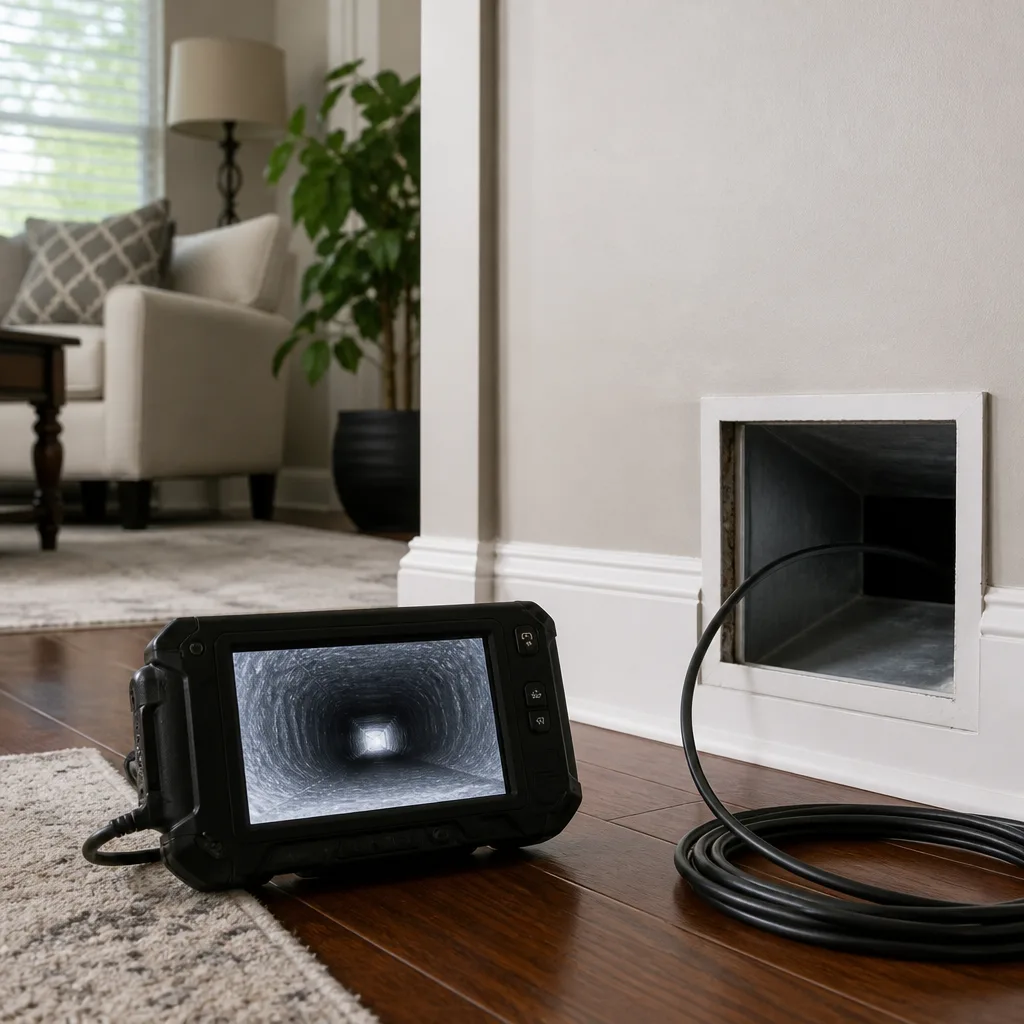 Camera inspection
 Sanitizing & deodorizing
Whole-system duct and dryer vent check with before-and-after photos - you see exactly what came out of your vents
That "$99 whole-house special" is a bait ad - the real number appears once they are in your hallway, or the "clean" is a shop-vac at the register. We photograph the inside of your ducts before and after instead.
Air Duct Cleaning Cost Breakdown: The Tampa Homeowner’s Reference for 2026
Here’s a number that should stop you cold: a proper, NADCA-standard duct cleaning on a 2,000 sq ft Tampa home takes a two-person crew roughly three to four hours. Factor in commercial-grade equipment, insurance, and labor, and any quote under $250 is mathematically impossible without skipping steps. Yet Tampa homeowners see those coupon prices every day. This guide reverse-engineers what a legitimate job actually costs in labor, equipment, and time, so you can spot a quote that’s too low to be real before the van shows up in your driveway. For more on what to watch for, see our Air Duct Cleaning Warning Signs: A Tampa Homeowner’s Reference Guide.
Styles & brands we work with
Quick Answer
Air duct cleaning in Tampa typically costs between $350 and $650 for a standard single-system home under 2,500 square feet. Larger homes with multiple air handlers run $700 to $1,100. Any flat-rate quote below $250 in Tampa means the crew is cutting corners, and any per-vent quote that balloons past $40 per vent is padding the invoice.
Table of Contents
- Tampa Market Rates by Home Size for 2026
- The Flat Rate vs. Per Vent Debate: Which Model Tells You the Truth
- The Honest Cost Variables Most Tampa Quotes Never Mention
- Legitimate Add-Ons vs. Manufactured Upsells: A Tampa Field Guide
- Line-by-Line: What a Written Quote Should Include in Tampa
- How to Spot a Quote That’s Too Low to Be Real
- What a Proper Duct Cleaning Actually Looks Like, Step by Step
- Common Mistakes to Avoid
- When to Call a Professional
- Frequently Asked Questions
- The Bottom Line
Tampa Market Rates by Home Size for 2026
Let’s talk real numbers for Tampa specifically. The market here isn’t the same as Orlando or Miami, and it’s certainly not whatever national average a blog in Ohio published. Tampa’s housing stock skews older in neighborhoods like Seminole Heights and Hyde Park, newer in Westchase and New Tampa, and the duct systems reflect that range. What you’ll pay depends less on what your neighbor paid and more on your home’s footprint and system design.
Here’s the breakdown, based on what we’ve seen across Tampa jobs in the past several years:
- Homes under 1,500 sq ft (condos, bungalows in Seminole Heights, older South Tampa homes): $300 – $450. One air handler, typically 8 – 12 vents, flex duct.
- Homes 1,500 – 2,500 sq ft (most of Carrollwood, Brandon, Westchase, and Lutz): $350 – $650. One air handler, 12 – 20 vents, mixed flex and sheet metal.
- Homes 2,500 – 4,000 sq ft (New Tampa, Odessa, larger South Tampa estates): $600 – $900. Often two air handlers, 20+ vents, longer duct runs.
- Homes over 4,000 sq ft or with commercial-grade systems: $900 – $1,400. Multiple systems, access complications, extended run times.
These are whole-system prices, not per-vent fees. They assume standard access through existing registers and a normal amount of buildup. If your ducts haven’t been touched since the Clinton administration, expect the upper end of whichever tier you fall into.
One more Tampa-specific factor: the climate. Our humidity means dust clings. It doesn’t just sit in ducts; it bonds to the duct walls, especially in the return side where Tampa’s airborne moisture condenses on cool surfaces. That buildup takes longer to remove mechanically, and crews that rush through it leave half the job behind.
The Flat Rate vs. Per Vent Debate: Which Model Tells You the Truth
Here’s the core problem with Tampa duct cleaning pricing: two companies can advertise wildly different numbers for the same job, and both can be technically accurate. The difference is how they structure the quote.
Per-vent pricing is the classic bait model. You’ll see “12 vents for $99!” and feel great about it until you learn your home has 18 vents, and the remaining six are $35 each, and the return vents count double, and the main trunk line is a separate “system fee” of $150. Suddenly your $99 special is $497. Per-vent pricing isn’t inherently dishonest, but it’s the model most likely to obscure the final number, because the advertised price only covers a fraction of what’s actually being cleaned.
Flat-rate pricing is what it sounds like: one price for the entire system, quoted before work begins, and it doesn’t move when the technician counts vents and finds more than the ad assumed. The honest version of flat-rate requires the company to know what they’re walking into, which is why legitimate operators ask about home size, number of systems, and duct type before quoting.
Here’s what a per-vent invoice often looks like for a typical 3-bed, 2-bath Tampa home with 14 supply vents and 2 returns:
- Advertised rate: 10 vents for $99
- Additional 4 supply vents at $35 each: $140
- Return vents (2) at $45 each: $90
- Main trunk line “system fee”: $150
- Total: $479
And here’s what the same job looks like as an honest flat rate: $425 for the entire system, written down before the crew arrives, with no line items that can multiply. Same job, two different structures, and the flat rate is both cheaper and more transparent. That’s the entire argument in one paragraph.
One of the reasons we use flat-rate pricing for our Air Duct Cleaning services at Cardinal Air Duct Tampa is that it removes the variable. The written quote you receive before any work starts reflects the whole system, not a teaser price that climbs once the Rotobrush is in the attic. You should expect the same from any contractor you’re seriously considering. If they won’t put the total in writing before arrival, they’ve told you something important about their business model.
The Honest Cost Variables Most Tampa Quotes Never Mention
If two Tampa homes are both 2,000 square feet, their duct cleanings can still land $200 apart. Here’s why, and it’s the kind of detail most companies don’t volunteer on a sales call.
Duct material matters more than square footage. Flex duct, the accordion-style tubing used in most Tampa homes built after 1990, is relatively easy to clean with rotary brush systems like our Rotobrush equipment. Sheet metal ducts, common in mid-century homes around Temple Terrace and South Tampa, take longer because buildup adheres differently and the seams require more attention. Fiberboard ducts, found in some older Florida homes, are fragile and need lower-pressure techniques, which means more time and care. Expect maybe a 10 – 15% premium for sheet metal and 20% for fiberboard over standard flex duct pricing.
System age is the invisible multiplier. A ten-year-old duct system in Westchase cleans faster than a thirty-year-old system in Seminole Heights. Old ducts have more sealant failures, more debris accumulation, and often have been through multiple air handler replacements that left construction dust and drywall particles behind. That’s not a shameful thing; it’s just more work. A technician who quotes before asking the home’s age and system history is guessing.
Number of air handlers changes the math. A single two-ton handler serving a 2,200 sq ft ranch is one job. A two-story New Tampa home with a separate upstairs and downstairs system is effectively two jobs. Each air handler has its own coil, its own return path, and its own duct run, and each needs to be cleaned separately. Any quote that prices by home size alone without asking about system count is missing the single biggest cost driver in two-story Tampa homes.
Access difficulty is real labor. Attic access through a bedroom closet with a pull-down ladder in an older Seminole Heights bungalow takes different effort than a standing attic in a Westchase new-build. Crawlspace ducts, rare but present in older elevated Florida homes, add time and equipment needs. If your access points are tight, mention it on the call. A company that asks about access is a company that has actually done this work before.
To summarize the honest variables in one frame: duct material changes technique, system age changes effort, air handler count changes scope, and access changes time. None of these are upsells. They’re the difference between a job done thoroughly and a job done quickly.
Legitimate Add-Ons vs. Manufactured Upsells: A Tampa Field Guide
There’s a moment in many Tampa duct cleaning sales calls where the conversation shifts from cleaning to “while we’re in there.” Some of those add-ons are genuinely worth considering. Others exist to pad an invoice. Here’s how to tell the difference.
Legitimate: Evaporator coil cleaning. Your air handler’s coil sits directly in the airflow path and gets coated with the same dust that clogs your ducts. In Tampa’s humidity, that coating becomes a damp, sticky film that reduces system efficiency and feeds mold growth. Cleaning the coil while the system is already open adds maybe $100 – $150 to a job and is worth it if the coil hasn’t been serviced in years. If the technician opens the air handler and shows you a matted coil, that’s not a manufactured problem. It’s just a problem you didn’t know you had.
Legitimate: Sanitizing after mold or pest remediation. If you’ve had a rat in the attic, a documented mold issue, or severe dust from a renovation, an antimicrobial treatment makes sense. Products like those from Aprilaire are designed for HVAC systems and applied properly, the treatment is a real line item with real benefit. But it should be presented as a response to a specific, observed condition, not as a default add-on for every home.
Manufactured: “Duct sealing” on an intact system. If your ducts are leaking, you have an efficiency problem, and sealing is a legitimate repair. But if a duct cleaning company suggests sealing as a routine add-on to a cleaning, with no evidence of leaks beyond “older systems benefit from it,” that’s a product being sold, not a problem being solved. A proper duct sealing job involves testing, not guesswork.
Manufactured: Fogging or “air purification” without a basis. Fogging introduces a chemical vapor into your ducts. Without a specific contaminant concern (mold confirmed by testing, heavy pest residue), fogging is theater. The particles it targets aren’t present in meaningful quantities in a normal home, and the chemical itself becomes a temporary indoor air quality concern. If you’re offered fogging as a standard part of your cleaning, ask: what exactly are we treating, and how do we know it’s there?
The pattern: legitimate add-ons respond to something the technician actually observes. Manufactured ones get offered to everyone, regardless of what’s found. A company that quotes the cleaning first and discusses add-ons only after seeing your system is doing it in the right order.
Line-by-Line: What a Written Quote Should Include in Tampa
A written quote is more than a number on a page. It’s the difference between a job with defined scope and a blank check. Here’s what it should contain, line by line, and why each line exists. This is also exactly what you get with Cardinal Air Duct Tampa before any work begins. For more guides & resources on hiring HVAC contractors, visit our blog.
- Home size and system count. The quote should state “2,400 sq ft, two systems” or similar. If it doesn’t reference your actual home, the number is a guess.
- Scope of work. “Clean all supply ducts, return ducts, trunk lines, plenums, and air handler interior” or equivalent. Vague language like “full system cleaning” without specifics is a red flag.
- Flat price for the full system. One number, not a range, not an estimate, not a “starting at.” A price.
- Equipment method. The quote should note rotary brush cleaning, negative-pressure extraction, or whatever method will be used. If the company can’t name its method, it doesn’t have one. We use Rotobrush rotary brush systems and Nikro HEPA-rated negative-pressure vacuums, and that’s on the quote.
- Expected duration. “Estimated 3 – 4 hours” tells you they’ve thought about the job, not just the invoice.
- What’s not included. This is the honesty line. A good quote says “coil cleaning, sanitizing, or repairs priced separately if recommended after inspection.” The absence of this line is how surprise charges arrive.
- Guarantee terms. What happens if you’re not satisfied. Our 365-Day Done Right Promise goes on every quote: if the work isn’t right within 365 days, we return and correct it at no charge.
If a contractor can’t produce a document with all seven of these elements before the technician rings your doorbell, you’re not comparing quotes. You’re comparing bait.
How to Spot a Quote That’s Too Low to Be Real
Let’s do the math on that $199 “whole house special” that lands in your mailbox every spring. A legitimate two-person crew in Tampa costs a company roughly $80 – $120 per hour in wages, insurance, and overhead. A proper NADCA-standard cleaning on a 2,000 sq ft home takes three to four hours. That’s $240 – $480 in labor alone before equipment amortization, fuel, and the cost of the van. A $199 quote means the company is either losing money, which means they plan to make it up elsewhere, or they’re doing a one-hour rush job, which means they’re not cleaning your ducts.
Here are the tells:
- No home questions asked before the quote. If they’ll price a 1,200 sq ft condo and a 3,500 sq ft two-story at the same number without asking which you have, it’s not a quote. It’s a lure.
- Time frame sounds too short. If someone tells you your entire system will be cleaned in 45 minutes, that’s a visual inspection, not a cleaning.
- The advertised price is per-vent, and the vent count in the ad is lower than your home’s actual vent count. This is the classic structure, and it works because almost no Tampa home has ten vents.
- You can’t find the company’s equipment. A legitimate duct cleaner can tell you what brands they run. A shop-vac and a drill don’t clean ducts. We run Rotobrush systems, Nikro HEPA vacuums, and Abatement Technologies containment units, and that’s not a brag; it’s what the job requires.
- No written price before arrival. The single most reliable predictor of a bad experience. If the price isn’t in writing before the door opens, it can be anything after.
The core principle: a price that’s below the cost of doing the job honestly can’t produce an honest job. The question isn’t whether they’re cutting corners. It’s which corners, and whether you’ll ever know.
What a Proper Duct Cleaning Actually Looks Like, Step by Step
Here’s the process, in order, as it should happen on a standard Tampa home. This is what the three to four hours actually buys.
- Setup and containment. The crew runs containment barriers around the work area to keep loosened dust from drifting into your living space. Abatement Technologies makes the containment units we use for this; the idea is negative-pressure extraction, meaning the loosened debris goes straight into the vacuum, not back into your living room.
- Register removal and inspection. Every supply and return register comes off. The team inspects the visible duct interior with a camera, documenting what’s actually in there before cleaning begins. This is the moment that separates real companies from theatrical ones; if the tech never shows you the before photos, that’s odd.
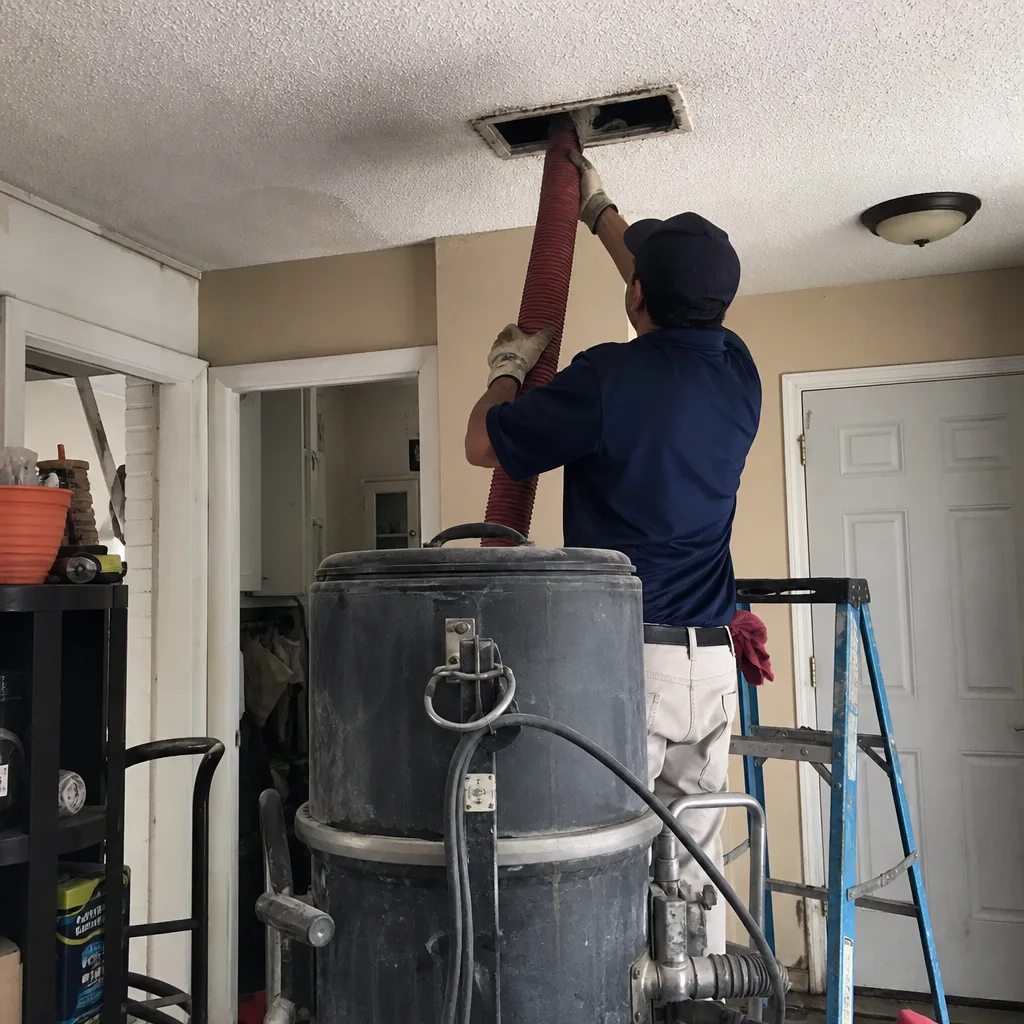
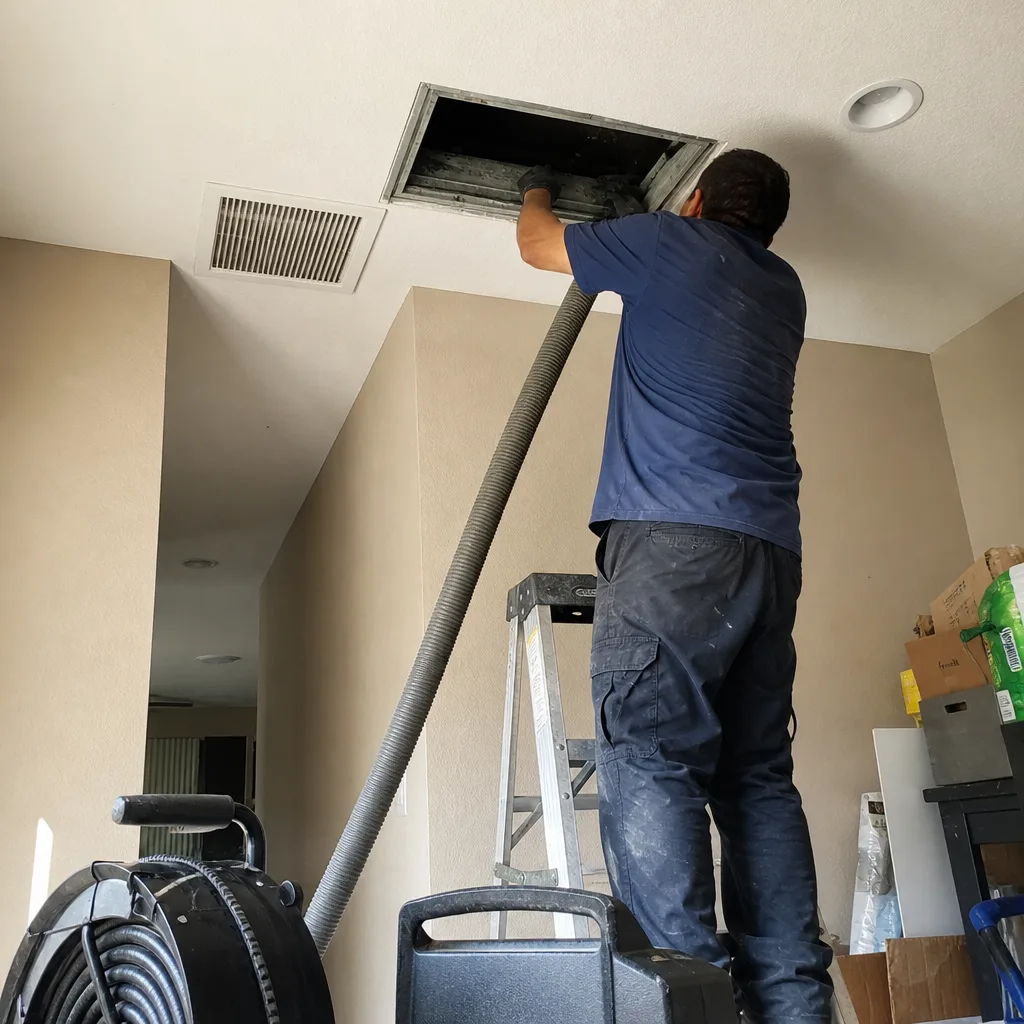
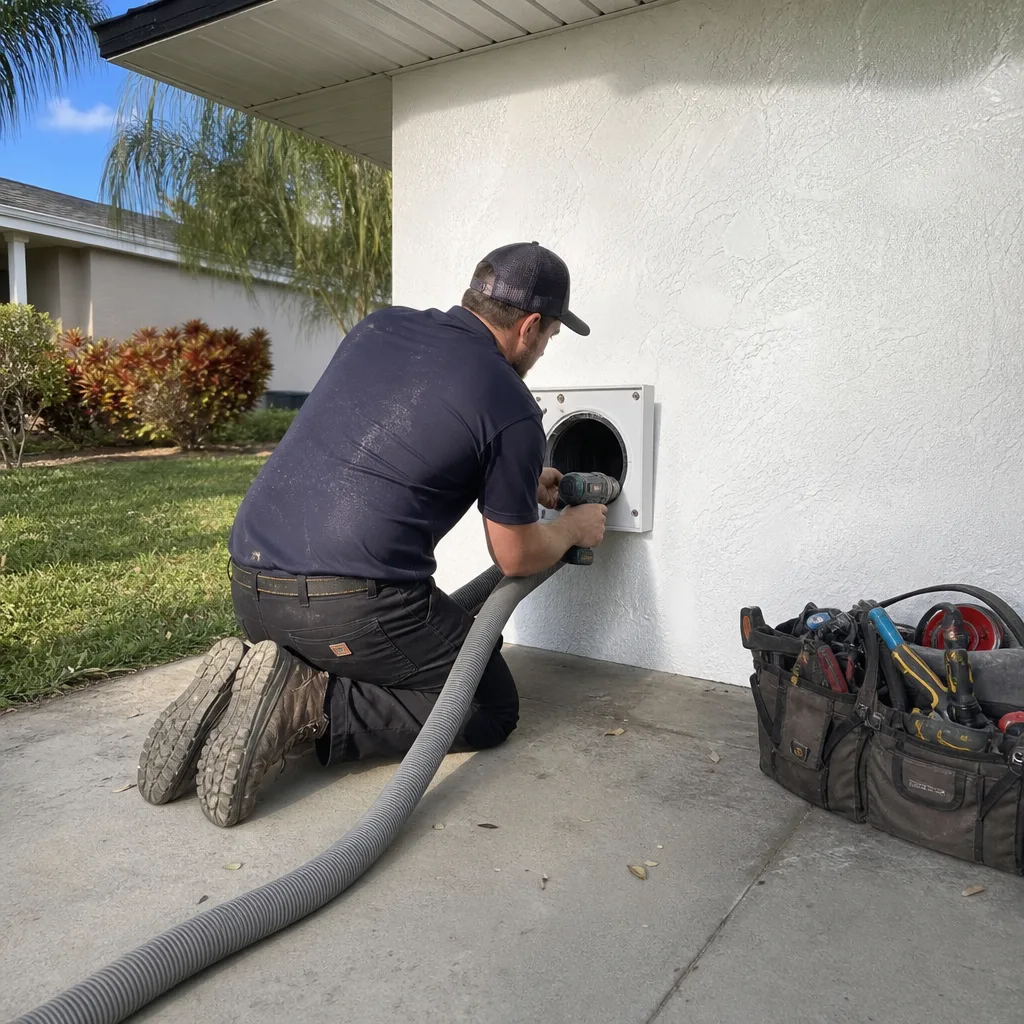
- Mechanical agitation. A rotary brush system runs through each duct run, physically dislodging the buildup that’s bonded to the walls. This is the step that Tampa’s humidity makes essential; a vacuum alone can’t pull up dust that’s stuck.
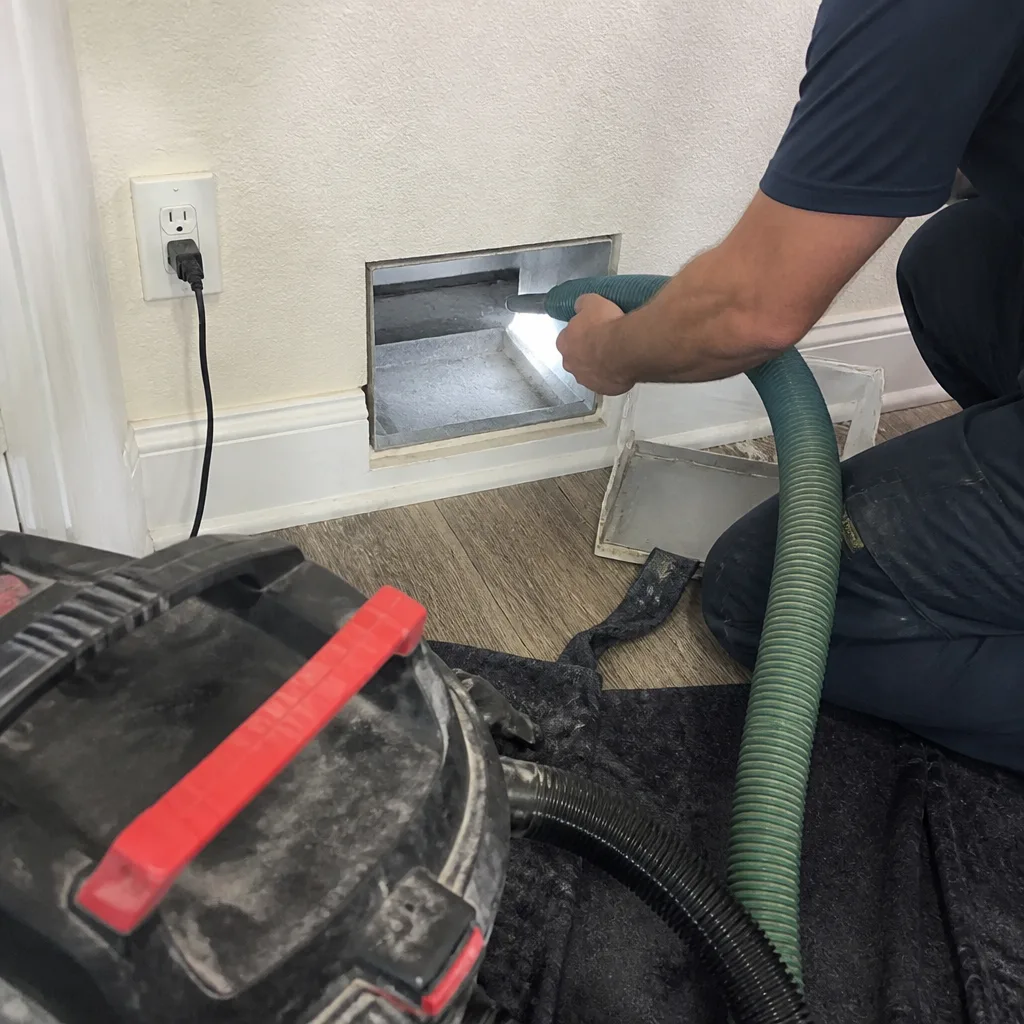
- Negative-pressure extraction. While the brush works, a HEPA-rated vacuum unit maintains continuous suction at the system level, pulling dislodged debris into a filtered collection unit. Without this simultaneous suction, you’re just stirring dust around.
- Air handler and coil cleaning. The blower compartment, evaporator coil, and drain pan get cleaned as part of the system. This is where the “does the price include the handler” question gets answered.
- Final walkthrough and documentation. The crew shows before-and-after photos of the ducts, not just the registers. You should see the inside of your trunk line, clean, on your phone before you pay. At Cardinal Air Duct Tampa, this documentation is part of the standard booking, the Relay Standard: a written price before work starts, before-and-after photo proof, and a digital invoice you can pay from a link.
If any of these six steps is missing from a company’s description of their process, ask why. Particularly step six. In our experience, the companies that won’t show you the after photos are the ones who know what the before photos looked like.
Common Mistakes to Avoid
- Clinging to a “deal” that can’t cover real labor. The $99 coupon is the most expensive quote you’ll ever take, because the upsell comes after the van arrives, and at that point you’re negotiating from your driveway, not from a position of leverage.
- Believing the claim that “duct cleaning isn’t necessary.” That talking point comes from a decades-old EPA page that predates modern containment equipment and was written before Tampa’s humidity-driven mold dynamics were well understood. Talk to a real technician, not a 1997 PDF.
- Skipping the coil because it’s “not ducts.” Your evaporator coil is in your air handler, which is part of your HVAC system. A cleaning that skips the handler cleans half the path your air actually travels.
- Accepting a verbal quote. In Florida, if it’s not in writing, it didn’t happen. A verbal price is a suggestion, not a contract. In a market as full of bait pricing as Tampa’s, written is the entire point.
- Falling for fogging without cause. You wouldn’t spray your kitchen with pesticides because “just in case.” Chemical fogging in your ducts without an observed problem is the same logic applied to air you breathe.
- Trying to DIY the inspection and skipping the job. Peeking into a register with a phone camera shows you the last six inches of one duct run. The trunk line, the returns, the handler: none of it is visible from one register. DIY inspection creates false confidence, not clean air.
- Waiting until there’s a visible problem. By the time you see dust puffing from vents or smell the musty signature of mold in the handler, the buildup has been accumulating for years. Duct cleaning isn’t an emergency service; it’s a maintenance discipline, like changing your air filter, just on a longer cycle.
When to Call a Professional
If you’ve renovated recently, the answer is now. Drywall dust, sawdust, and paint particles make their way into the return system and then get redistributed through every room for months. If you can see dust buildup on the register grilles themselves, that’s the visible fraction of a much larger deposit inside the ducts. If your energy bills have crept up without a change in usage, restricted airflow from duct buildup is a common and silent cause. And if anyone in your home has respiratory issues or allergies, a duct system that’s never been cleaned is a reservoir of whatever has accumulated over the years: pet dander, pollen, construction debris, and in Tampa’s humidity, the moisture-trapped particles that bind it all together. Cardinal Air Duct Tampa offers free estimates in Tampa. Call (850) 403-3474 and we’ll give you a written price before any work starts. No bait, no surprise line items, no fogging theater. Just a real number for a real job.
Frequently Asked Questions
For most Tampa homes under 2,500 square feet with a single air handler, expect $350 to $650 for a full-system cleaning. Homes over 2,500 square feet or with two air handlers typically run $600 to $1,100. These are whole-system flat rates that include the air handler and all duct runs. If you’re quoted below $250 for a full system, the quote is built on skipping steps. Call (850) 403-3474 for an exact written quote for your home, free.
Cheap quotes usually have three explanations: per-vent pricing that multiplies once the technician arrives, a scope that excludes the air handler and return ducts, or a process that skips mechanical agitation entirely and just runs a vacuum briefly. None of those produce a clean duct system. The flat-rate quote that asks about your home size, system count, and duct material is the honest one. Call (850) 403-3474 and we’ll give you a written flat price before work starts.
Before-and-after photos of the duct interior, not just the registers, are the standard of proof. A legitimate company documents the trunk line, the returns, and the handler with a camera before and after cleaning. At Cardinal Air Duct Tampa, this documentation is built into our Relay Standard booking: every job includes before-and-after photo proof and a digital invoice you can review from your phone.
In Tampa’s climate, every three to five years is a reasonable interval for most homes, assuming standard filtration and no major renovations or pet loads. Homes with multiple large dogs, recent construction, or residents with respiratory conditions may benefit from every two to three years. The honest answer is that it depends on what’s accumulating in your system, which is why a camera inspection should precede any cleaning recommendation. Call (850) 403-3474 to schedule one.
Flat-rate pricing tells you the total before work begins, and it doesn’t change when the technician counts vents. Per-vent pricing can be legitimate, but it’s the model most often used to advertise a low teaser number that climbs once the job starts. For a home in Tampa, where the housing stock ranges from bungalows to two-story estates, flat-rate is the more transparent structure, and it’s what Cardinal Air Duct Tampa uses. Written quote, whole system, before any work starts.
A legitimate full-system cleaning includes all supply and return ducts, the main trunk line, the plenums, and the air handler interior including the blower and evaporator coil. It involves mechanical agitation with a rotary brush and simultaneous negative-pressure extraction through a HEPA-rated vacuum. If your quote excludes the air handler or returns, it’s not a full-system cleaning. Call (850) 403-3474 for a written quote that spells out exactly what’s included.
The Bottom Line
Tampa duct cleaning pricing is a mess because the market rewards the mess. Coupon bait works, so companies use it. The homeowner who loses is the one who trusts the number on the ad instead of the number in writing. What you actually need to know is simple: a legitimate full-system cleaning on a standard Tampa home costs $350 to $650, it takes a real crew real hours, and the proof it was done is photos of the inside of your ducts, not a receipt. For details on local requirements, read our guide to Air Duct Cleaning Permits, Codes & Inspections in FL: What You Need to Know. Ask for a written flat-rate quote that covers the entire system before work begins. If a company can’t produce that, call the one that can: Cardinal Air Duct Tampa at (850) 403-3474.
Written by Omar Haddad, Owner at Cardinal Air Duct Tampa, serving Tampa since 2005.
See the difference
 Before
 After
After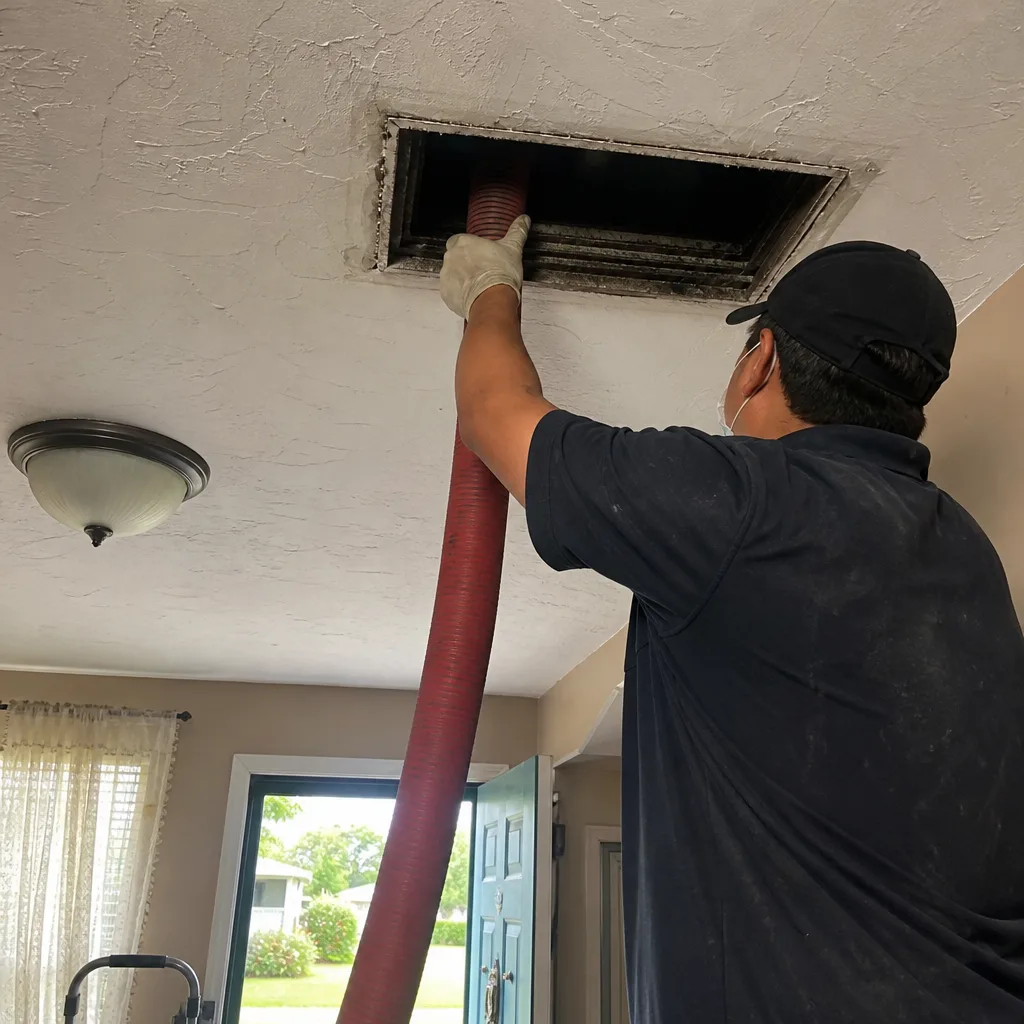 Before
 After
After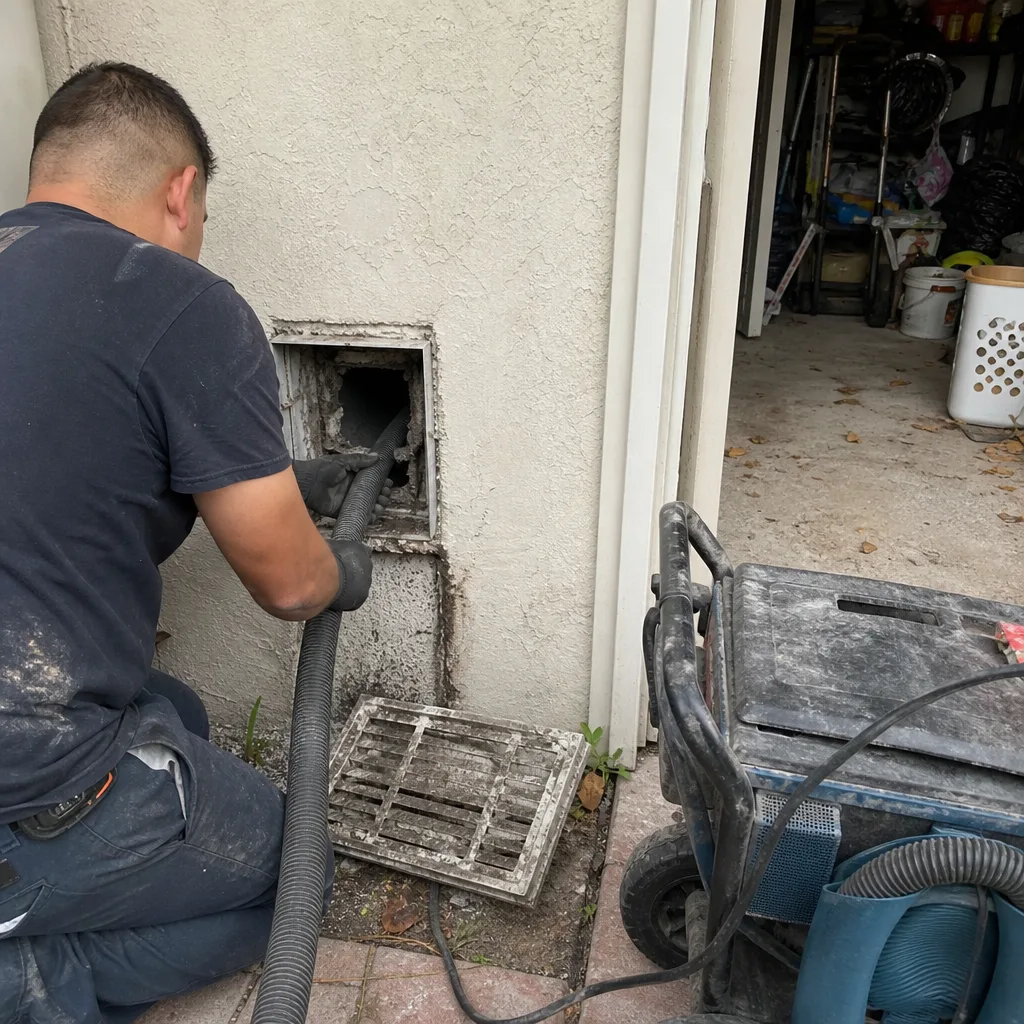 Before
 After
After