
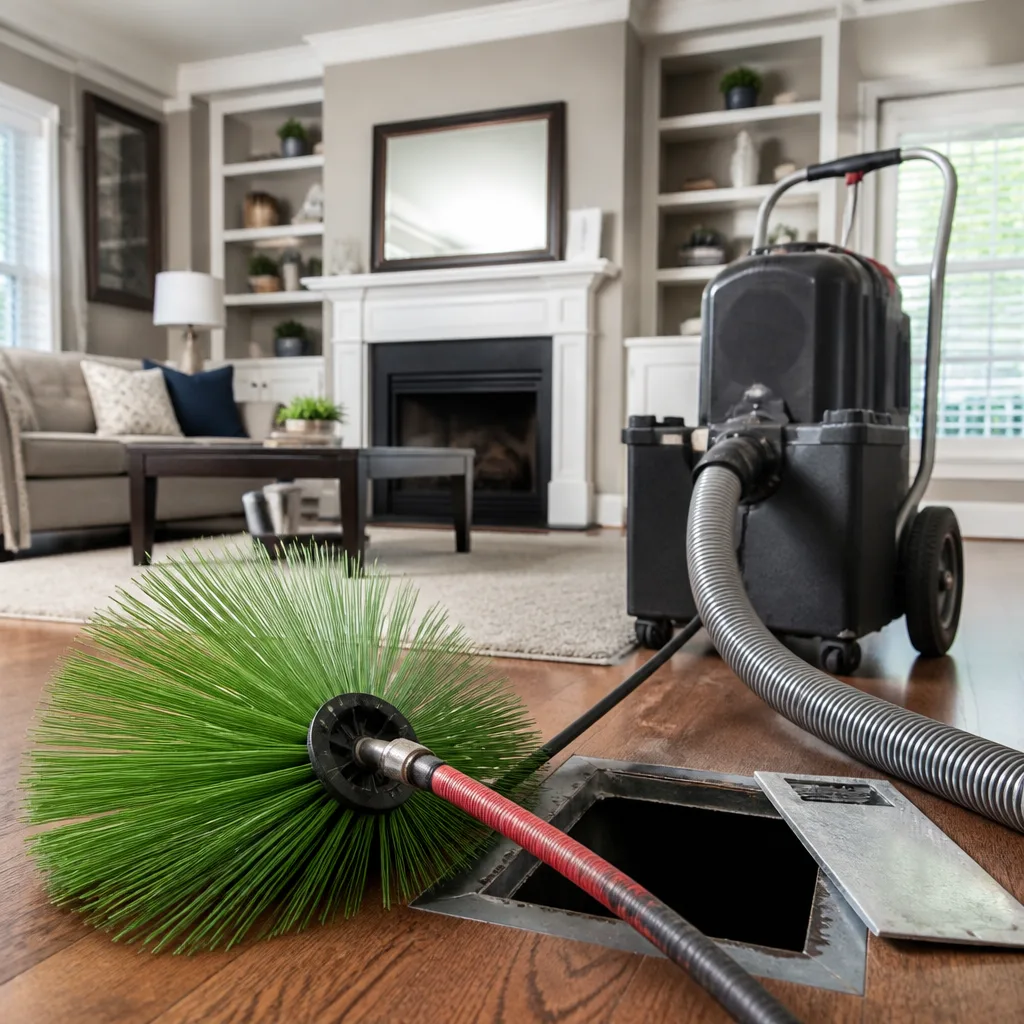
 Whole-home duct cleaning
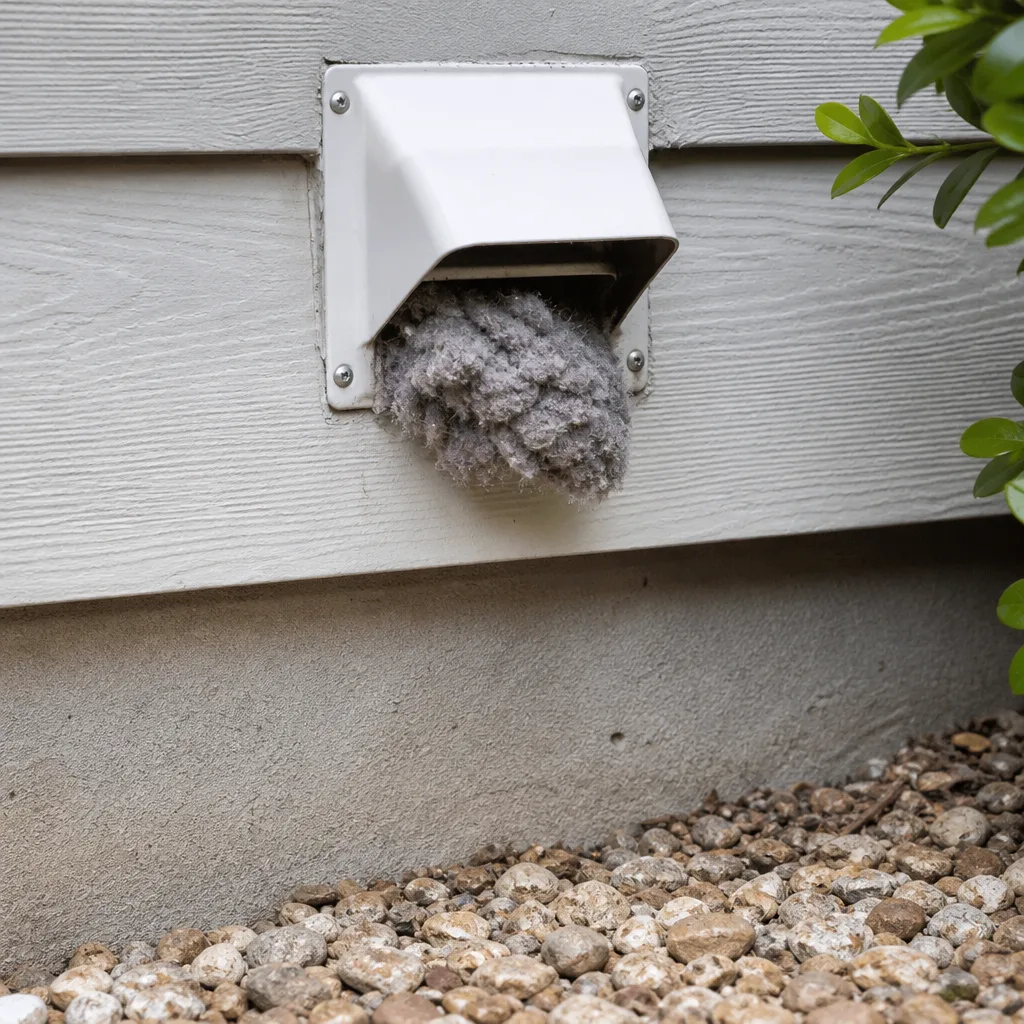 Dryer vent cleaning
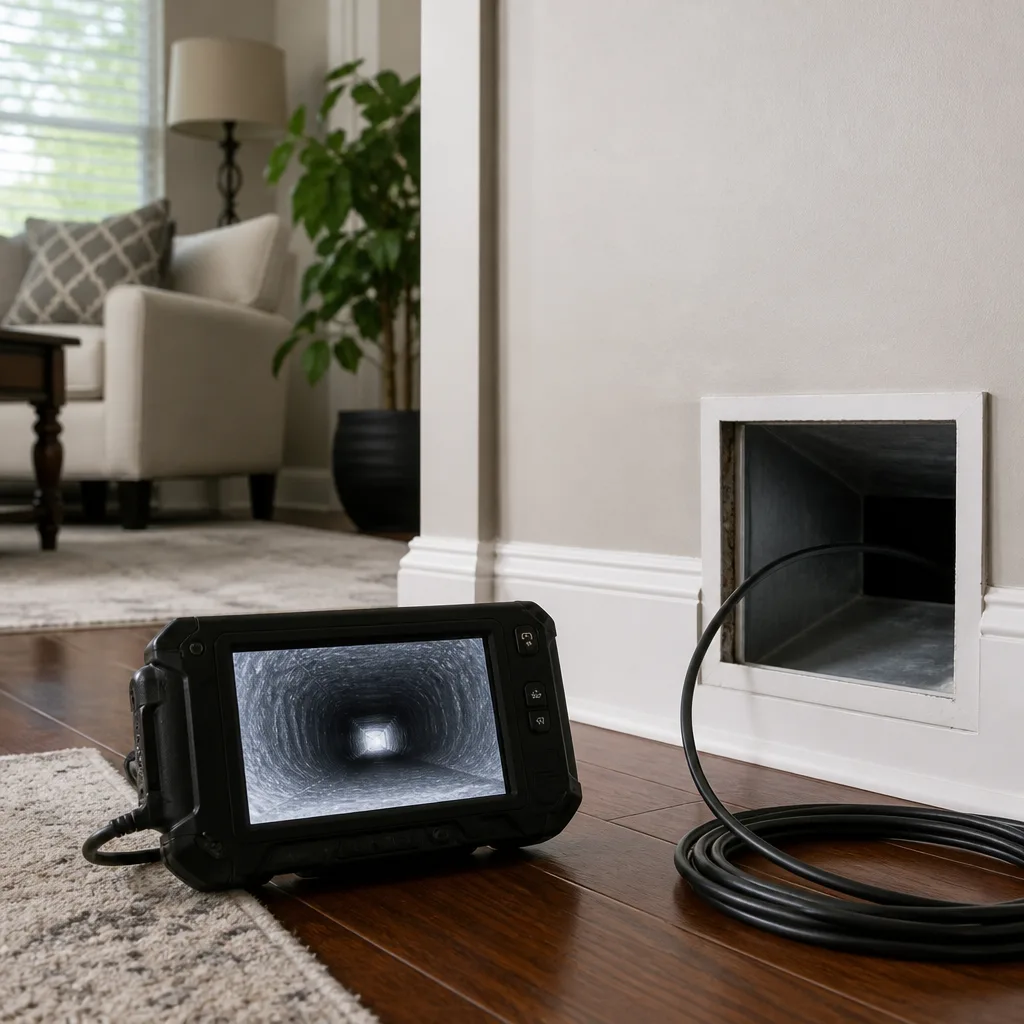 Camera inspection
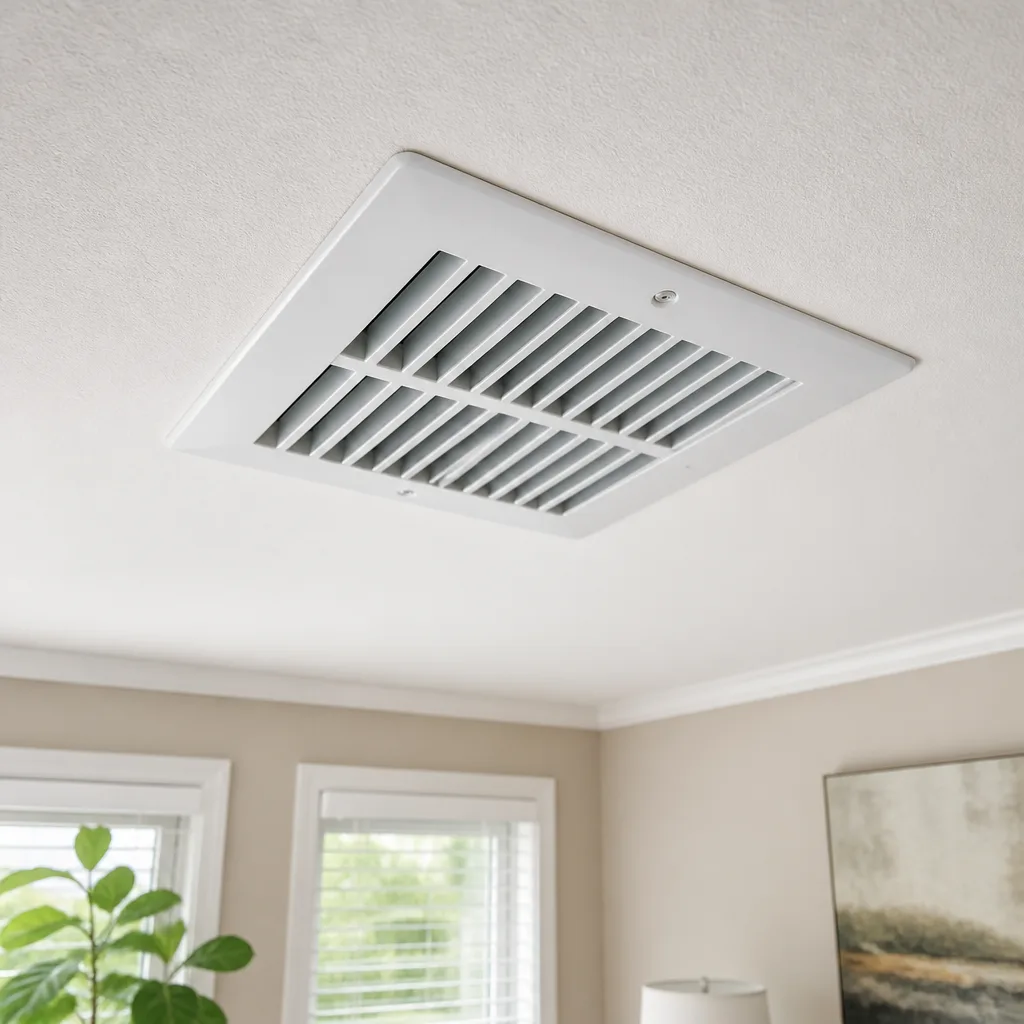 Sanitizing & deodorizing
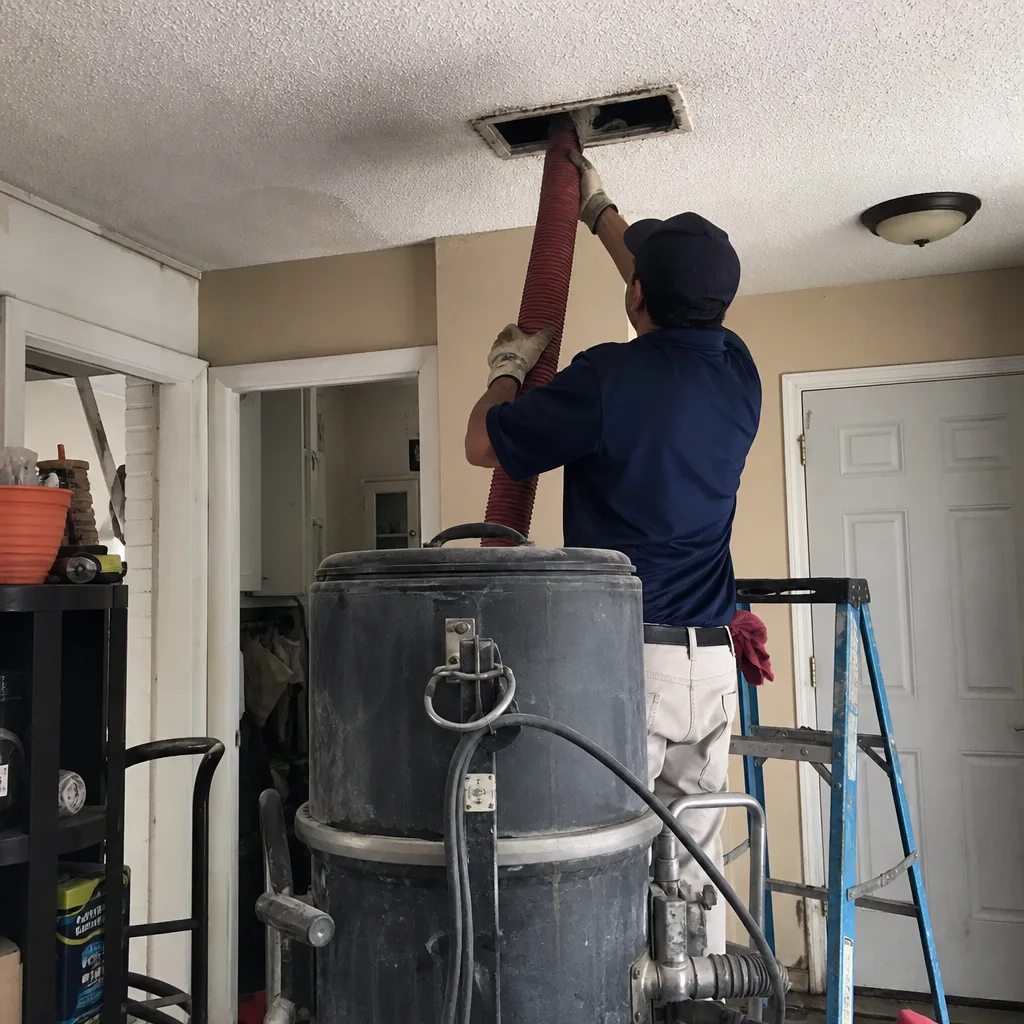
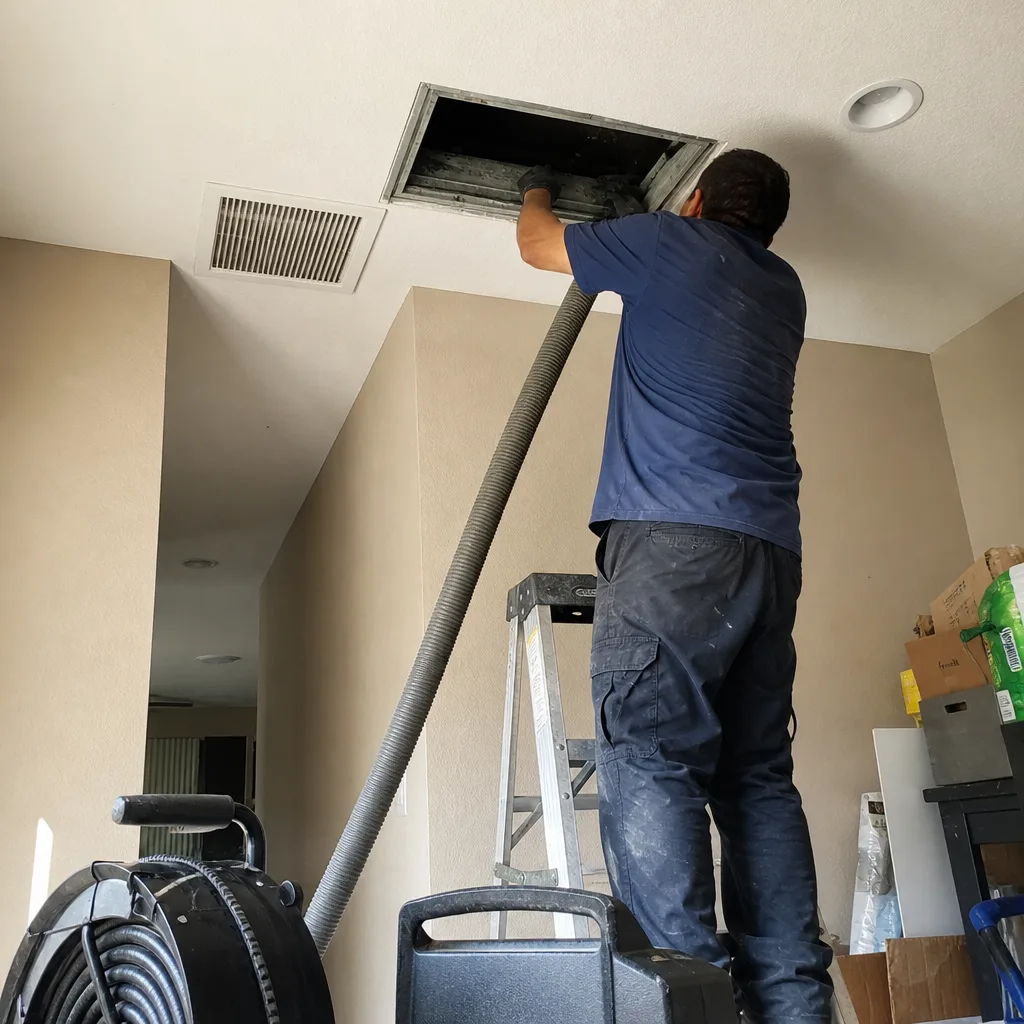
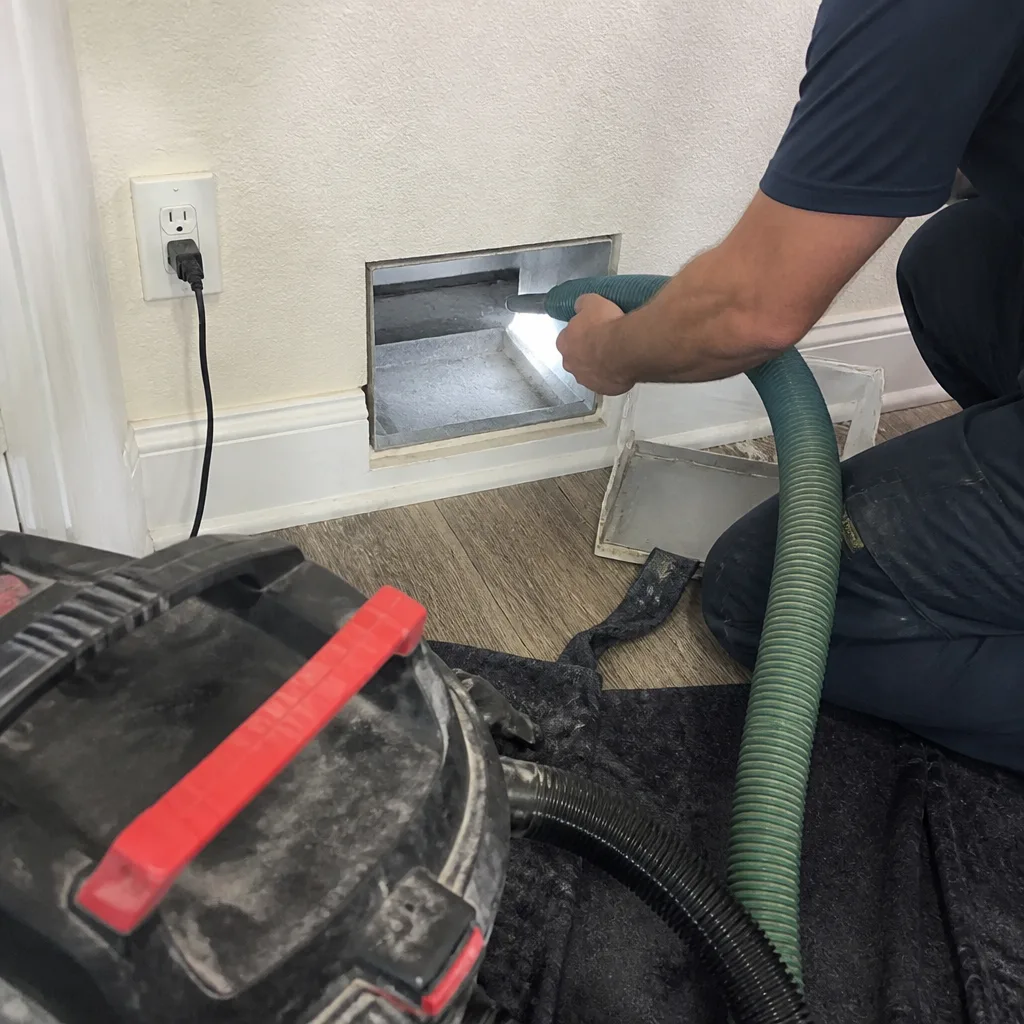
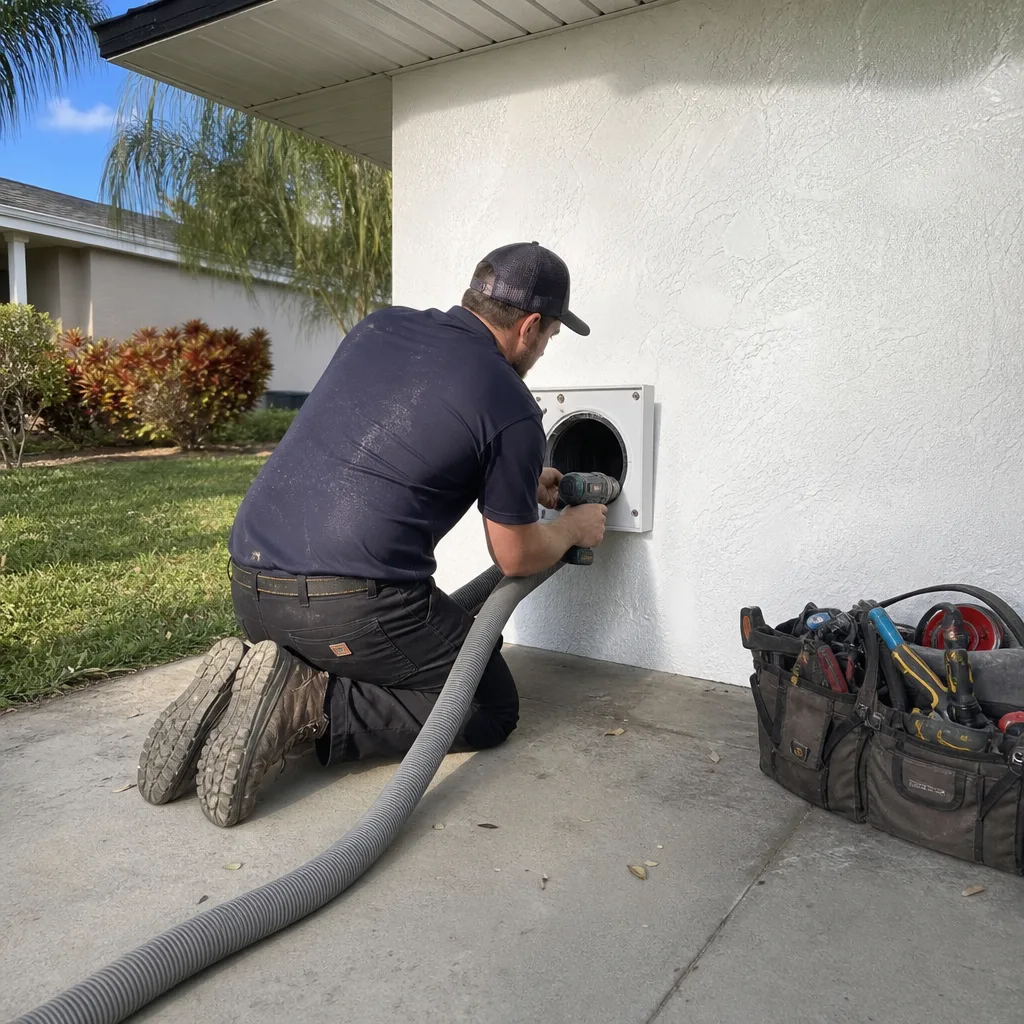
Whole-system duct and dryer vent check with before-and-after photos - you see exactly what came out of your vents
That "$99 whole-house special" is a bait ad - the real number appears once they are in your hallway, or the "clean" is a shop-vac at the register. We photograph the inside of your ducts before and after instead.
Honeywell Register & Grille Cleaning: The Tampa Owner’s Guide
We clean and restore Honeywell registers and grilles throughout Tampa, and most homes run $120 to $240 depending on how many you have and how much buildup we’re dealing with. We don’t stock replacement Honeywell registers on the truck because cleaning usually solves the problem, but if yours is cracked, rusted, or beyond saving, we’ll measure and order the exact match while you’re standing there. Most Tampa owners don’t notice their registers until a room suddenly feels stuffy, the airflow drops off, or someone actually looks up and sees the gray fuzz clinging to every louver.
Here’s the thing about Honeywell registers in Florida: they’re not failing because the metal gave out. They’re failing because the humidity and your AC’s constant pull is dragging dust, pet hair, and the occasional mystery fuzz across those fins every single hour the system runs. The register itself is usually fine. It’s what’s packed onto it and behind it that’s the real problem. Omar Haddad has been pulling registers in Tampa Bay homes for over a decade, and the amount of buildup he’s seen on what looks like a clean grille from across the room would surprise you. Some of it’s dust. Some of it’s construction debris from that remodel three years ago. And in enough cases, it’s a film of cooking grease that’s turned the whole grille into a lint trap.
Which Honeywell Models This Applies To
Honeywell makes several register and grille lines, and the good news is that cleaning applies to all of them: the standard stamped-steel registers you’ll find in most Tampa production homes, the heavier cast aluminum floor registers in older bungalows, and the adjustable return-air grilles with the opposed-blade dampers. What changes between models is mostly the finish, the louver spacing, and whether the damper is a simple slide or a multi-shutter design.
Here’s a compatibility gotcha most people miss: Honeywell floor registers come in standard rough openings like 4×10, 4×12, and 6×12, but the actual faceplate dimensions vary by model line. If you’re replacing rather than cleaning, measure the opening in the floor or wall, not the old grille’s faceplate. A register that’s been stepped on for ten years can be bent enough to throw off your measurement by an eighth of an inch, and an eighth of an inch is the difference between a flush fit and one that rocks underfoot. We handle that measuring for you when we’re on site.
As for OEM versus aftermarket: Honeywell’s OEM registers are solid, but for basic stamped-steel supply registers, a quality aftermarket equivalent from a name the trade respects like Accord or Shoemaker often matches or beats OEM at a lower price. Where we tell Tampa customers to stick with genuine Honeywell is on their proprietary damper mechanisms and certain decorative aluminum lines where the aftermarket copies just don’t hold their finish. We’re an independent service provider, not affiliated with Honeywell, so our recommendation is based on what actually holds up in coastal Florida air, not on what one manufacturer wants us to sell. We also work with other major brands regularly, including Lennox, Trane, and Carrier, so if your system is a mix, we can identify every register in the house.
Styles & brands we work with
Signs Your Honeywell Register & Grille Cleaning Is Failing
- Visible dust buildup on the louvers or fins. This is the obvious one, but what you’re seeing is only about 20 percent of what’s there. The rest is packed inside the register throat and the first few inches of the duct, building up in a felt-like layer that restricts airflow before you ever notice the surface dust.
- Uneven airflow between rooms. If one Tampa bedroom feels like a meat locker and the one next door barely moves air, check the registers in the weak room first. A partially clogged register isn’t the only possible cause, but it’s the one you can see without opening a wall.
- Black marks or streaking around the register edges. This is filtration soiling, and it’s more common in Tampa homes than just about anywhere because our AC runs for months on end. The conditioned air escaping around a slightly dirty register face deposits even finer particulate on the surrounding ceiling or wall.
- A musty smell that seems to come and go with the AC cycle. Dust plus Florida humidity plus the cool metal face of a register equals a place where mildew wants to form. You may never see it on the outside, but the inside face of the register boot is often where it starts.
- Louvers that won’t hold their position anymore. On adjustable Honeywell registers, the friction mechanism eventually wears out, and when the louvers flop around, air gets directed wherever gravity says. Sometimes cleaning and re-tensioning the mechanism fixes it. Sometimes the whole register needs replacing, and we’ll tell you honestly which one you’re looking at.
See the difference
 Before
 After
After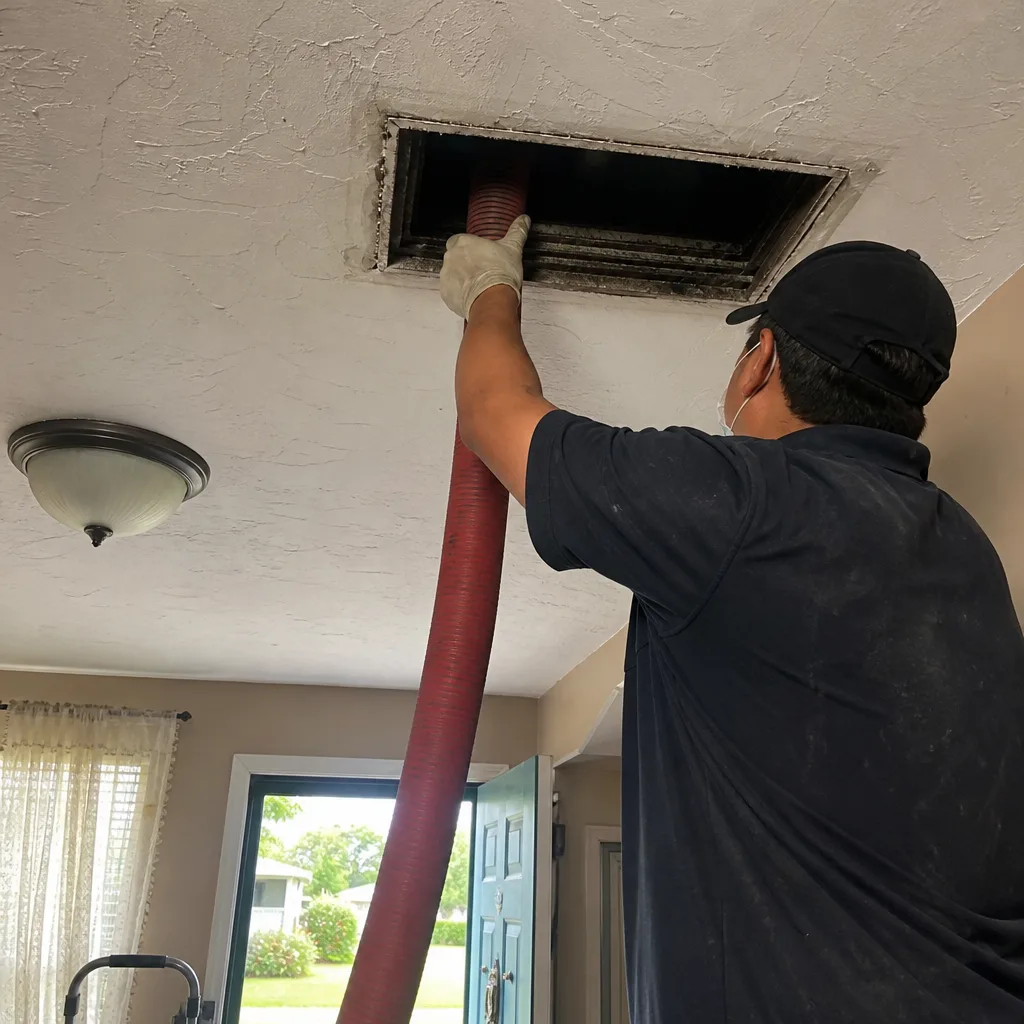 Before
 After
After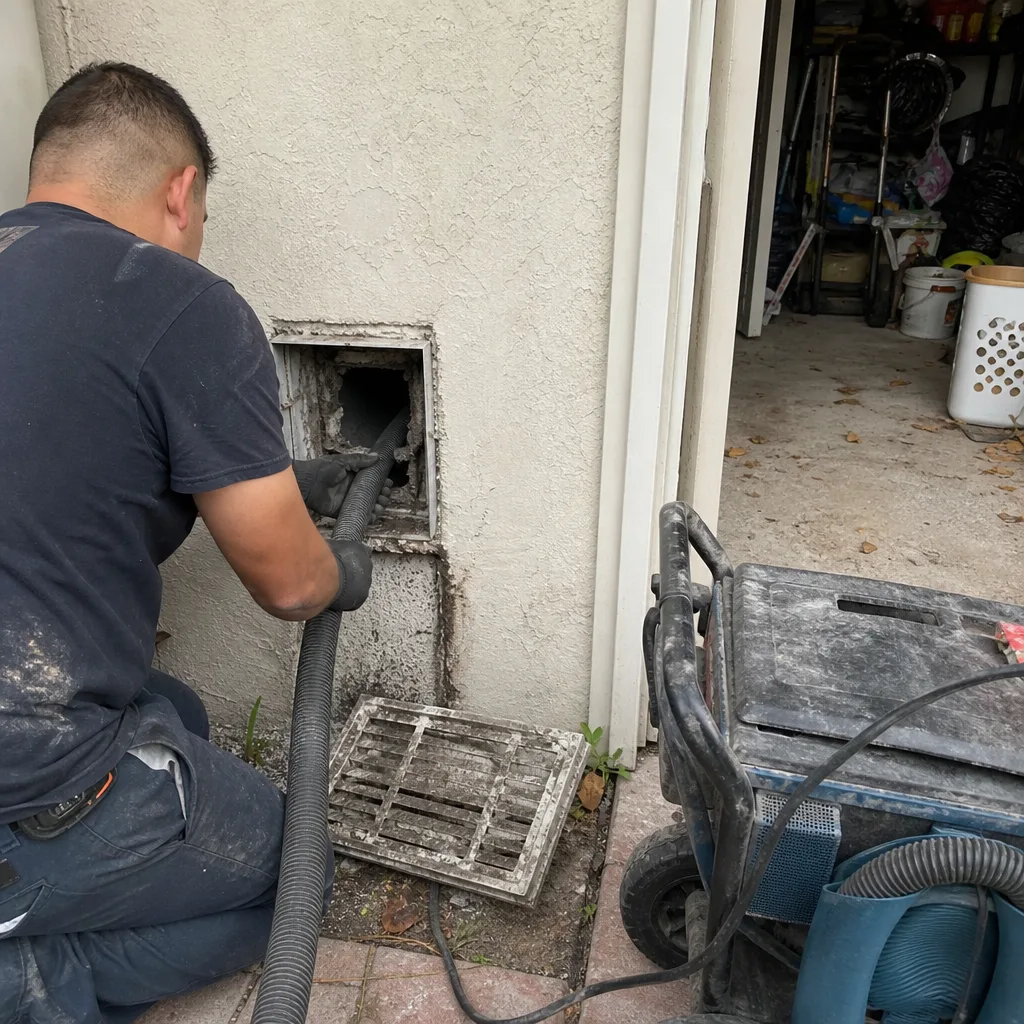 Before
 After
AfterReplacement Cost & What’s Included
For most Tampa homes, register cleaning runs $120 to $240 for the whole house, with replacement registers priced per unit based on size and finish. A standard 4×10 stamped steel supply register might cost $8 to $20 off the shelf, while a larger cast aluminum return grille can run $60 to $120. Labor is usually bundled into the cleaning visit, so if we’re already there pulling every register for cleaning, installing a few replacements adds very little to the bill.
What drives the price up? The number of registers, the amount of buildup, and accessibility. Floor registers in a crawlspace home in Seminole Heights are quick. Ceiling registers in a two-story Westchase house take longer. We write every price down before we touch a single register, and that number doesn’t change. The written price is part of The Relay Standard, and it applies to every visit. If we find something unexpected, you hear about it and approve the number before work continues.
Every register cleaning and replacement comes with the 365-Day Done Right Promise. That means if the same register clogs back up or the replacement doesn’t fit right within a full year, we return and make it right at no charge. Not a prorated warranty. Not a “we’ll take a look.” A full year.
DIY or Call Us?
Removing a Honeywell register and vacuuming it is about as safe as home maintenance gets. No springs, no wiring, no danger. If you want to unscrew your registers, take them outside, and hit them with a brush and your shop vac, you should. It helps between professional cleanings, especially in dusty months.
Where DIY falls short is everything behind the register. That first few feet of duct, the boot, the damper assembly, the buildup you can’t reach with a standard vacuum hose. That’s where the real airflow restriction lives, and it’s why a homeowner can scrub their grilles and still have weak airflow. We run professional-grade negative-pressure extraction, which means the loosened debris goes straight into a Nikro HEPA vacuum instead of back into your living room. If you’ve cleaned your registers and the problem persists, don’t guess at what’s downstream. Call (850) 403-3474 and we’ll figure out what’s actually going on.
FAQs
A quality Honeywell register in a Tampa home typically lasts 15 to 25 years before the finish, damper, or louver mechanism gives out, though coastal salt air in areas like Davis Islands or Bayshore can shorten that. The register usually outlives several cleanings, which is why we recommend cleaning before replacing in most cases. If yours is under 15 years old and not physically damaged, call (850) 403-3474 for an honest assessment before you spend money on new hardware.
Sometimes yes, sometimes no, and it depends on what’s broken. Bent louvers can often be straightened, loose friction mechanisms can be re-tensioned, and surface rust can be treated if it hasn’t gone through the metal. A cracked faceplate, a snapped damper lever, or rust that’s eaten through the corner means replacement is the only real fix.
For a typical Tampa home with 10 to 15 registers, full removal, cleaning, and reinstallation takes 60 to 90 minutes as part of a broader duct cleaning visit. If you’re having only registers done with no ductwork, it’s usually a quicker stop, and we’ll give you a written time estimate when you book.
We keep common sizes like 4×10, 4×12, and 6×12 in standard finishes on the truck along with matching return grilles for most Tampa homes. If your register is an unusual size, a specific Honeywell finish, or a decorative model, we’ll measure and order the exact match, usually arriving within a few days. Call (850) 403-3474 with your measurements and we’ll tell you right away whether it’s a truck stock item or an order.
Written by Omar Haddad, Owner, Cardinal Air Duct Tampa at Cardinal Air Duct Tampa, serving Tampa and nearby areas.