
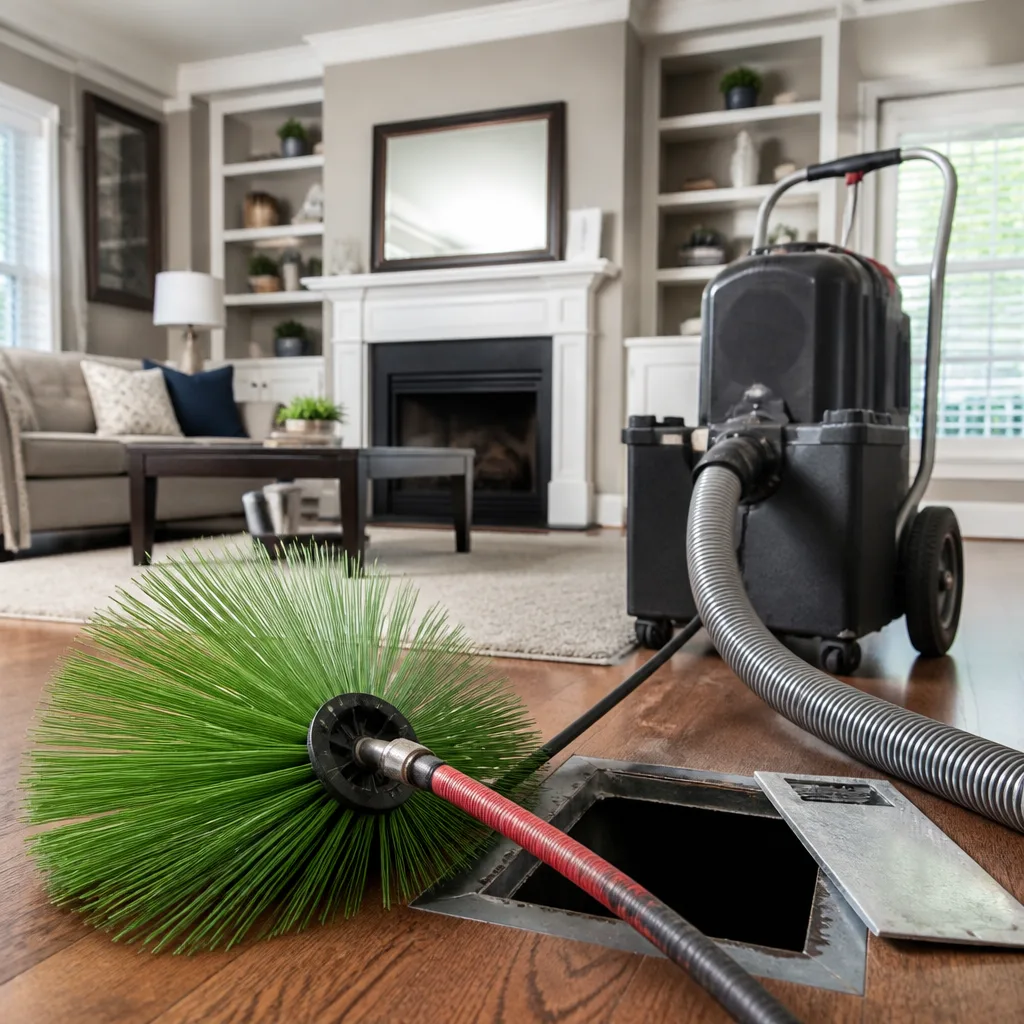
 Whole-home duct cleaning
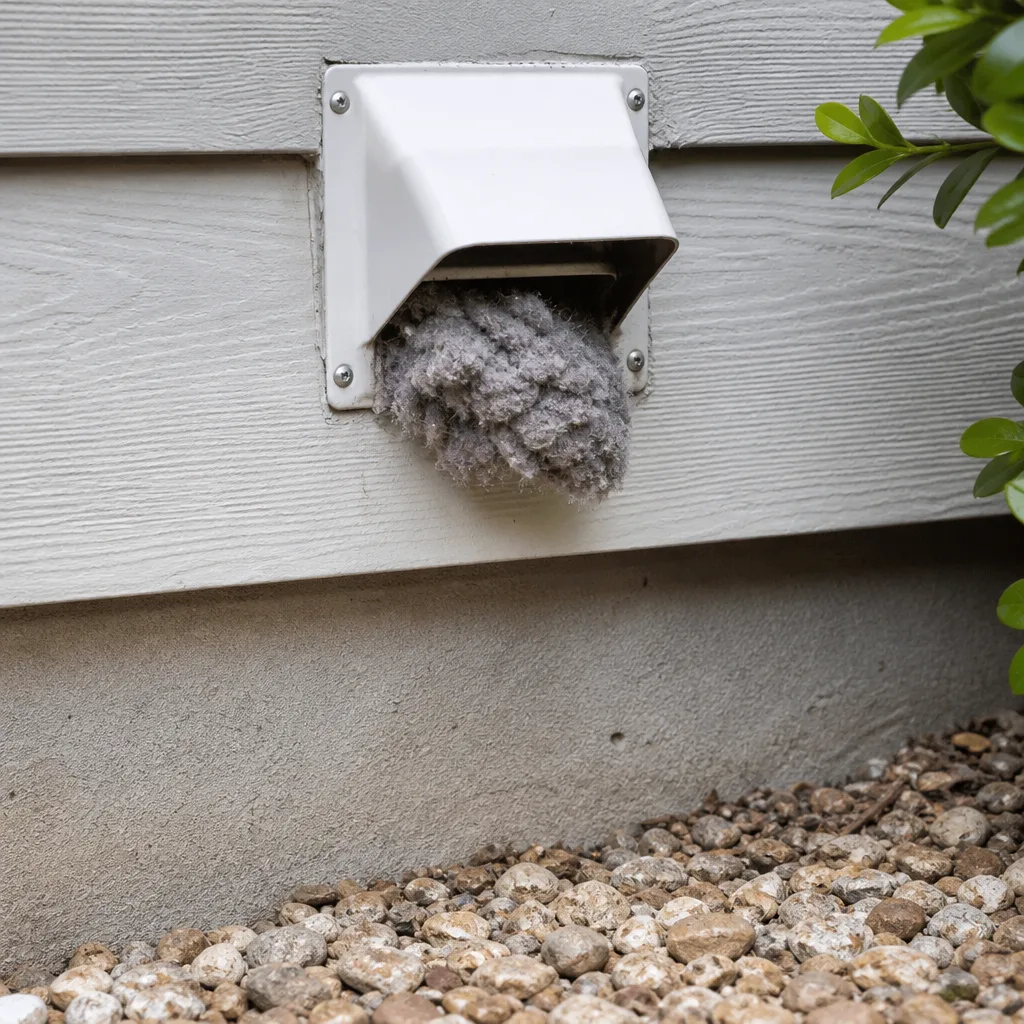 Dryer vent cleaning
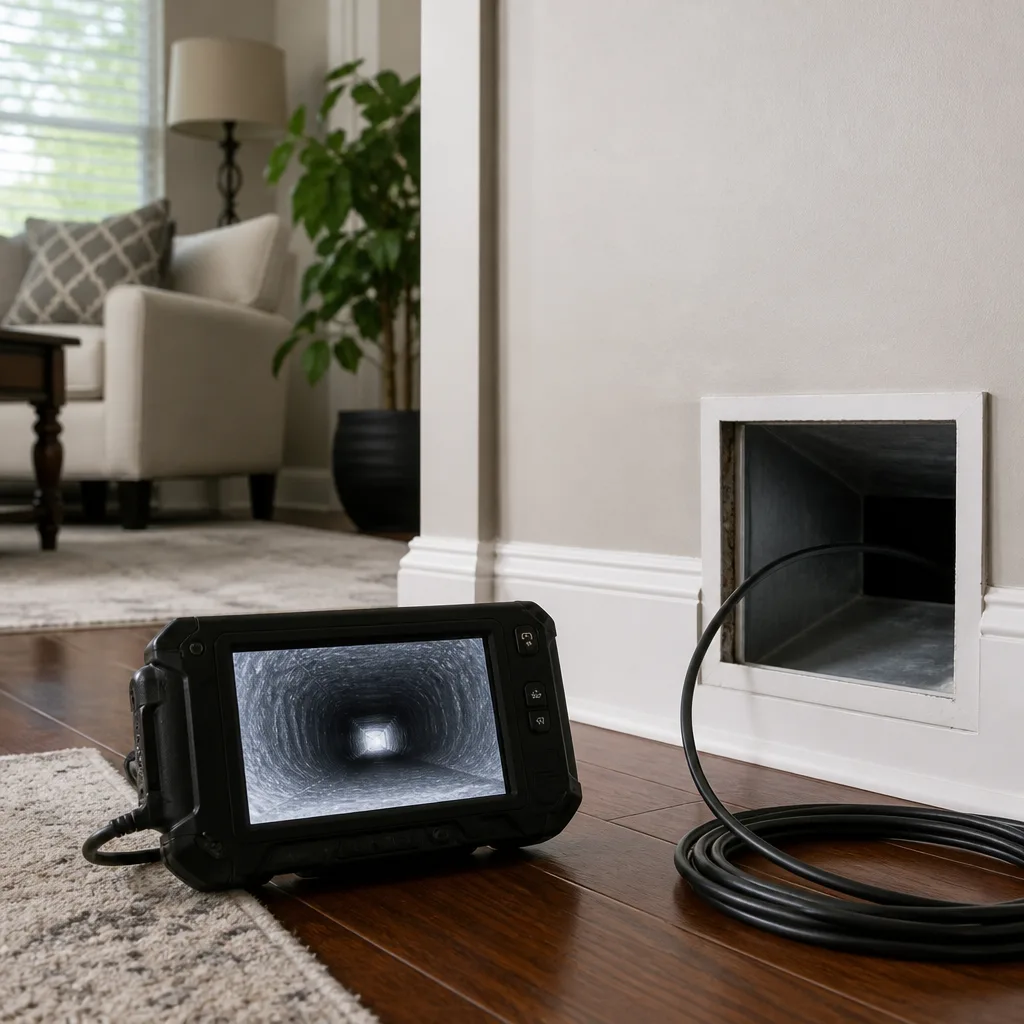 Camera inspection
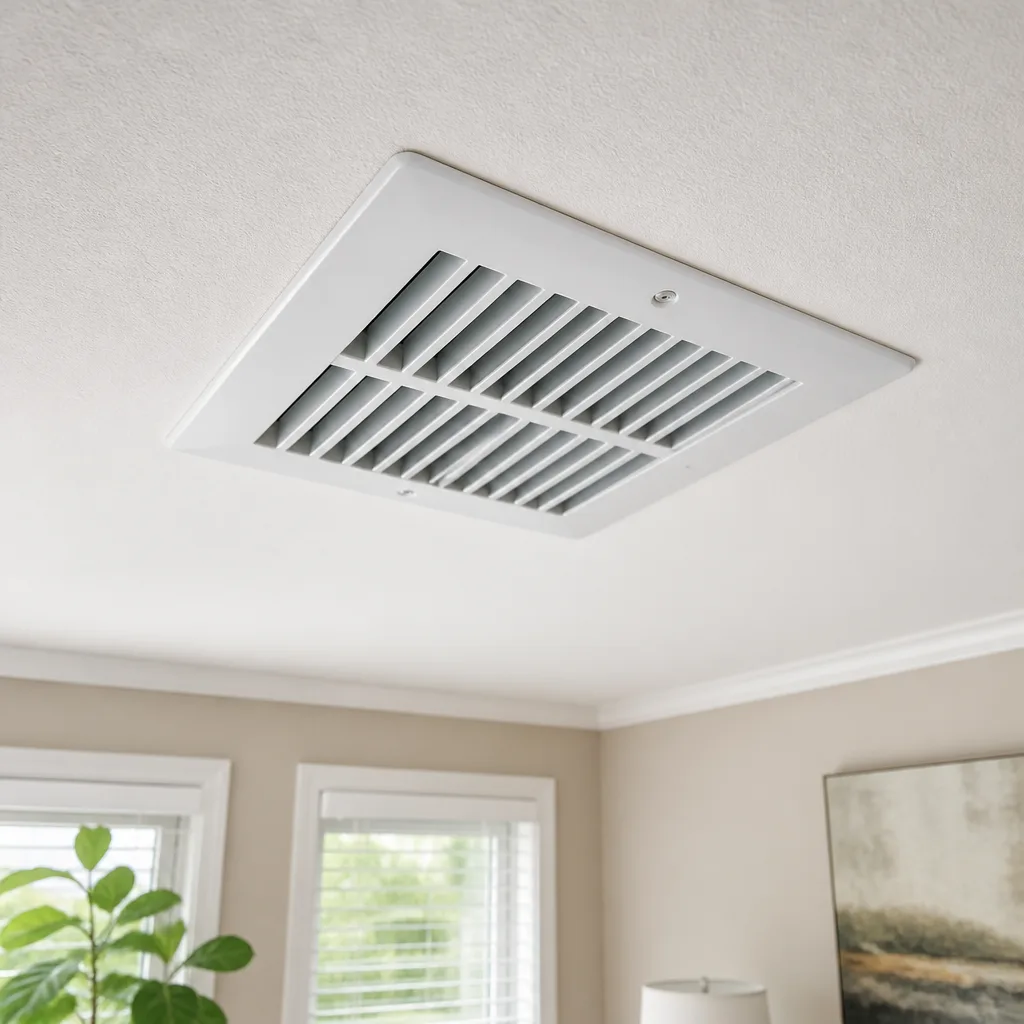 Sanitizing & deodorizing
Whole-system duct and dryer vent check with before-and-after photos - you see exactly what came out of your vents
That "$99 whole-house special" is a bait ad - the real number appears once they are in your hallway, or the "clean" is a shop-vac at the register. We photograph the inside of your ducts before and after instead.
Nikro Vent Sanitizing: The Tampa Owner’s Guide
If the sanitizing unit on your Nikro system has stopped fogging, is leaking solution, or tripped a breaker mid-cycle, here’s the straight answer: we stock Nikro-compatible vent sanitizing parts on our trucks throughout Tampa, and a complete sanitizer swap typically runs $225 to $410 installed, depending on your Nikro series and whether the pump, nozzle, or control module failed. Most Tampa jobs are same-week, not same-day, because we match your exact Nikro model rather than forcing a generic part into a housing it wasn’t built for. You’ll know the sanitizer has failed because the fog output thins out, the pump runs dry or loud, or you get a chemical smell in the wrong place: your hallway instead of the ducts.
Here’s what usually happens when a Nikro vent sanitizer goes down in a Tampa home. The pump seals harden from sitting idle between cleanings, the spray nozzle clogs from mineral buildup in Florida tap water, or the control board corrodes from humidity cycling inside a garage or utility closet. The result is the same: the unit runs, but nothing actually sanitizes the ducts you just paid to clean. You don’t need a new Nikro. You need the right part, installed by someone who knows which revision of the pump your specific series shipped with.
Which Nikro Models This Applies To
Nikro has built several vent sanitizing configurations over the years, and they are not all interchangeable. The main lines we see in Tampa are the Nikro Fog Master series (common on portable HEPA units), the sanitizer modules integrated into Nikro’s larger negative air machines, and the standalone electrostatic sprayers that some cleaning crews run separately. Each uses a different pump flow rate, a different voltage feed, and a different nozzle thread pattern. Swapping a Fog Master pump for a sanitizer module pump will fit physically and fail electrically within days.
Here’s the compatibility gotcha that costs owners money if they guess wrong: Nikro changed the pump voltage on sanitizing units around the mid-2010s from 120V AC to a lower-voltage DC feed on integrated modules. The part number will look nearly identical, but the suffix changes. Before ordering anything, we read the label plate on the unit itself, not the invoice from the original installer. If the unit predates that switch or the label is gone, we pull the pump and test the feed first. For OEM vs. aftermarket: Nikro OEM pumps are built to the exact flow spec of your unit’s fogger, and the aftermarket equivalents we stock are from manufacturers that supply the trade, not the knockoff brands that show up online. For parts that touch sanitizing chemistry, we default to OEM or trade-grade aftermarket only. The savings on a cheap pump disappear the first time the seals fail and you’re paying us to do the job twice.
Styles & brands we work with
Signs Your Nikro Vent Sanitizing Is Failing
- The fog is thin, weak, or barely visible. This usually means a partially clogged nozzle or a pump that’s losing pressure. In Tampa’s hard-water zones, mineral scale builds inside the nozzle over months, not years, and the fog output drops before the unit stops entirely.
- The pump runs loud or rattles. Nikro sanitizer pumps are quiet by design. A knock or chatter tells us the internal diaphragm is torn or the pump is cavitating because the pickup line is restricted. Running it this way sends sanitizing solution through the motor housing, which turns a pump replacement into a board replacement.
- Solution puddles under the machine. A cracked seal or loose fitting lets sanitizer drip even when the unit is off. This is both a part failure and a safety issue, because the puddle is a concentrated chemical, not dirty water. We treat any Nikro unit with a visible leak as a do-not-run until repaired.
- The breaker trips only when the sanitizing cycle runs. This points to a short in the pump feed or a corroded control board. Tampa humidity accelerates corrosion in garage-stored equipment. The trip might be intermittent for a while, then become permanent.
- You smell the sanitizing solution outside the vents. If the fog is escaping from the machine housing instead of traveling into the ductwork, a duct line or clamp has failed, or the nozzle is dumping solution in the wrong direction. Your ducts aren’t being sanitized, and you’re breathing concentrated fog in an enclosed space.
If you’re seeing any of these, stop running the sanitizer and call us at (850) 403-3474. One honest look at the unit beats guessing while the rest of the system keeps circulating untreated air.
See the difference
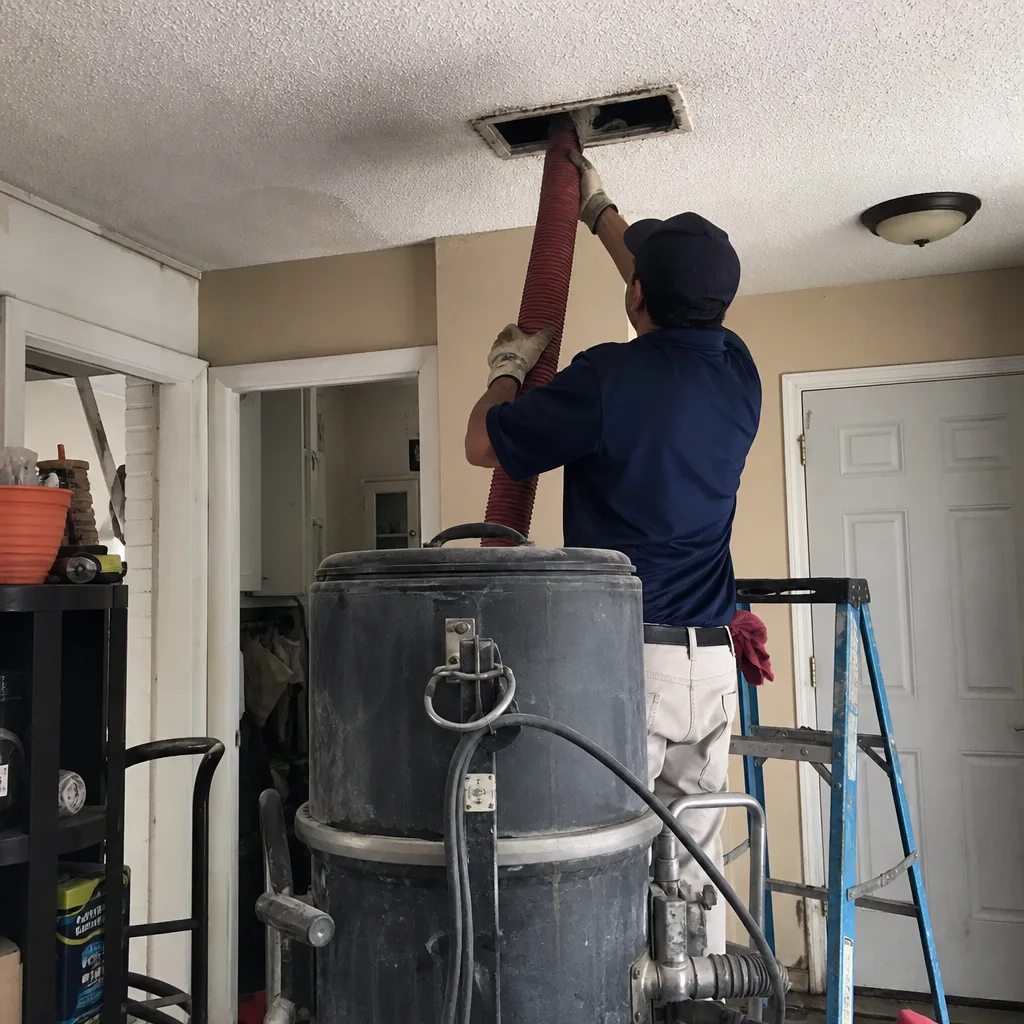 Before
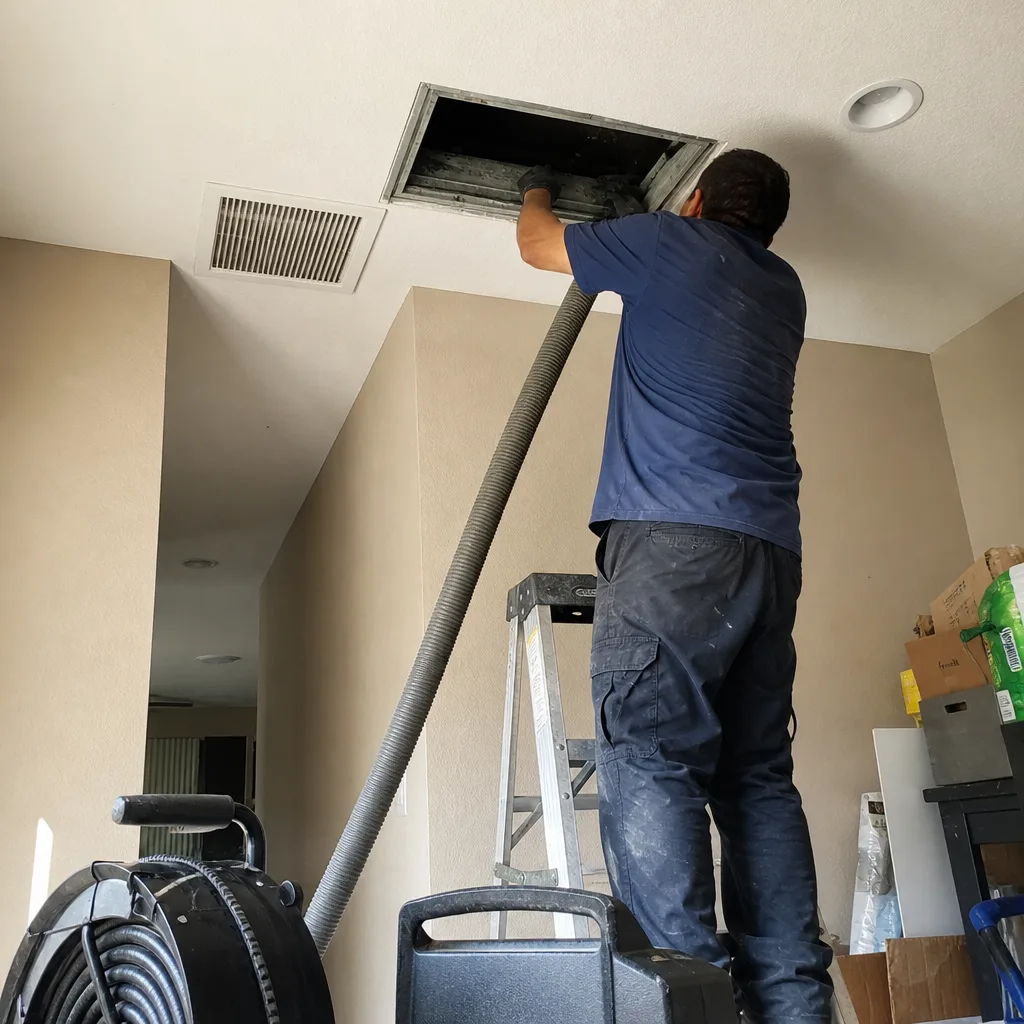 After
After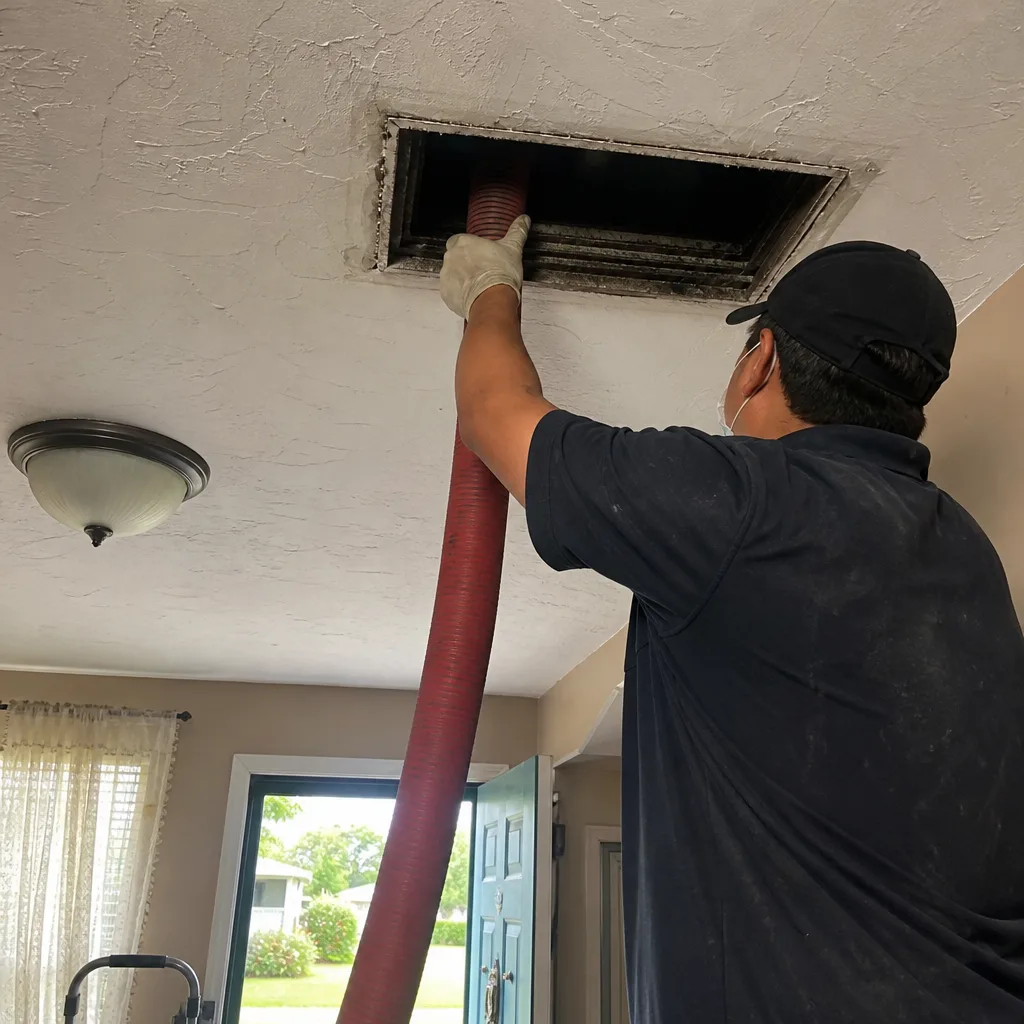 Before
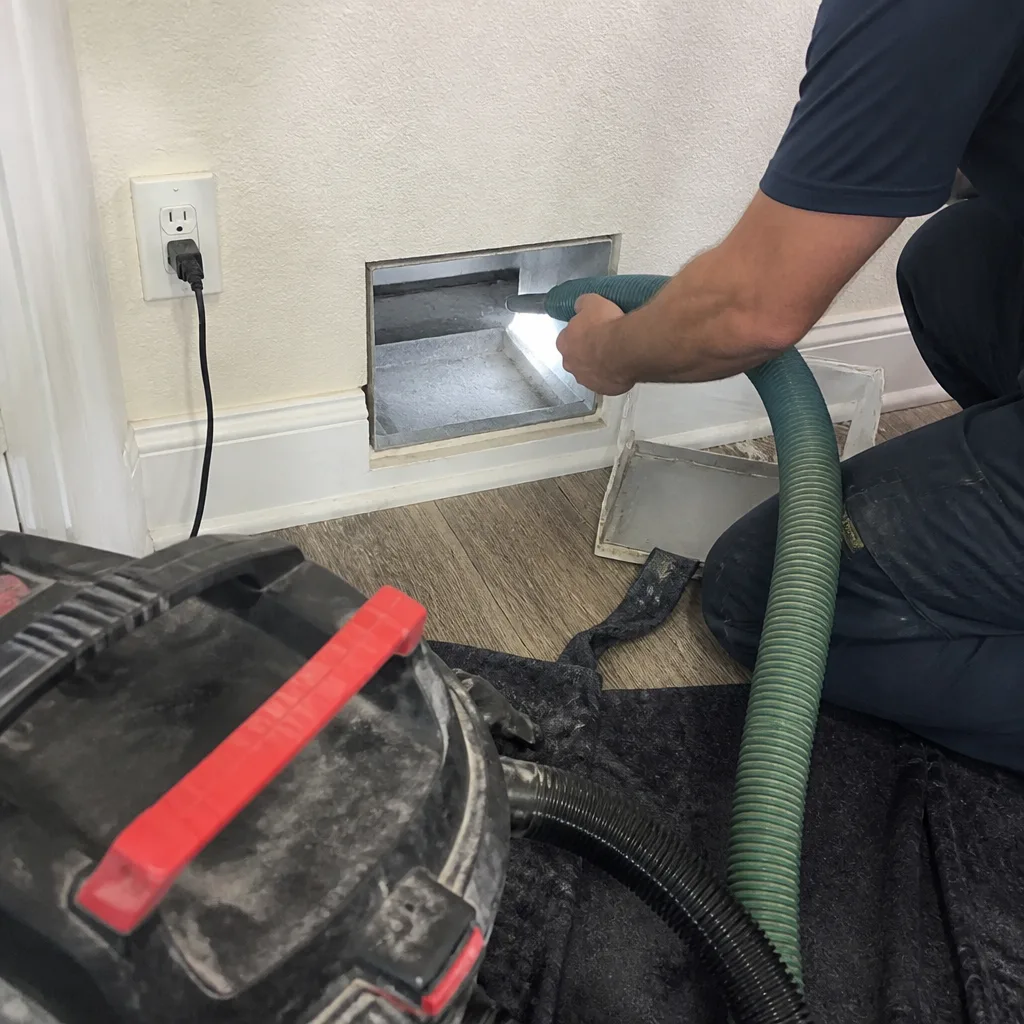 After
After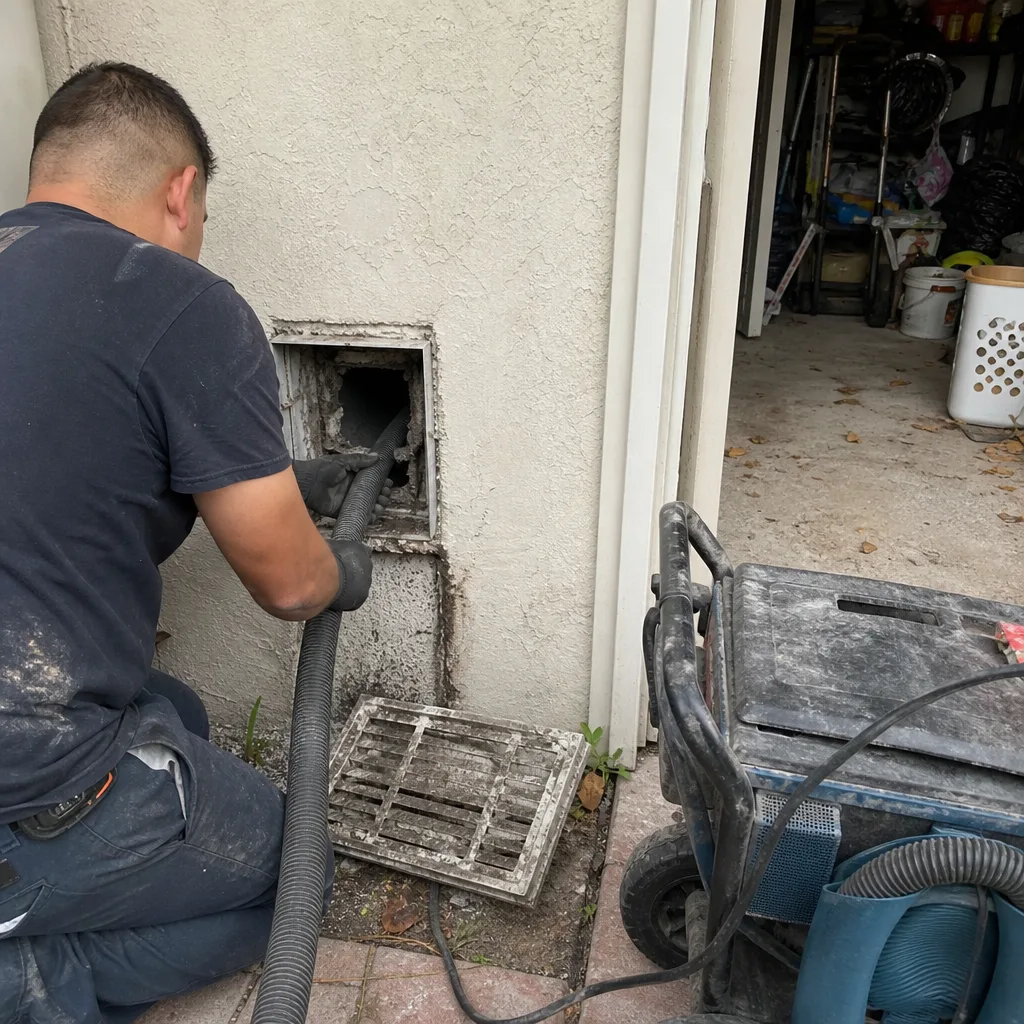 Before
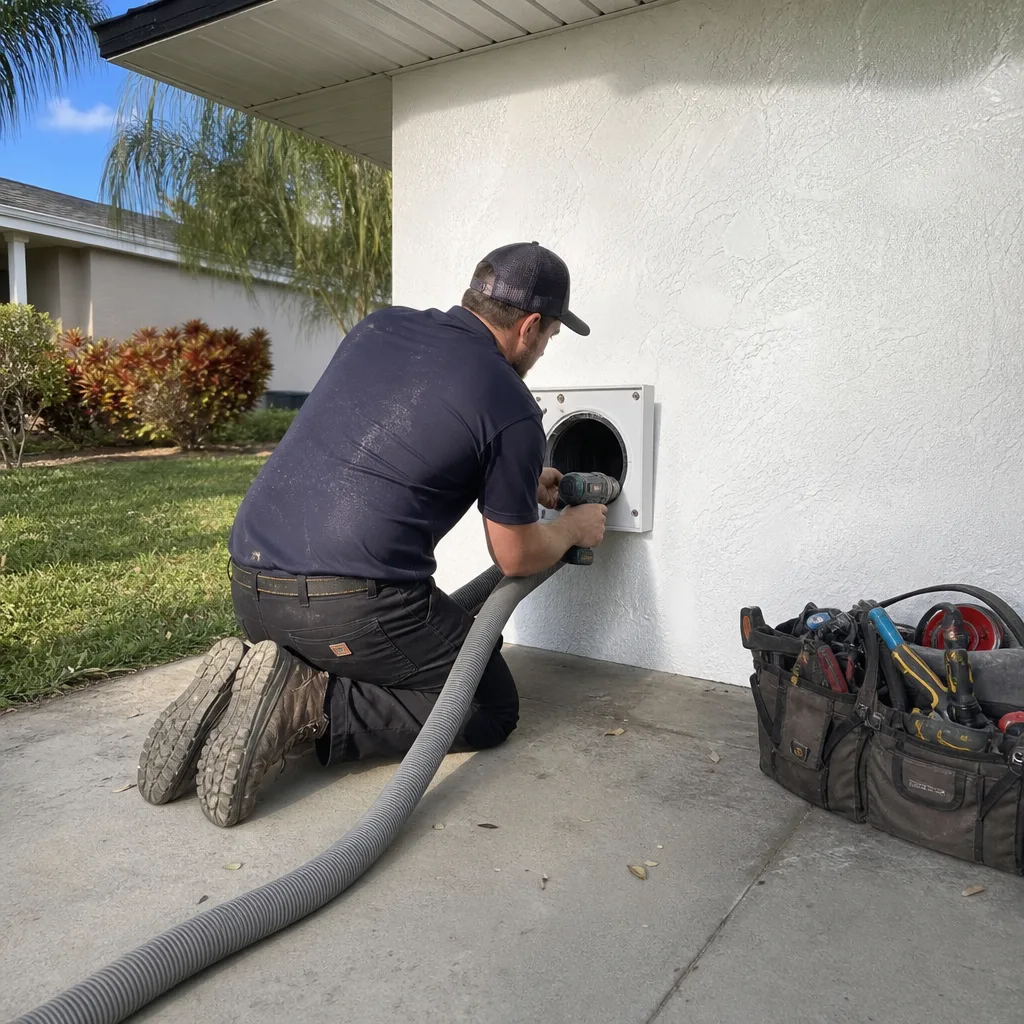 After
AfterReplacement Cost & What’s Included
Here’s the honest Tampa pricing picture. A full Nikro vent sanitizing part replacement, pump and nozzle together, typically runs $225 to $410 installed, with most jobs landing around $285 to $330. The spread depends on which Nikro series you own and whether the failure took out just the pump or also the control feed. If your unit only needs a nozzle or a seal kit, we never inflate the job into a full replacement. You pay for the part that failed, not the part we’d rather sell you. A control board replacement is the high end, usually $340 to $410, because the board itself is pricier and we test the entire sanitizing circuit after installing it.
Every replacement comes with the written price before we open the machine, the part spec confirmed against your Nikro model, and our 365-Day Done Right Promise on the full job. If that replacement fails within a year, we return and correct it at no charge. That’s not a new offer. It ships with every repair we do in Tampa, no exceptions, no fine print.
DIY or Call Us?
What you can safely check yourself: read the label plate so you can tell us your Nikro model, inspect the power cord and plug for visible burns or cracking, and check whether the sanitizer pickup tube is kinked or the solution tank is empty. That’s the honest limit. What we’d caution against: opening the pump housing, removing the fogging nozzle under pressure, or bypassing any electrical interlock to test the unit. Nikro sanitizers run pressurized fluid through tight fittings. A nozzle that’s under residual pressure can spray concentrated solution into your face, and a pump that’s being bench-tested with the wrong voltage will fry the board you were trying to save.
We’ve fixed enough DIY attempts across Tampa to say this plainly: the training isn’t the issue, it’s the chemistry and the electrical feed. The job isn’t hard for someone who has the right parts and a multimeter in the truck. If you have to buy the part online and watch a video to install it, call us at (850) 403-3474 instead. It’ll be done correctly the first time, with a written price and a year-long correction window behind it.
FAQs
We typically see Nikro sanitizer pumps last 3 to 5 years in Tampa homes before the seals harden or the motor bearings wear, though units stored in unconditioned garages can fail faster because the humidity cycles eat into the electrical connections. A unit that’s run monthly during peak AC season will outlast one that sits sealed in a box eight months a year. If yours failed early, we’ll always check whether the cause was the part or the storage conditions before we hand you a quote for the same part again.
Yes, when the failure is a nozzle, a seal, a fitting, or a kinked pickup line, and we repair those often. Pumps and control boards are replacement territory. If the repair meaningfully extends the life of the part, we’ll recommend it. If not, we’ll tell you straight. Call us at (850) 403-3474 and we’ll quote both directions before any work begins.
A straightforward pump or nozzle swap takes about 45 to 75 minutes on site, start to finish, including testing the full fog output against your Nikro’s flow spec and confirming no leaks at any joint. A control board replacement can add 20 minutes because we verify every feed and ground before and after. Either way, you’ll have a written price in hand before we start turning wrenches.
We stock the most common Nikro vent sanitizing pumps, nozzles, and seal kits on our trucks in Tampa, from trade-grade equivalents for the Fog Master line to the exact OEM part for integrated modules. If you have a less common revision, we source it within a few days and schedule the install around arrival. You won’t be left with a dead sanitizer and no answer. We also work on vent sanitizing systems for Lennox, Trane, and Carrier setups, so if you run multiple brands across your properties, we can service them in a single visit.
Call (850) 403-3474 for a free estimate on your Nikro vent sanitizing replacement. We’ll ask for your model number, tell you what’s likely failed, and quote you an installed range before we ever park the van. That’s how Omar Haddad runs Cardinal Air Duct Tampa: written price, matched part, no surprises. Clean ducts aren’t a luxury, in Florida humidity, they’re just maintenance you haven’t skipped yet.
Written by Omar Haddad, Owner, Cardinal Air Duct Tampa at Cardinal Air Duct Tampa, serving Tampa and nearby areas.