
 Whole-home duct cleaning
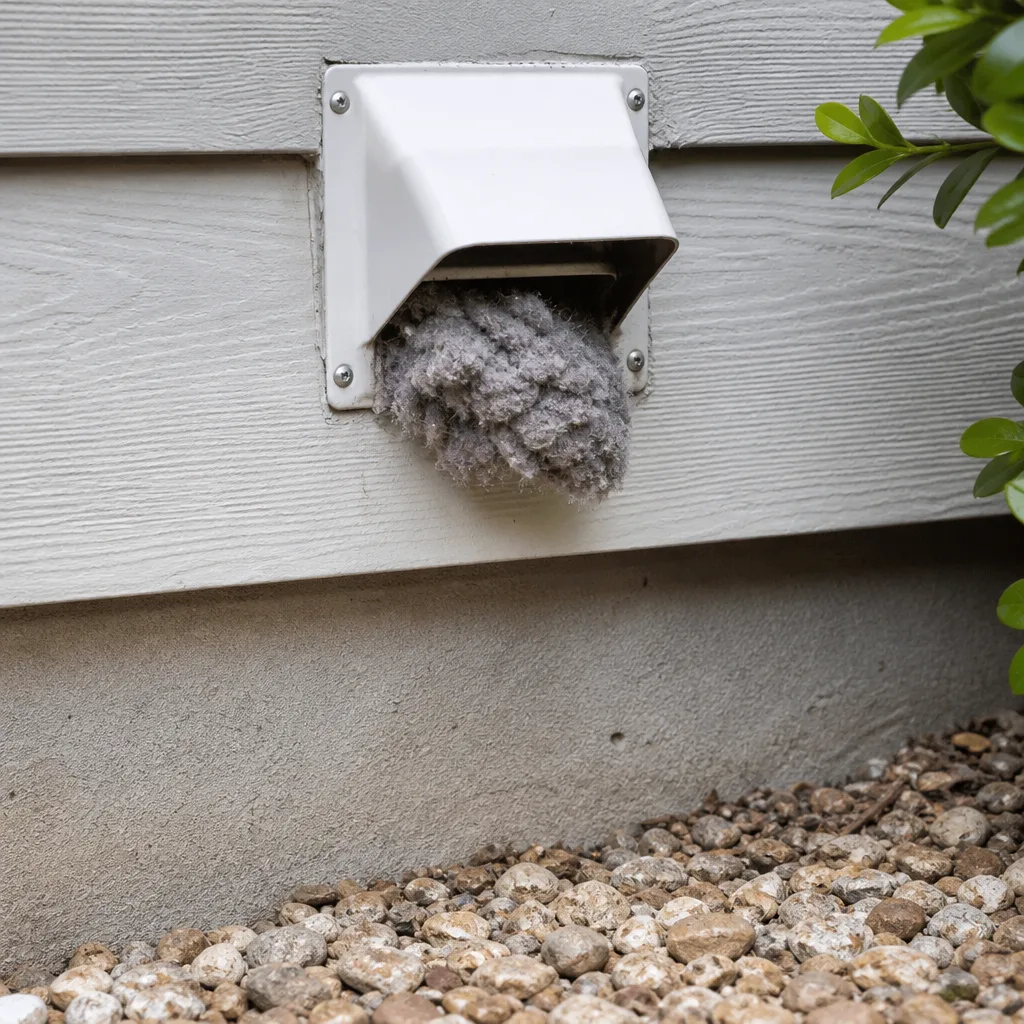 Dryer vent cleaning
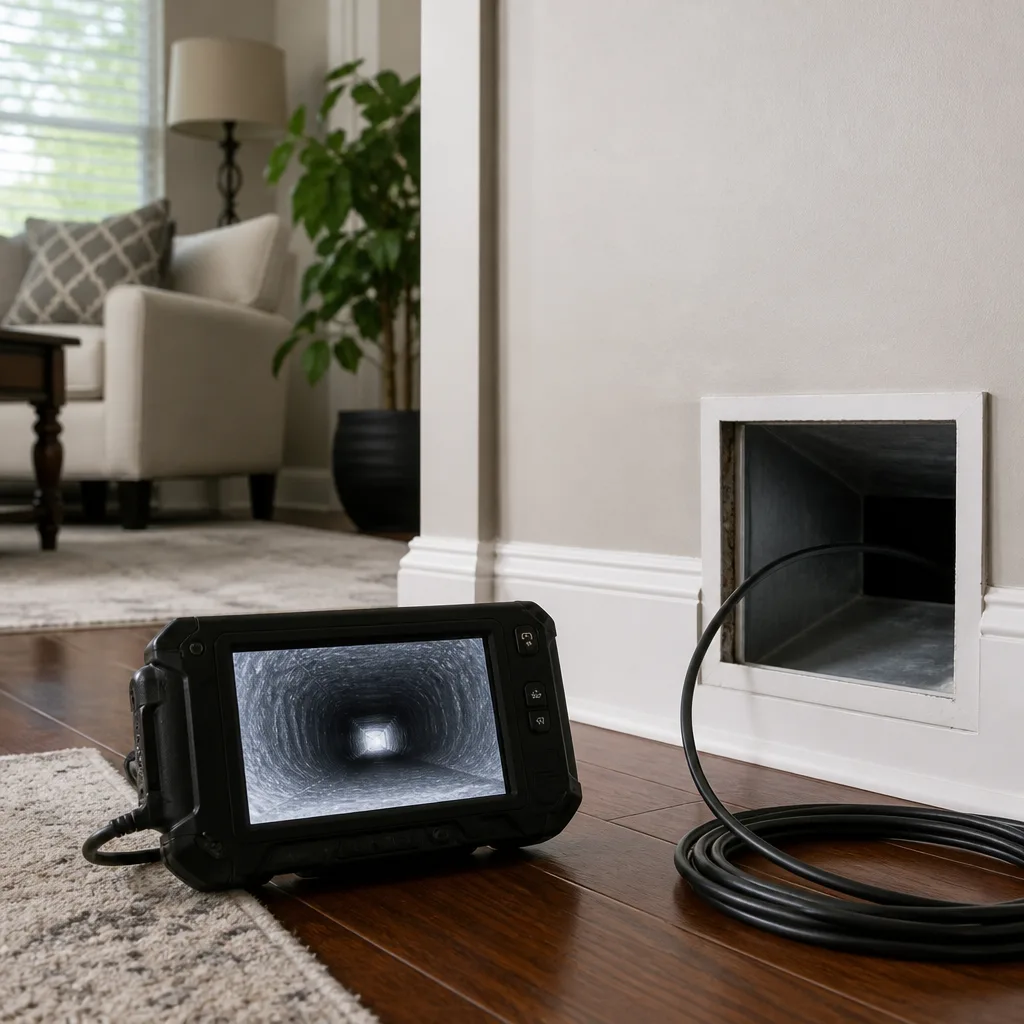 Camera inspection
 Sanitizing & deodorizing
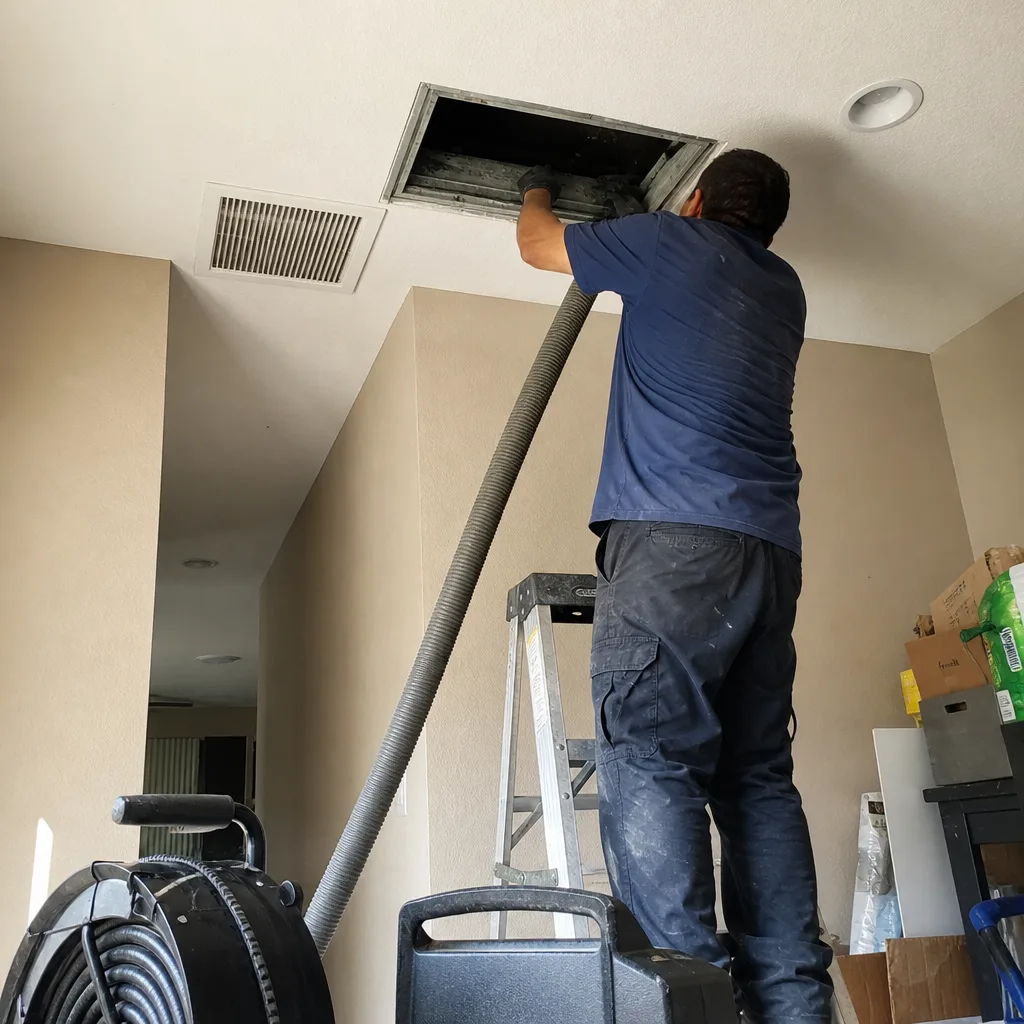
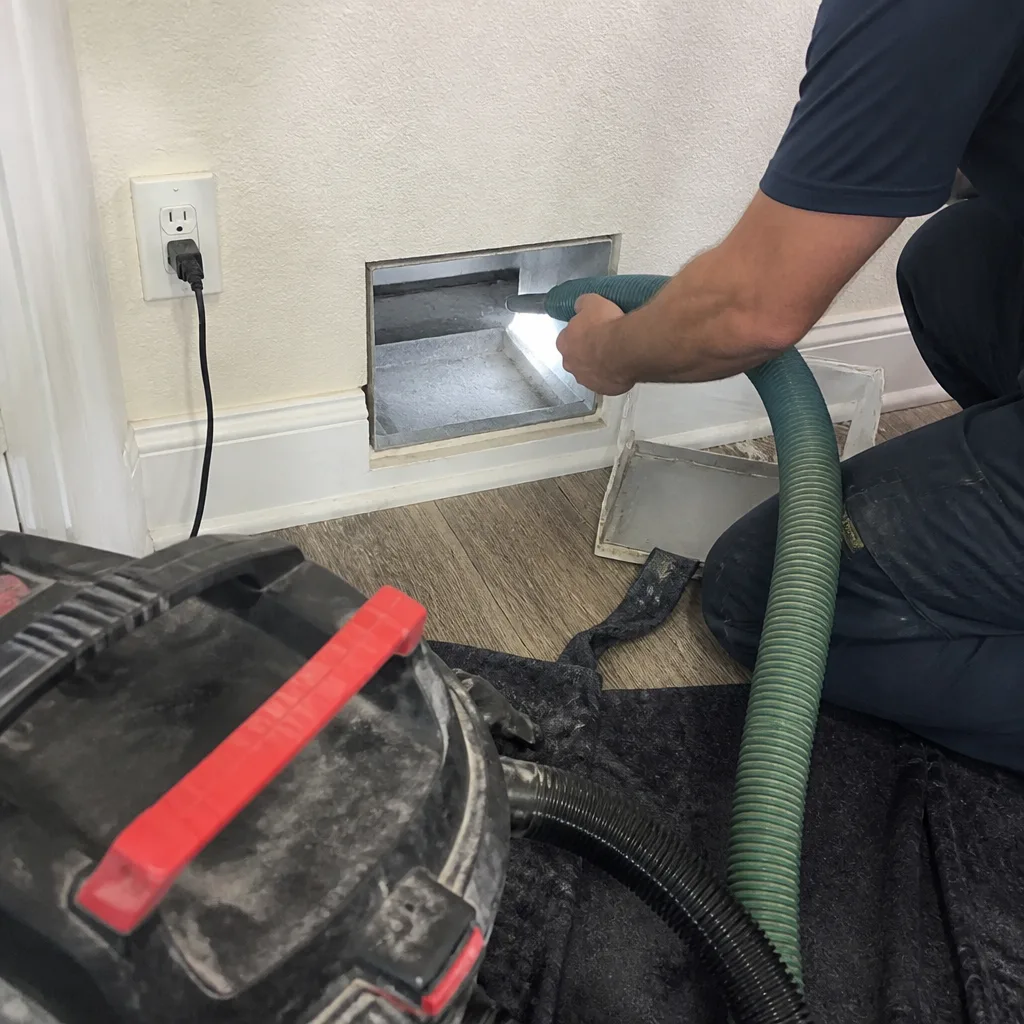
Whole-system duct and dryer vent check with before-and-after photos - you see exactly what came out of your vents
That "$99 whole-house special" is a bait ad - the real number appears once they are in your hallway, or the "clean" is a shop-vac at the register. We photograph the inside of your ducts before and after instead.
Rotobrush Register & Grille Cleaning: The Tampa Owner’s Guide
We stock and install Rotobrush-compatible register and grille cleaning attachments for most residential brush systems, and a typical replacement runs $145 – $310 installed here in Tampa. Most owners discover the part has failed the same way: the bristles start flattening against the register face, the brush head wobbles on the spindle, or it simply stops grabbing the grille lines altogether. We carry the common sizes on our trucks, so in many Tampa neighborhoods we can swap yours the same visit without a second trip. Omar Haddad has been putting these parts in for over a decade, and the failure pattern is almost always the same story: nylon bristle fatigue from years of hard contact with painted metal grilles.
Here’s the honest picture. A register and grille cleaning attachment is a consumable wear part, not a lifetime component. The bristles flex thousands of times per job, and Florida’s heat plus the abrasive edge of powder-coated and enamel-painted grilles chews through them faster than most manuals suggest. If yours is leaving visible streaks on the register face or you’re hearing a chattering sound when the brush head makes contact, the part is telling you something.
Which Rotobrush Models This Applies To
The register and grille cleaning attachment fits Rotobrush aiR+ series systems, the older Rotobrush 1 and 2 brush platforms, and aftermarket brush kits built to the same 1/4-inch quick-connect spindle spec. The critical measurement is the brush head diameter. Most residential systems run a 4-inch or 6-inch register brush face. Commercial units occasionally use an 8-inch head, which we order if you need it. Before you call us, look at the brush hub. Rotobrush stamps a part number on the back of the brush block on most aiR+ attachments, typically starting with “RB” followed by a four-digit number. That number tells us the series and diameter in seconds.
Here’s the compatibility gotcha most Tampa owners hit: aftermarket register brushes sold on generic supply sites often list “fits Rotobrush” but use a softer nylon blend that flattens within 20 or 30 jobs. A genuine Rotobrush brush head uses a stiffer nylon formulation, and on painted Florida register faces that stiffness is exactly what keeps the cleaning even. We stock OEM Rotobrush heads, and when a customer wants a longer-wearing option we offer quality aftermarket heads in the same durometer range. Either way, you’ll know what you’re getting and what it costs before we touch the system. We’re an independent Tampa service provider, not affiliated with Rotobrush, so we’re free to tell you which option actually makes sense for how you use your machine.
Styles & brands we work with
Signs Your Rotobrush Register & Grille Cleaning Is Failing
- Streaking on register faces after cleaning. This is the earliest and most common sign. Flattened or bent bristles skip over sections of the grille, leaving visible dust lines. The brush is no longer making full contact.
- Chattering or bouncing during a pass. When nylon bristles lose their spring, the head starts oscillating unevenly against the metal. You’ll hear it and feel it through the wand. It’s not the motor. It’s the brush.
- Visible bristle loss around your work area. Nylon fibers breaking off mid-job means the bristle compound has gone brittle. In Tampa’s heat, brittle failure happens faster, especially if the brush gets stored in a hot van or garage. You’ll find small nylon strands on the floor near the registers.
- Reduced suction pickup at the register. A worn brush head stops creating the proper air seal around the grille face. The negative-pressure extraction, which pulls loosened debris straight into the vacuum rather than your living room, loses effectiveness. You’ll notice dust settling back onto the register within a day or two.
- Wobble or play where the brush mounts. A brush head that no longer seats tightly on the spindle has a worn hub or a stretched quick-connect. That wobble will wear the spindle over time, turning a $145 brush head replacement into a motor housing repair. We see it in Tampa more often than you’d think, especially on systems that run multiple jobs a week.
See the difference
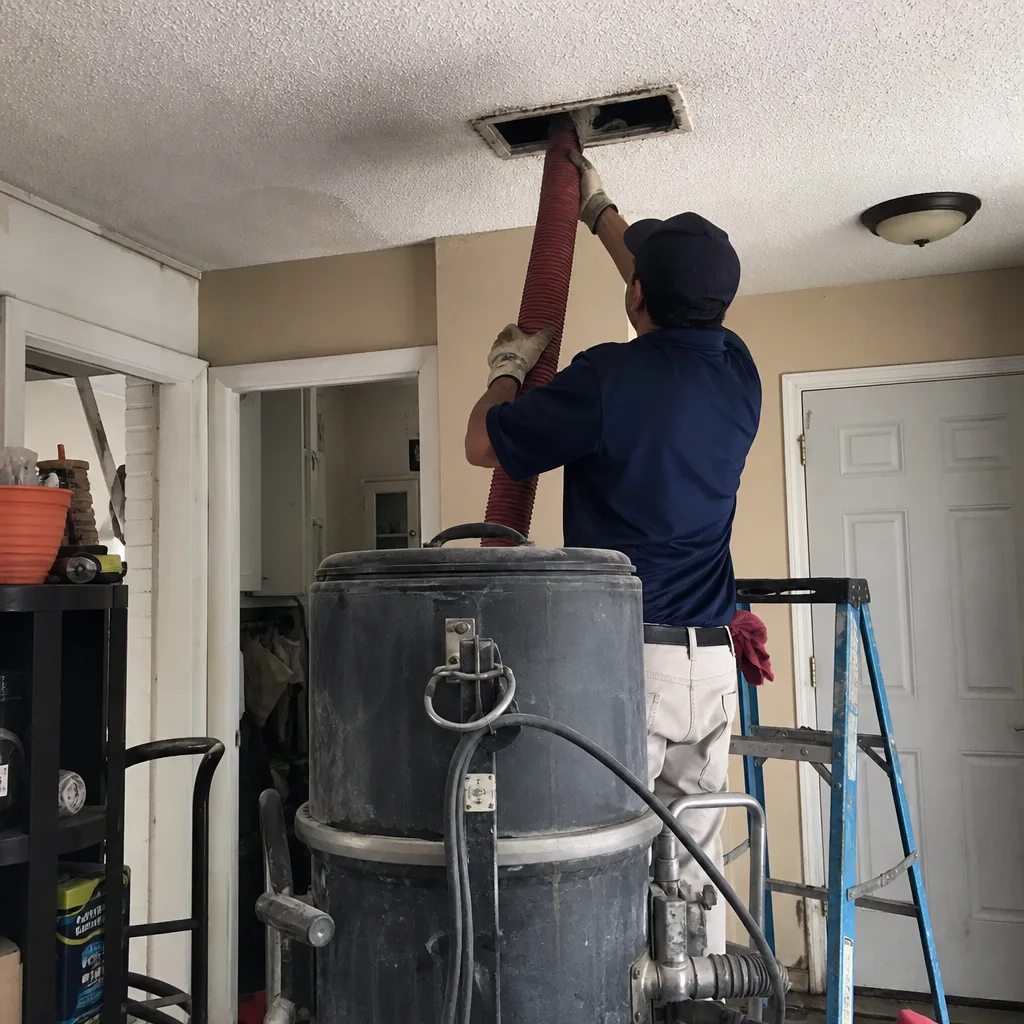 Before
 After
After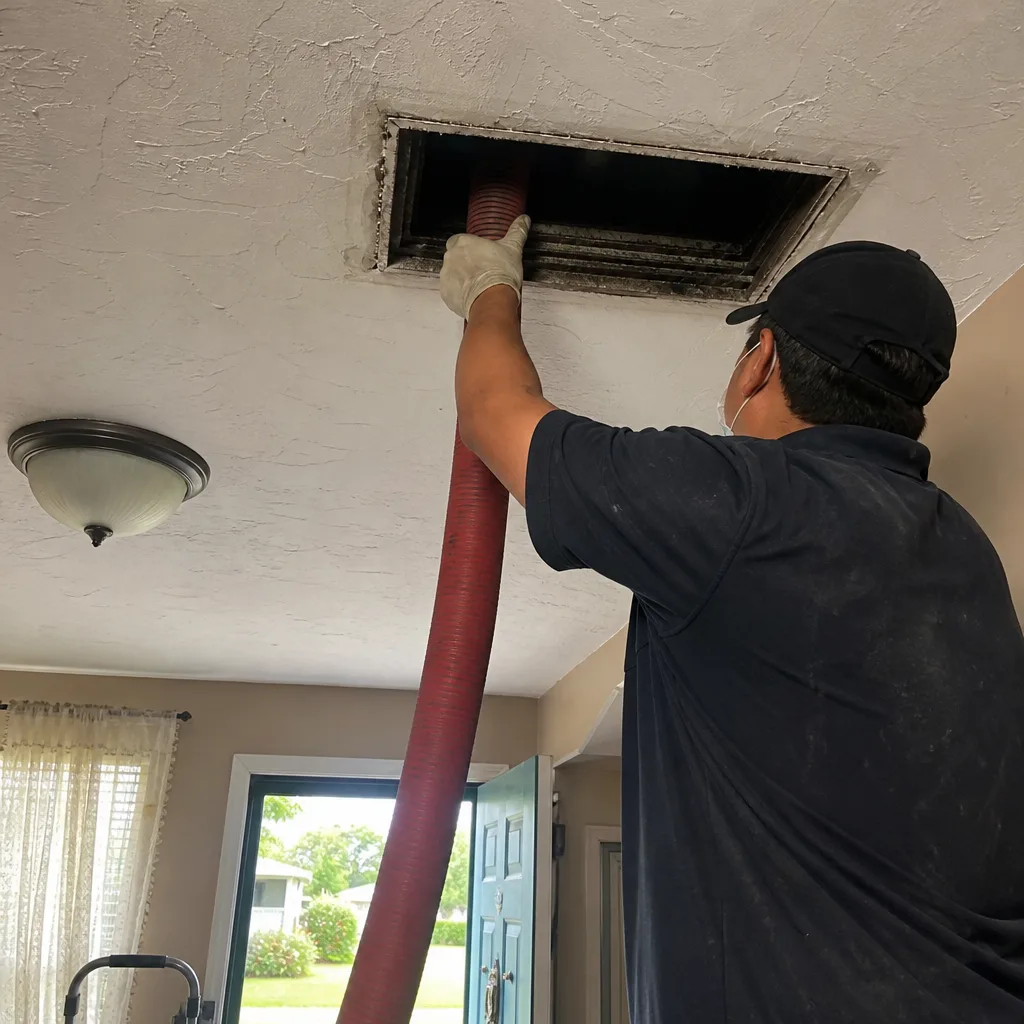 Before
 After
After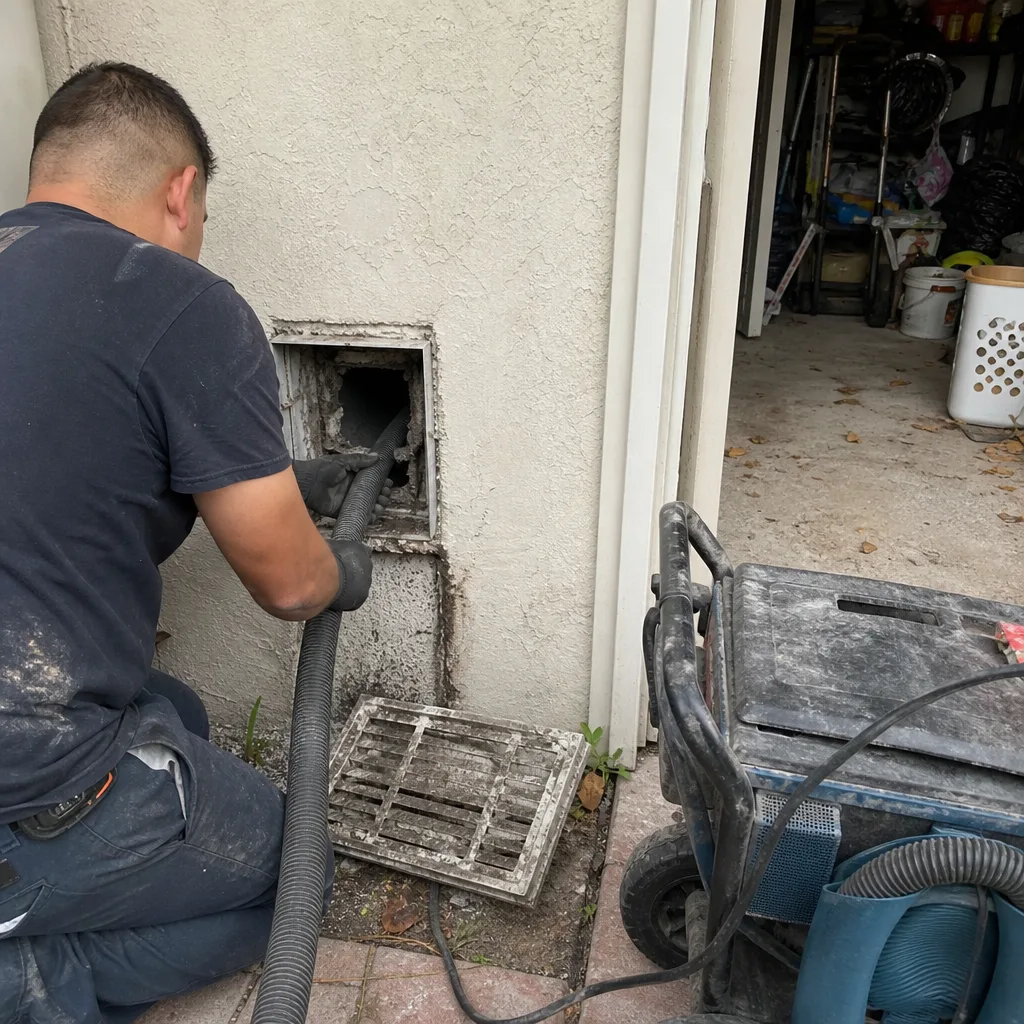 Before
 After
AfterReplacement Cost & What’s Included
A register and grille cleaning attachment replacement in Tampa runs $145 – $310 installed, depending on brush diameter and whether you need an OEM Rotobrush head or a quality aftermarket equivalent. The 4-inch residential heads sit at the low end. The 6-inch heads and commercial 8-inch heads push toward the top. The labor is straightforward: we remove the old head, inspect the spindle for wear, install the new brush, and run a test pass on one of your registers so you can see the contact pattern before we leave. That test pass matters. It confirms the bristle pressure is right, and it’s the difference between a parts swap and an actual fix.
Every replacement carries a written guarantee, and if the new brush fails within 365 days, we return and replace it at no charge. That’s the 365-Day Done Right Promise, and it applies to every parts job we do in Tampa, no fine print. You’ll get a written price before any work starts, and the quote won’t change once we’re at your door.
DIY or Call Us?
There’s no serious injury risk in swapping a register brush head, assuming the Rotobrush is unplugged first. We’re not going to scare you off a straightforward parts replacement. What you can safely do: read the part number off the brush hub, measure the head diameter with a tape measure, and check the spindle for visible scoring or rust. Those three steps help us quote the job accurately over the phone.
Where DIY goes wrong is the diagnosis. Most owners replace the brush head and call it fixed, then the same chatter comes back because the real problem was a worn spindle or an unbalanced wand connection. We’ve corrected enough of those in Tampa to be direct about it: if you’ve had the brush head replaced before and it failed again inside a year, the brush wasn’t the whole story. We’ll diagnose the full assembly, quote you the one part that actually needs replacing, and back it for a full year. Call (850) 403-3474 and we’ll help you sort it out.
FAQs
In residential use around Tampa, expect 300 – 500 register faces before the bristles lose their spring, less if you’re working with heavily textured or older painted grilles on a regular basis. Storing the brush out of direct Florida heat, ideally in a climate-stable space rather than a closed van or garage, meaningfully extends the bristle life. Call (850) 403-3474 if you’re tracking productivity per head and want a straight answer on whether yours is wearing normally.
Replacement is the only sensible fix. The nylon bristle block is molded as a single unit, and attempting to re-bristle or trim it to restore stiffness always produces uneven contact and a weaker seal. The attempt costs more in wasted labor than a new brush head. We keep the common sizes on our trucks in Tampa, so we can usually swap yours the same visit.
The physical replacement takes 20 to 30 minutes. We add a short test pass on one of your registers to confirm the brush contact pattern and the air seal, so plan for about 45 minutes total from arrival to a written invoice in your hand. If the spindle shows wear, the visit gets longer, and we’ll show you what we found and quote the additional work before touching it.
Yes. We carry 4-inch and 6-inch Rotobrush-compatible brush heads as standard truck stock across our Tampa service area, plus the most common aftermarket equivalents. The 8-inch commercial head and unusual spindle adapters are typically a short order. Call (850) 403-3474 with your part number and we’ll tell you whether the replacement is on the truck today.
Yes. The brush head is the air-seal point at the register face. A worn head lets air leak around the sides of the cleaning pass, which pulls less debris into the Rotobrush vacuum. New bristles restore the seal and keep the negative-pressure extraction doing its job, meaning the loosened debris goes into the vacuum instead of drifting into your living room. If you notice dust settling back on registers within days of cleaning, the brush head is the first thing we check. Call (850) 403-3474 for a free estimate on the replacement.
Written by Omar Haddad, Owner, Cardinal Air Duct Tampa at Cardinal Air Duct Tampa, serving Tampa and nearby areas.