
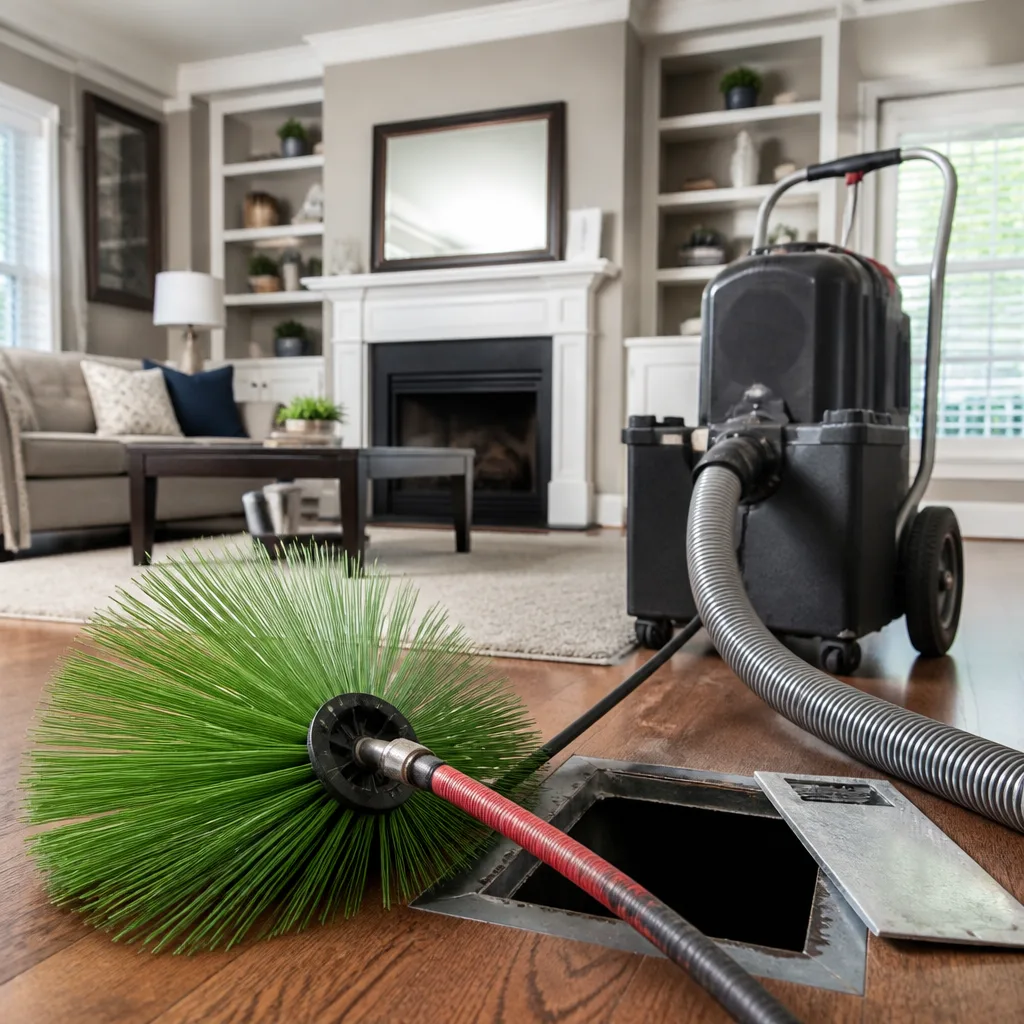
 Whole-home duct cleaning
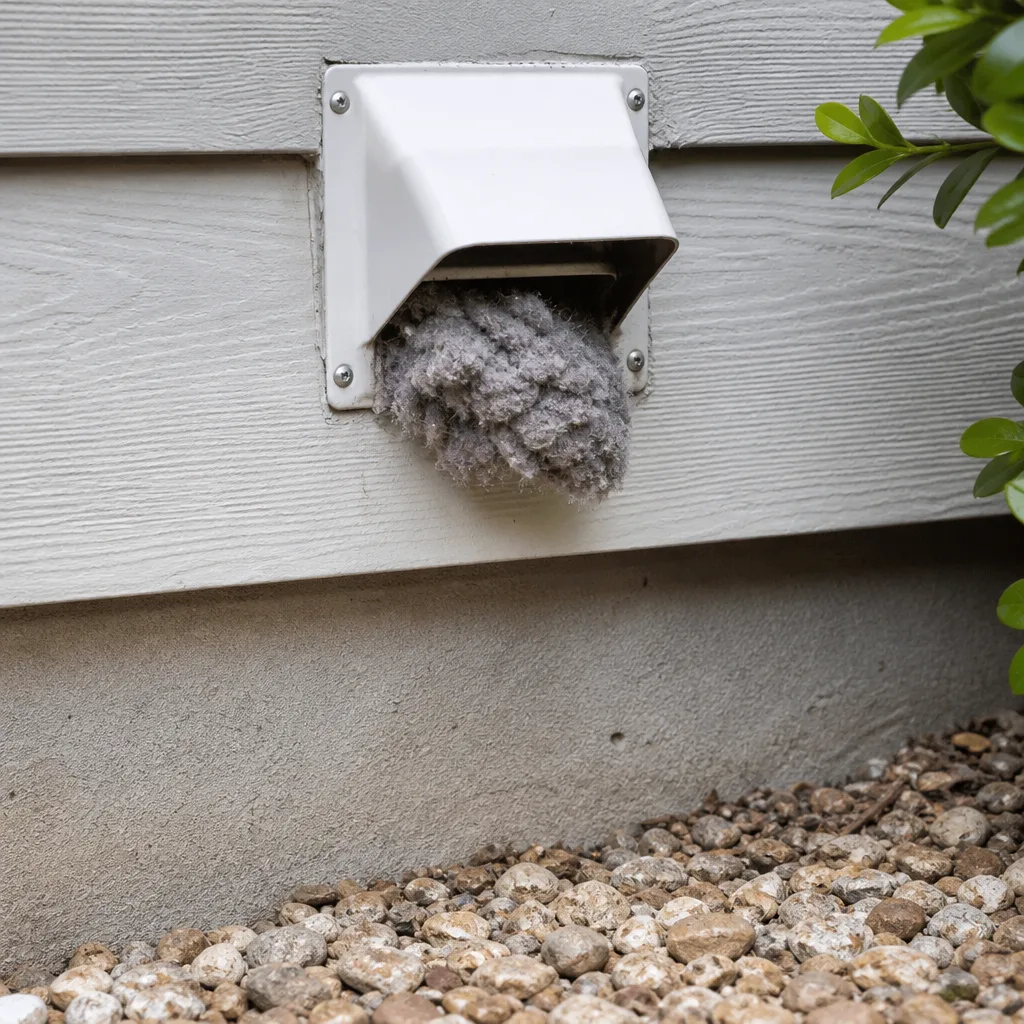 Dryer vent cleaning
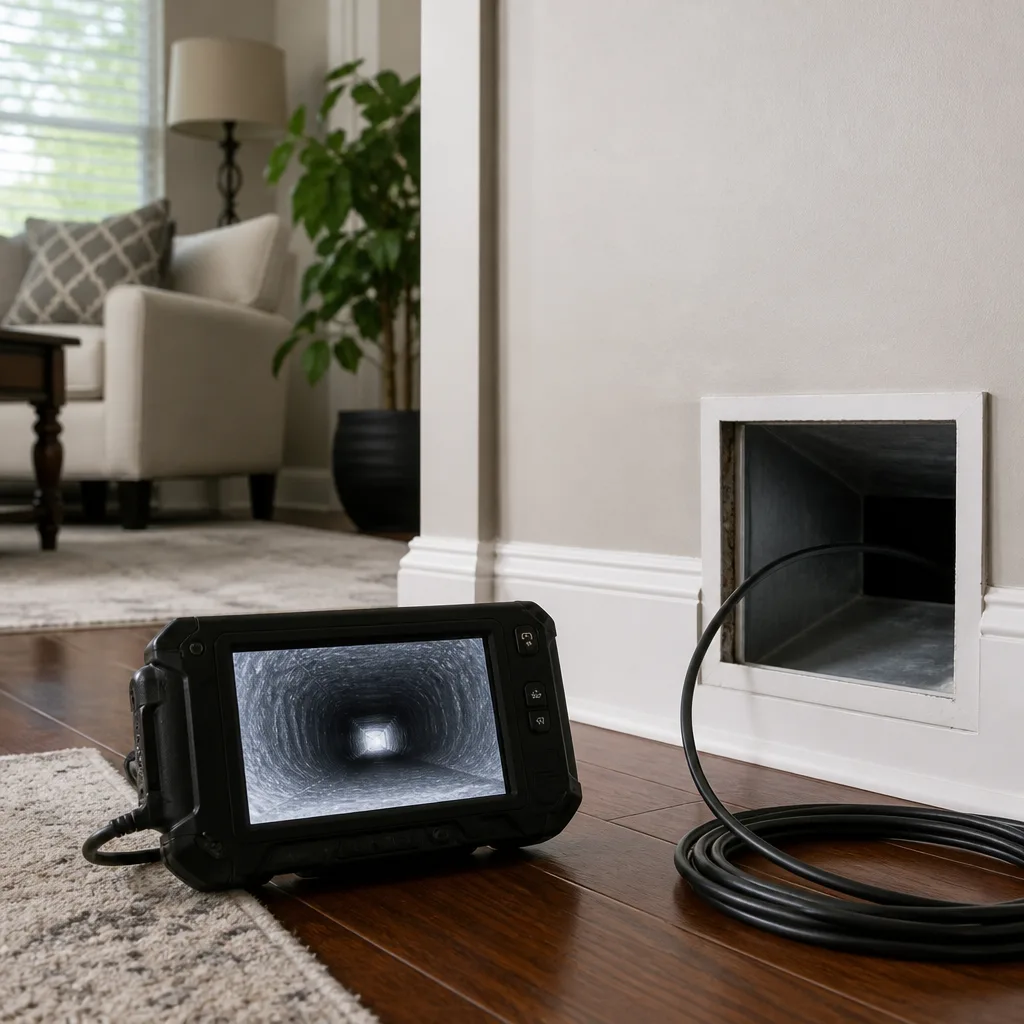 Camera inspection
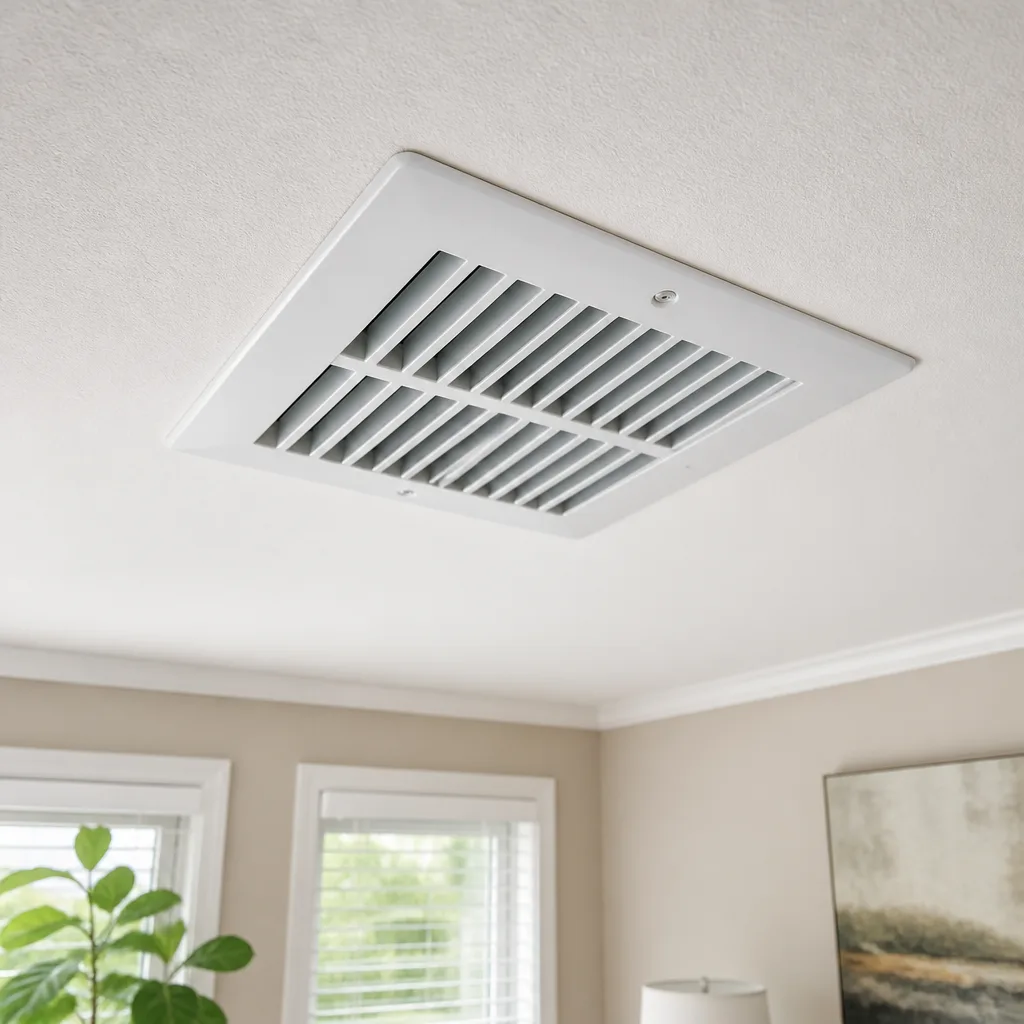 Sanitizing & deodorizing
Whole-system duct and dryer vent check with before-and-after photos - you see exactly what came out of your vents
That "$99 whole-house special" is a bait ad - the real number appears once they are in your hallway, or the "clean" is a shop-vac at the register. We photograph the inside of your ducts before and after instead.
Rotobrush Vent Sanitizing: The Tampa Owner’s Guide
We stock, install, and service Rotobrush-compatible vent sanitizing components across Tampa, and a typical sanitizer replacement or repair runs $145 – $285 installed, depending on which Rotobrush model you’re running and whether the failure is in the atomizer head or the feed line. Most owners discover the problem the hard way: they fire up the unit after it’s been sitting in a humid garage or truck bay for a few months, and instead of a fine sanitizer mist, they get a weak dribble or nothing at all. What follows is the page we wish every Tampa duct cleaner had before they bought a part they didn’t need.
We’re an independent Tampa duct cleaning company that runs Rotobrush brush systems, Nikro HEPA vacuums, and Abatement Technologies containment units every week. We are not affiliated with Rotobrush, but we know their equipment the way you only can after a decade of field repairs in Florida humidity.
Which Rotobrush Models This Applies To
The vent sanitizing hardware on Rotobrush systems spans three main generations, and the compatibility gotcha is real. The older aiR+ and R2S series use a gravity-fed sanitizer cup with a needle valve at the base. The R3 and Viper series moved to a small electric pump that pushes sanitizer through a 1/4-inch clear vinyl line to a brass atomizer tip. The newer Beast and Raptor units run a stainless steel atomizer block mounted at the brush head, and that block threads onto a specific male fitting that is not interchangeable with the older R3 thread pattern.
How to identify yours: look at the sanitizer line where it meets the head. If you see a small brass cone with a single tiny orifice, that’s the R3/Viper atomizer. If the tip is recessed inside a stainless block with a hex shoulder, that’s the Beast/Raptor fitting. If you have a plastic cup that just drips, you’re on the aiR+ series and you need a new needle valve assembly, not the atomizer tip.
On OEM versus aftermarket: for feed lines and gaskets, a quality aftermarket equivalent is fine and saves money. For atomizer tips and metering parts, we order OEM Rotobrush components because the orifice tolerances matter. A cheap aftermarket tip with a slightly oversized orifice will over-apply sanitizer, which leaves sticky residue inside the duct and can trigger odor complaints from homeowners. In Tampa’s humidity, that residue also attracts dust faster.
Styles & brands we work with
Signs Your Rotobrush Vent Sanitizing Is Failing
- Weak or sputtering mist. The atomizer tip has mineral buildup from Tampa’s hard water mixed with sanitizer concentrate. If you’re diluting with tap water instead of distilled, this happens within 40 – 60 jobs. The fix is a new tip; cleaning rarely restores the spray pattern.
- Sanitizer dripping from the head when the unit is idle. The check valve inside the brass tip has failed, or the feed line has a pinhole where it flexes at the boom pivot. This drips concentrated sanitizer onto your brush bristles and eventually onto the first section of duct you clean.
- No sanitizer flow at all. On R3/Viper systems, the pump diaphragm has dried out and cracked, usually after a slow season with the unit stored in a Florida garage. The pump motor still hums, but it’s not moving fluid.
- Sanitizer leaking at the connection behind the brush head. The plastic barb fitting has stress cracks from the boom being pushed through tight trunk line transitions. Tampa homes with older metal ductwork and tight radius elbows are hard on that fitting.
- Uneven coverage inside the duct. You’re seeing wet spots on one side of the duct and dry metal on the other. The atomizer is partially clogged and spraying a lopsided cone. It still smells like sanitizer, but half the surface never gets treated.
See the difference
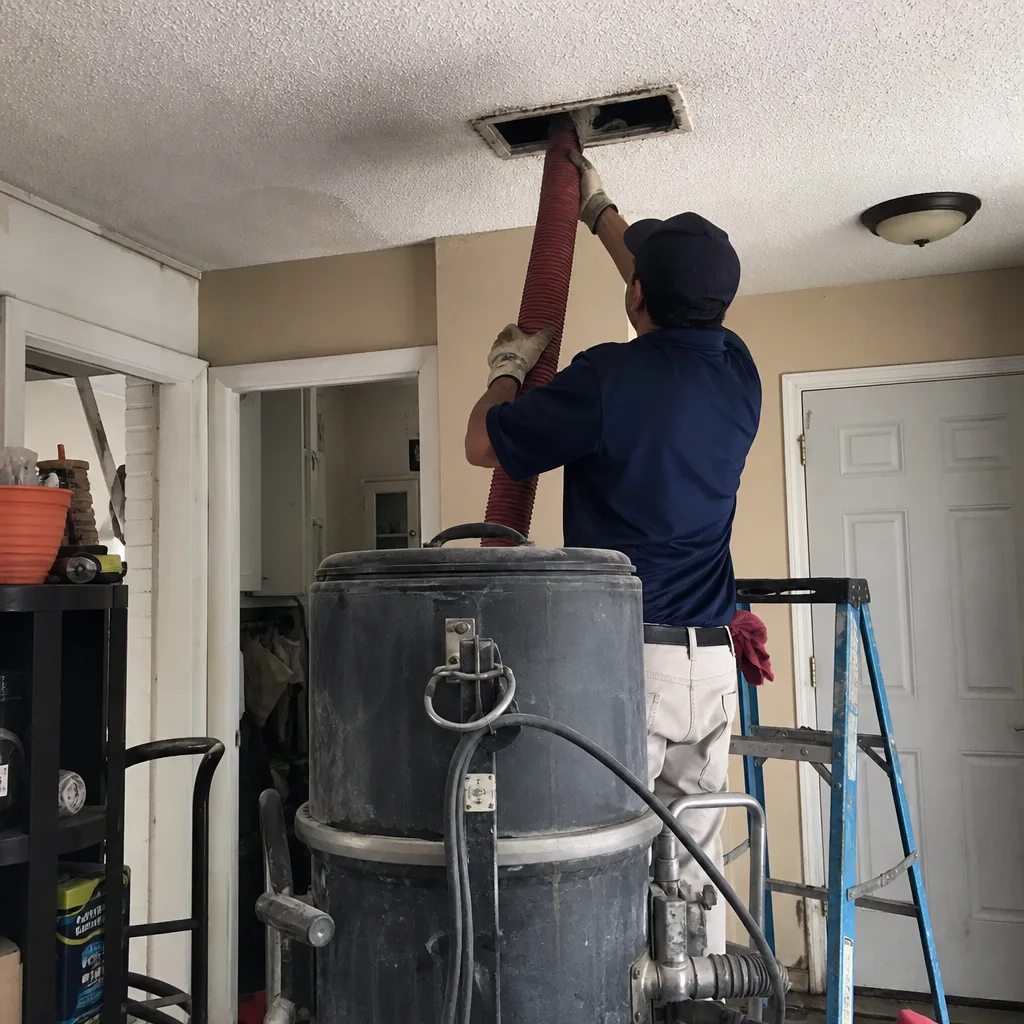 Before
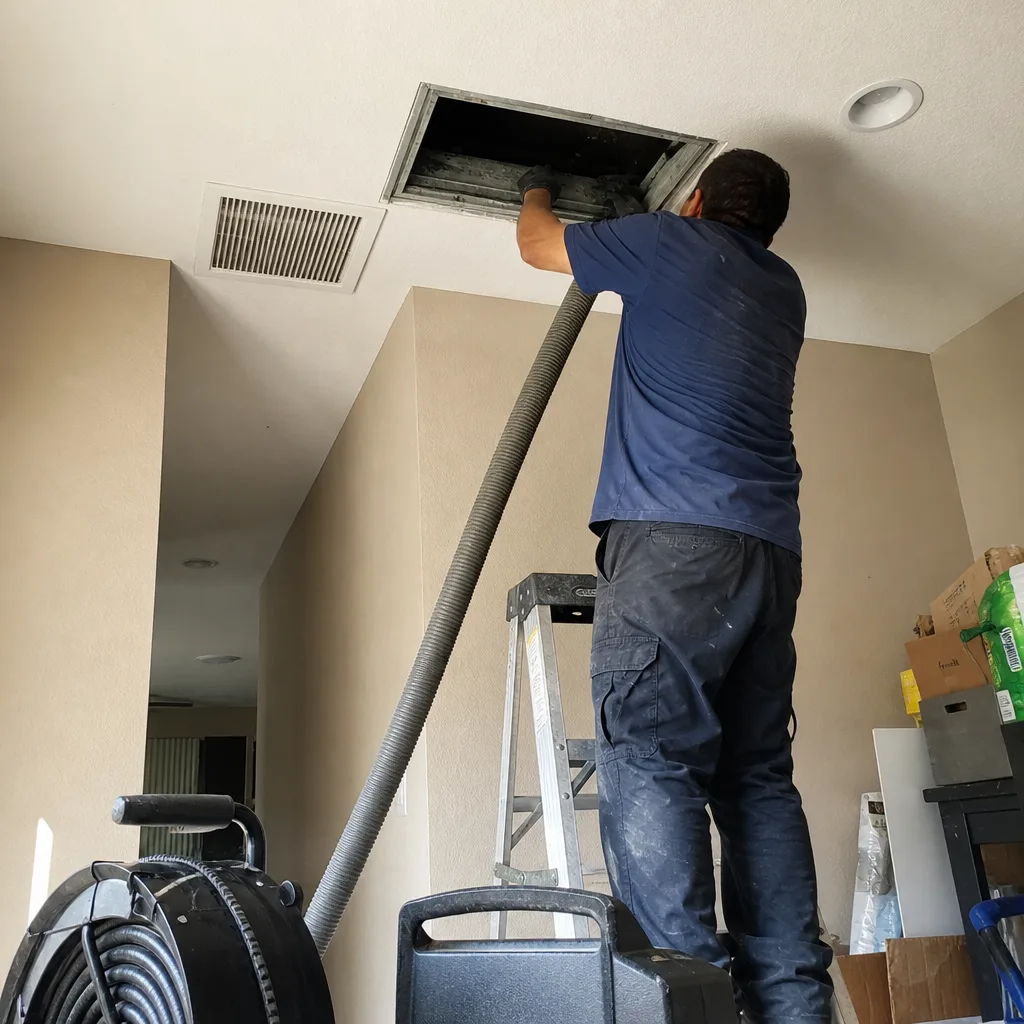 After
After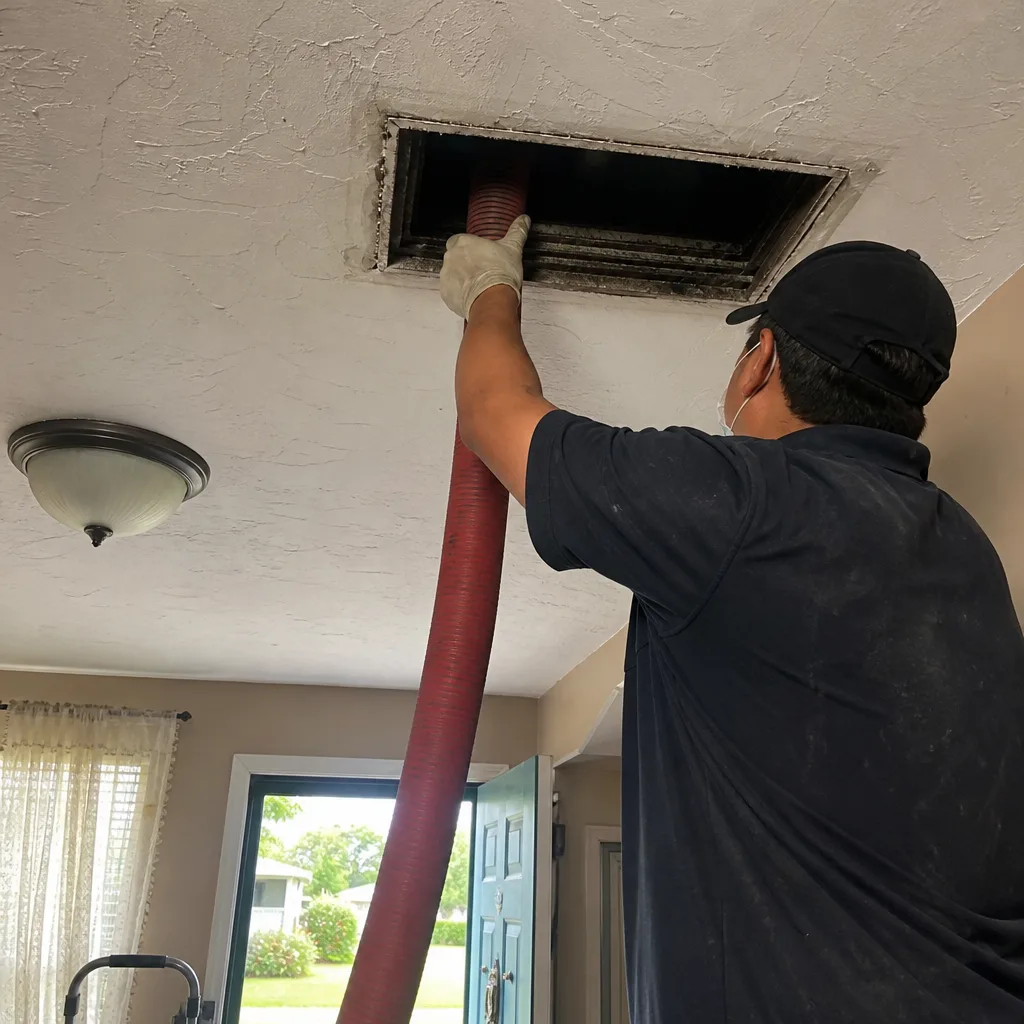 Before
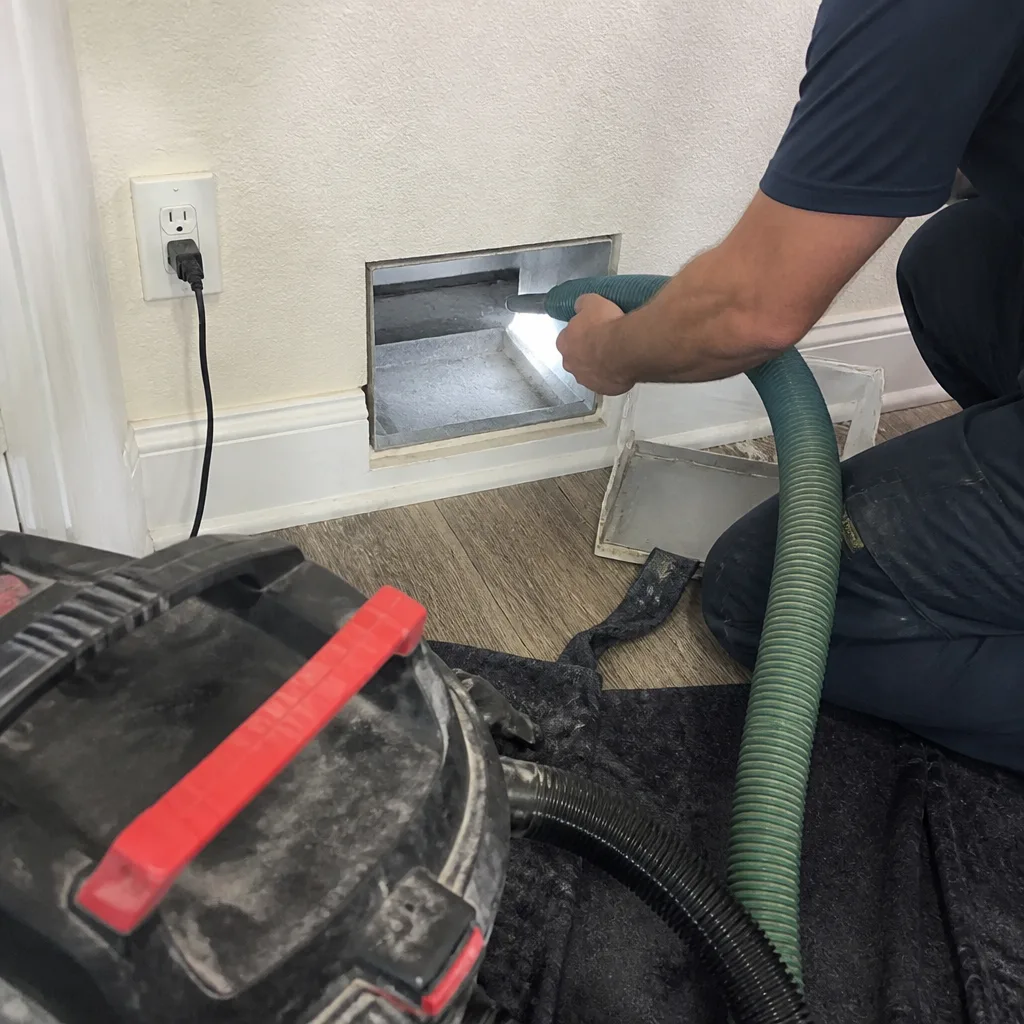 After
After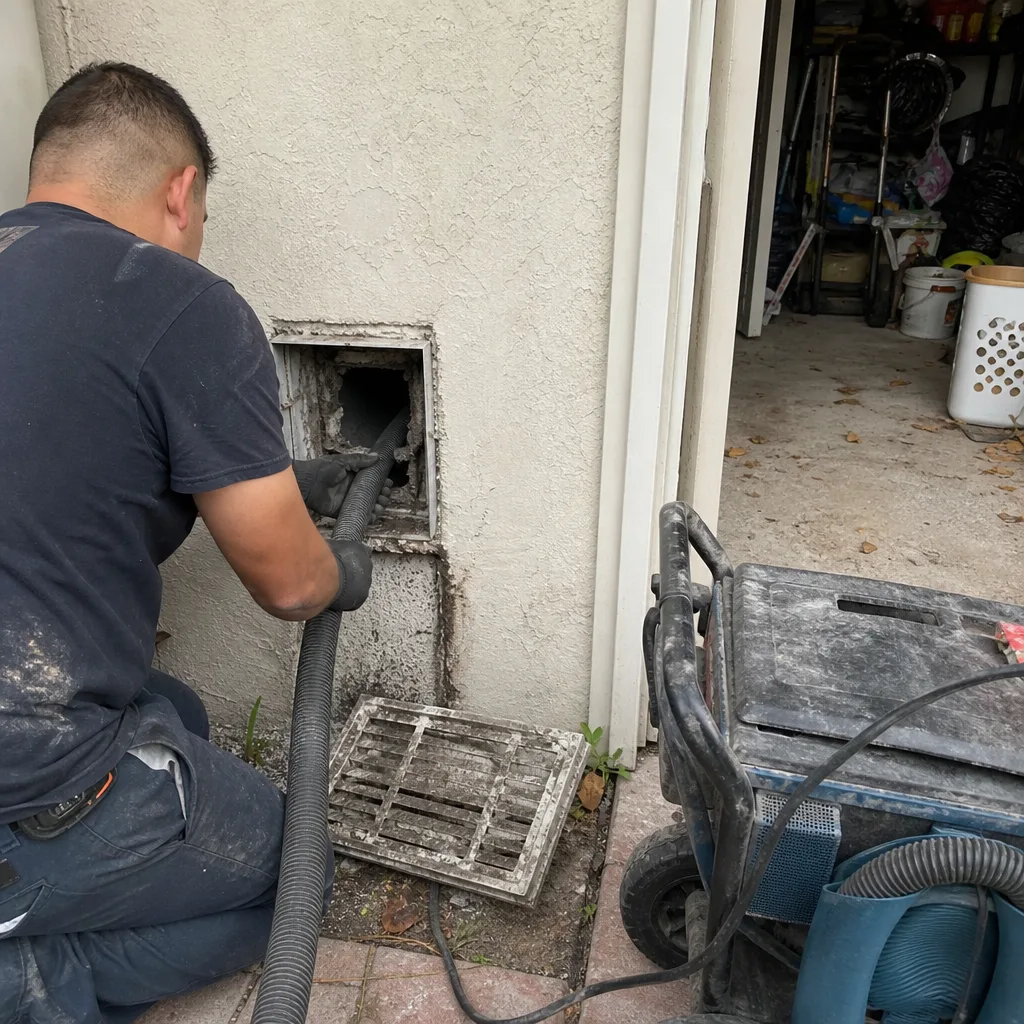 Before
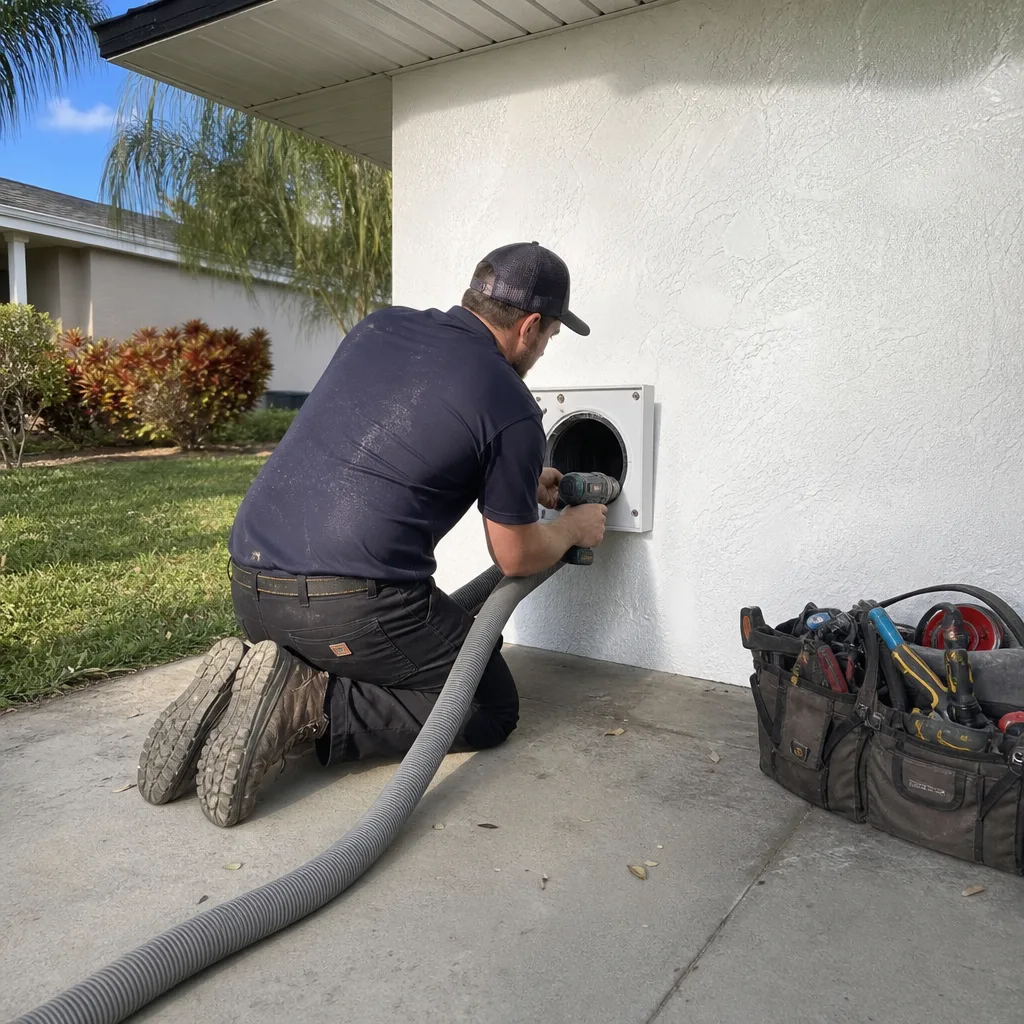 After
AfterReplacement Cost & What’s Included
In Tampa, a Rotobrush vent sanitizing repair with us runs $145 – $285 installed. The lower end is a feed line and barb fitting swap on an R3/Viper. The upper end is a new atomizer block and check valve assembly for a Beast or Raptor, plus labor. Here’s the breakdown that matters:
- Atomizer tip or block (OEM): $55 – $120 depending on series
- Feed line, clamps, barb fitting: $25 – $40
- Pump diaphragm kit (R3/Viper only): $60 – $90
- Labor: $50 – $85, flat, quoted before we touch anything
Every repair includes a written price before work begins, a written guarantee on the repair, and a free second visit if it fails. That’s the 365-Day Done Right Promise, and it applies to every parts job we do in Tampa, no exceptions.
DIY or Call Us?
There’s one thing you can safely check yourself: the feed line. If you can see a crack, kink, or a whitish stress mark where the line flexes at the boom, you’ve found the problem and you don’t need to pay a diagnostic charge. What you shouldn’t do is attempt to rebuild the atomizer block or replace a Beast/Raptor check valve without the right thread gauge and a diagram of the seat stack. Get that wrong and you’ll either cross-thread the fitting into the head or leave a loose seat that leaks sanitizer into the brush bristles mid-job. Sanitizer concentrate on bristles means sanitizer streaks on the customer’s walls.
We stock the common Rotobrush vent sanitizing parts on our truck: R3/Viper atomizer tips, feed line, barb fittings, and pump diaphragm kits. If you’re mid-job and your sanitizer died, call us at (850) 403-3474 and ask for Omar. We’ll tell you whether we carry what you need and what it costs before we even start driving.
FAQs
In Florida humidity, expect 18 – 24 months from an atomizer tip before mineral buildup degrades the spray pattern, and 2 – 3 years from a feed line before the flex point at the boom pivot stress-cracks. Units stored in air-conditioned shops fare better; truck-mounted rigs parked outside break down faster. If you’re cleaning 4 – 6 systems a week, plan on replacing the tip once a year. Call (850) 403-3474 and we’ll get you the right part for your series.
The feed line and barb fitting are replaceable parts. The atomizer tip is not worth repairing; once the orifice is clogged or the cone pattern is lopsided, cleaning it with wire or solvent usually worsens the issue. Pump diaphragms can be rebuilt with a kit for R3 and Viper units, which is cheaper than a new pump. Call us for a straight answer on what your failure actually requires.
Most swaps run 45 – 90 minutes, depending on access to the boom head. If you can bring the unit to us in Tampa, we can do it while you wait. On a job site, we do the repair and test the spray pattern before we leave.
We stock the high-failure items for R3, Viper, Beast, and Raptor systems: atomizer tips, check valves, feed line, barb fittings, and pump diaphragm kits. For oddball or older aiR+ components, we order OEM and typically have it in hand within two business days. We also carry sanitizing parts for common Lennox, Trane, and Carrier filtration accessories we see on Tampa jobs.
If your Rotobrush vent sanitizing is down and you need the part matched to your exact unit, call (850) 403-3474. You’ll get a live person on the line, a clear answer on compatibility, and a written price before any work happens. We work on Rotobrush systems all over Tampa, from Ybor City to Westchase, and we know what fails and why in this humidity. Clean ducts aren’t a luxury – in Florida humidity, they’re just maintenance you haven’t skipped yet.
Written by Omar Haddad, Owner, Cardinal Air Duct Tampa at Cardinal Air Duct Tampa, serving Tampa and nearby areas.